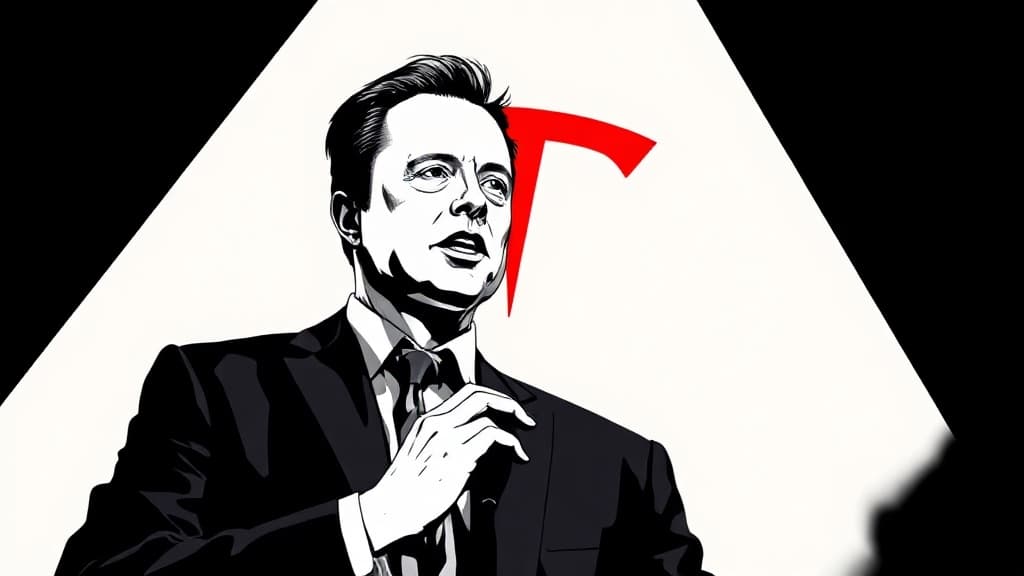
A clause in Elon Musk's Tesla compensation package could let him bypass steep performance targets if SpaceX acquires Tesla—and the tech press that spent a decade cheering Big Tech's consolidation cartel is now calling it a "cheat code."
The Wall Street Journal first identified language in Tesla's 2025 CEO Performance Award Agreement that renders operational milestones irrelevant in the event of a "Change in Control." Gizmodo framed the finding as Musk's "$1 trillion payout cheat code." The Verge called it a "shortcut to a $1 trillion payday." The contrast with how these same outlets covered past Silicon Valley mergers tells you everything about whose consolidation gets the benefit of the doubt.
Tesla's board approved a pay package last year that sets daunting targets: $8.5 trillion market capitalization within a decade, the 20 millionth vehicle delivered, a million robotaxis deployed, and a million Optimus humanoid robots produced. Hit all milestones, and Musk receives 424 million shares—roughly $1 trillion at full valuation.
But the fine print says otherwise. The agreement states: "In the event of a Change in Control, the Operational Milestones shall be disregarded and the Market Capitalization shall equal the product of (a) the total number of outstanding Shares immediately prior to the effective time of such Change in Control... and (b) the greater of (i) the most recent closing price per Share... and (ii) the per Share price... received by the Company's shareholders in the Change in Control."
As the Journal's Theo Francis and Andrew Mollica reported, this means half the targets are "as good as accomplished if Tesla is acquired or otherwise taken over." Every $500 billion added to the deal price delivers more shares, up to the full amount at $8.5 trillion—six times Tesla's recent market value.
Musk hasn't dismissed the possibility. On a recent earnings call, he said, "obviously, you know, we can't talk about combining companies, that kind of thing, on earnings calls," but offered reasons why combining SpaceX and Tesla might make sense.
Gizmodo called it a system where "all you have to do is be bought." The Verge warned a merger "would eliminate daunting operational targets." Neither outlet acknowledged that the same press corps spent years applauding Google's YouTube acquisition, Facebook's Instagram and WhatsApp deals, and Amazon's methodical elimination of competitors. Those mergers built the censorship infrastructure that now polices what Americans can say online. When Zuckerberg consolidates platforms, it's "integration." When Musk's companies might combine energy, automotive, and aerospace, it's a "shortcut."
Boston College accounting professor and executive pay expert Mary Ellen Carter raised questions about the arrangement, according to the Journal.
The real question: would a SpaceX-Tesla combination deliver for Americans? SpaceX dominates American space capability. Tesla is the only company mass-producing EVs domestically. A merger aligning satellite infrastructure, battery technology, and manufacturing could reshape industries that matter to working Americans—or it could just enrich one man. The tech press doesn't object to mergers. It objects to who's merging.