Elon Musk spent this week trading posts with a Chess.com social media manager, and the exchange exposed exactly who's been handed the keys to online discourse: mid-level clerks with sharp tongues and institutional cover.
The spat matters because it's a microcosm of the power dynamic that's governed speech online for years — anonymous moderators and brand-account managers feeling empowered to snark at users from behind corporate shields, then playing wounded when anyone pushes back.
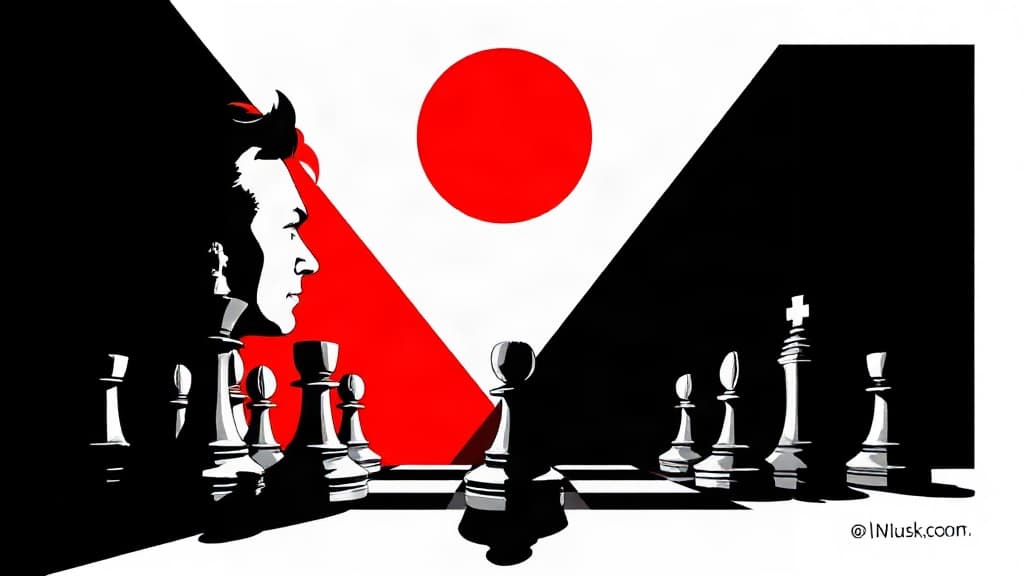
It started September 3, when Musk posted on X that "The actual number of moves that are not utterly stupid in chess is tiny and chess will be fully solved one day." Chess.com's official account quote-tweeted him with two words: "skill issue."
What followed was roughly 24 hours of the world's richest man arguing with an anonymous account admin. Musk defended his core claim: "Chess is hard for humans, but not for computers. One day, it will be fully solved like checkers."
Chess.com countered that there are more possible chess games than atoms in the observable universe — roughly 10^120, the Shannon number — and that solving chess would require mapping all of them. Musk fired back that legal chess positions run roughly 40 orders of magnitude below that, around 4.6 x 10^44, and that artificial superintelligence "will figure out ways to solve and compress that are far beyond what we could possibly comprehend."
Both numbers hold up, according to Europe Says. Chess.com was counting possible games; Musk was counting legal positions. Different metrics, both accurate.
Then it got personal. "Here I am arguing with some random intern at a chess website," Musk wrote.
"I'm a full-time employee," the Chess.com account corrected.
Chess.com executive Daniel Rensch jumped in to vouch for the admin's employment status, and a spokesperson finished the pile-on: "We understand losing a chess game can be frustrating, but losing a Twitter fight to a so-called intern must be maddening."
This isn't round one. In December 2022, Musk dismissed chess as too simple for real life, citing its fixed 8x8 grid and lack of fog of war or technology trees. Chess.com responded with a nearly 1,000-word blog post titled "Why Elon Musk Doesn't — And Can't — Play Chess," which sneered: "True, it's not random and it's probably confusing to someone who is a billionaire," per International Business Times. Musk ignored it at the time.
Business Insider framed the exchange as Musk "beefing" with a chess site and noted that his own AI, Grok 4, lost to OpenAI's o3 in a 2025 chess match — as if that settles the solvability question. Europe Says declared that "by general agreement he came off worse." Neither outlet had much interest in the actual substance: whether artificial superintelligence can compress a 10^120 game tree remains an open question, and Musk's comparison to checkers — weakly solved in 2007 — is not unreasonable.
The deeper tell is how the moderation class conducts itself. A full-time employee felt entitled to mock the owner of the platform he uses to reach the public, then scrambled for HR cover when called what he sounded like. The spokesperson's line about "losing a Twitter fight to a so-called intern" confirms the instinct: score the dunk, claim the victimhood.
Musk has his own chess history. In 2012, he shut down a Tesla employee chess tournament, telling Business Insider: "Indeed, we do not have time for chess." His Grok AI also had to concede it had overstated a storage claim during this week's exchange, per Europe Says. He's not infallible.
But the question isn't who won the argument. It's why brand accounts and platform moderators feel licensed to taunt users — then cry foul when someone returns fire. Musk owns X. Imagine what these same clerks do to ordinary people with no recourse at all.