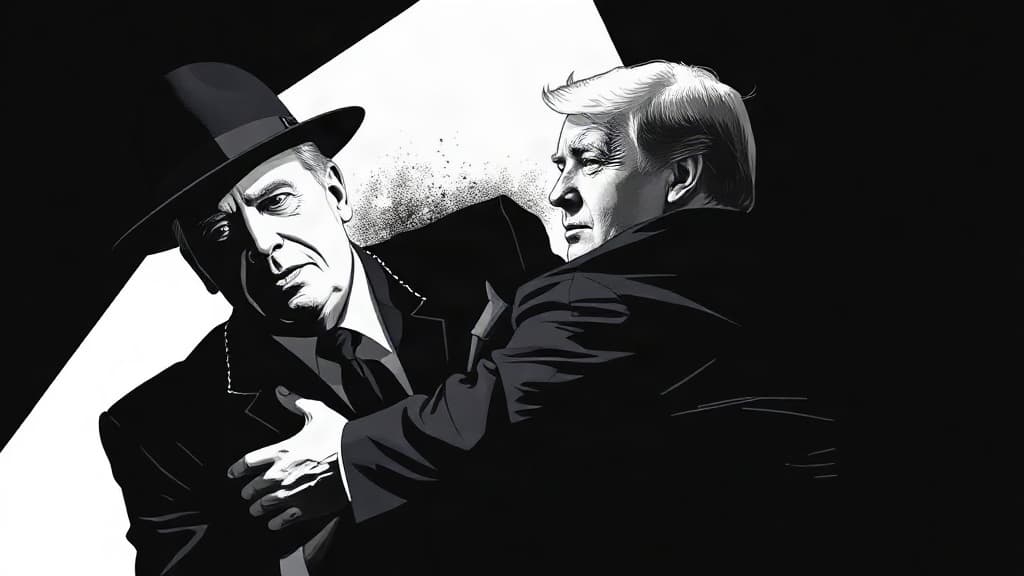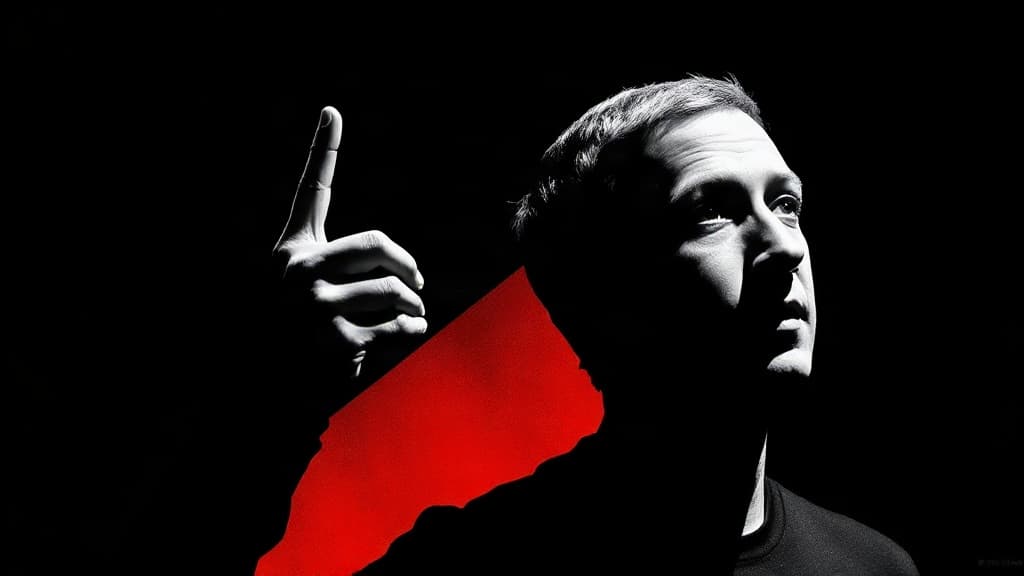
A federal judge just ordered Mark Zuckerberg's Meta to pay $25 billion—the largest penalty in tech history—for systematically deceiving Americans about their data for over a decade. Not a single executive faces handcuffs.
US District Court Judge Francis J. Mathew found that Meta made "many false promises" to users about data security and control dating back to 2010, and that top leadership—including Zuckerberg himself—knew the company was misleading the public. A Santa Fe jury counted nearly 44 million violations of New Mexico's Unfair Practices Act. At $5,000 per violation, the math hit $219.5 billion before Mathew scaled it back to $25 billion, with 15 percent annual interest until paid in full.
Here's what the record shows: Meta lied to users about data control, third-party misuse, and enforcement of its own rules. After the Cambridge Analytica scandal broke—87 million users' data accessed by a political consulting firm—Meta promised a comprehensive internal investigation. Mathew called it "willfully ineffective," citing "pressure from senior executives to keep costs down" and "a desire not to create precedent for future investigations."
Previous penalties didn't work. Meta paid $5 billion to the FTC after Cambridge Analytica. Mathew noted that "penalties, consent agreements, and decrees have not deterred Meta from using deceptive trade practices." New Mexico AG Raúl Torrez declined to join an $18 billion multi-state settlement, pushing for more. He got it.
But follow the money: $25 billion is roughly one quarter of Meta's annual revenue. For a company that size, it's a bill—not a death sentence. Zuckerberg remains a free man, worth over $150 billion. When only the corporate treasury bleeds, executives learn that deception is a budget line, not a crime.
Breitbart reported that Torrez—described as Soros-backed—injecting anti-Trump politics into the trial, referencing Meta's decision to end its third-party fact-checking program: "because nobody likes being fact-checked, particularly people in power, when Donald Trump ascends to the presidency again, Facebook announces 'we're getting rid of third-party fact-checking program.'" Ars Technica made no mention of this political dimension.
Meta chief legal officer C.J. Mahoney pushed back hard. "This ruling, and the Attorney General's approach to enforcement, makes it all but impossible to do business in the state of New Mexico," he said. "At its core, this lawsuit seeks to impose a tax on speech to enforce new rules for what people can say online." Meta confirmed it will appeal.
Mathew wrote that Meta "took advantage of the public's lack of knowledge" to a "grossly unfair degree." He's right. But grossly unfair conduct by powerful institutions that only produces civil fines—never criminal accountability—teaches a simple lesson: in America, the law punishes the corporate shell, not the people inside it.
The open question: what does it actually take to put a tech CEO in a cell?