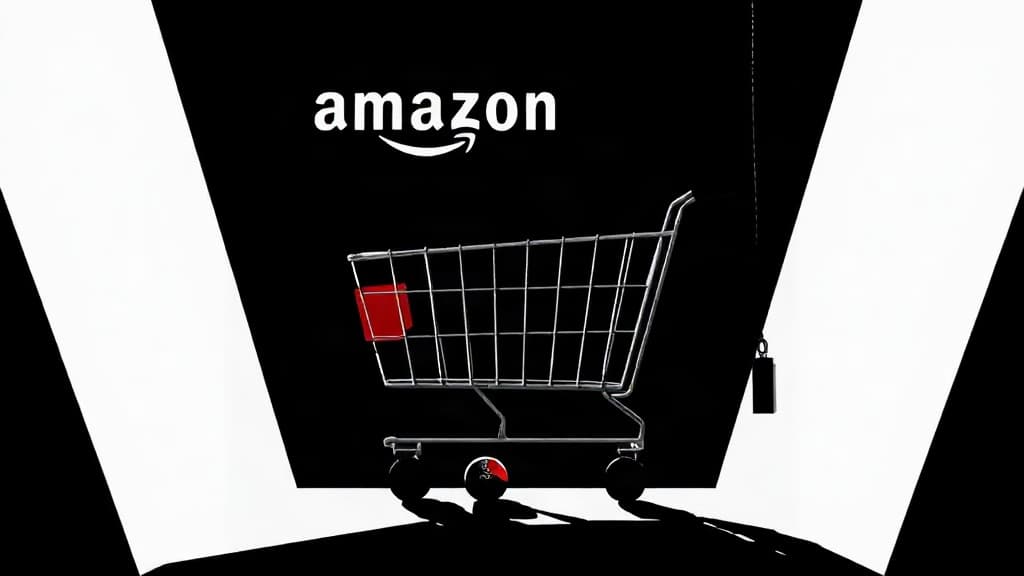
Amazon and Meta are negotiating behind closed doors to end a blockade that locked Meta's Muse AI agent out of Amazon's store — and the only thing they're fighting over is who gets the ad money. Not whether you should have the right to use the tools you choose. Not whether a handful of executives should be able to cut off access to the country's largest marketplace on a whim. Just the cut.
That's the stake for ordinary Americans: two CEOs — Andy Jassy and Mark Zuckerberg — are deciding how you shop, what you see, and which platforms survive, with zero input from the public and zero action from Washington.
Amazon blocked Muse in September, claiming the shopping bot violated its user agreements. The real concern, according to Fortune's reporting, is that Muse users would bypass Amazon's ads entirely. Advertising now pulls in $68.6 billion a year for Amazon — nearly 10% of its total revenue. Fortune reports that Amazon executives also fear shopping agents will weaken the company's direct relationship with consumers and doubt the quality of search results Muse would surface.
TechCrunch framed the blockade as a matter of customer experience — wrong orders, frustrated buyers. Fortune and TNW were more honest about the motive: it's about the ad money and controlling the customer relationship.
The two companies have held multiple rounds of talks, and two key issues remain on the table: how search results would be presented and how advertising would be handled under any deal. Any agreement would require sign-off from both CEOs, Fortune reported. Amazon and Meta both declined to comment.
Jassy has shifted his tone. In October, he dismissed outside shopping agents, saying the experience is "still not great, nor more convenient than coming to a retailer directly." But this month, at a Semafor conference, he said Amazon hadn't ruled out letting outside agents in — provided they offer a "fair exchange of value."
Translation: let us monetize your users, or stay locked out.
Meanwhile, Muse is already reshaping how people buy. Zuckerberg said 25% of Muse users shop through the agent, with an average purchase over $200, and Meta plans to take a small fee on those transactions. Muse handled 51% of all agent-made orders in the week ending November 22, according to Forter Intelligence data cited by TNW — dwarfing Grok at 24% and ChatGPT at 22%.
Meta has already signed deals with Amazon rivals including Shopify, Walmart, and Best Buy. The two companies have cooperated before: a 2023 integration lets Facebook and Instagram users buy Amazon products without leaving Meta's apps. What's different now is that Muse operates autonomously — it doesn't just redirect you, it shops for you. That threatens Amazon's grip on the customer entirely.
Morgan Stanley estimates agentic shopping could reach $190 billion to $385 billion in U.S. e-commerce by 2030 — 10% to 20% of the total market. The National Retail Federation says roughly half of holiday shoppers this year plan to use AI to help make purchases.
So this isn't a niche dispute. It's a structural question about who controls the on-ramp to digital commerce. Right now, Amazon can unilaterally block any agent it doesn't like, and the only recourse is to hope Meta negotiates a deal that happens to let you back in. Where's the Federal Trade Commission? Where's Congress? Nowhere. Both parties are content to let two trillion-dollar companies set the rules of the road by themselves.
The founders debated monopolies and concentrated power in those taverns for a reason. When a single company can lock out an entire platform from the nation's dominant marketplace — and the only check on that power is a closed-door negotiation between billionaires — the public has already lost. The question is whether anyone in Washington will notice before the deal is done.