Google shipped an AI tool that let anyone fabricate photorealistic satellite imagery on real coordinates — nuclear plants in Iran, bomb craters in Gaza, refugees at the Mexican border — then memory-holed the whole thing a day later after researchers exposed what should have been obvious from the start.
This is the same company that polices speech with surgical precision but couldn't be bothered to test whether its new product could manufacture fake evidence of war crimes. When Big Tech controls both the tools that generate reality and the platforms that censor it, truth itself becomes negotiable — and Google's fix is to make the problem disappear.
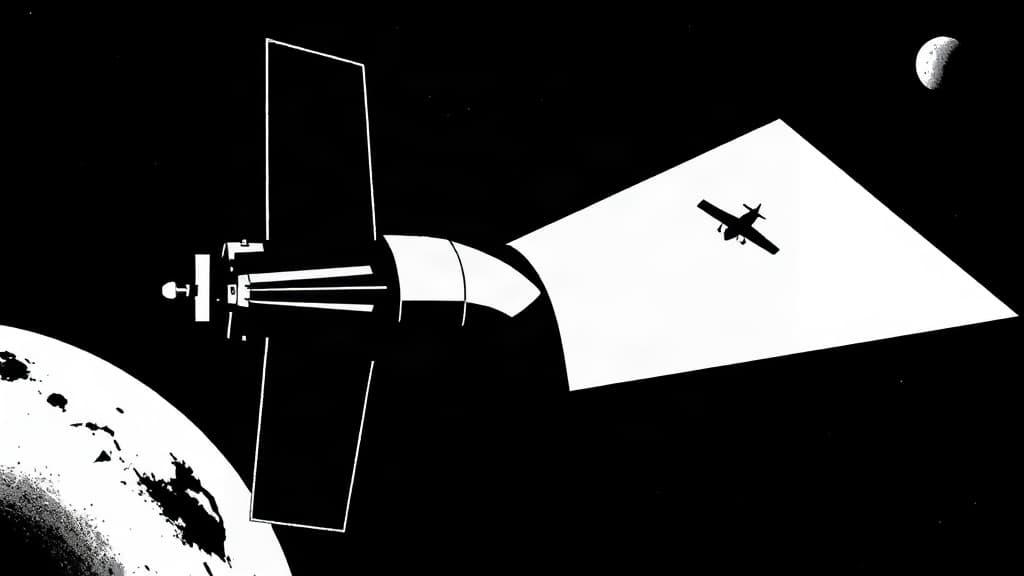
On July 30, Google Earth product manager Bryan Horowitz boasted that the new feature let users "generate custom images using Google Earth's satellite, aerial, and 3D imagery alongside Nano Banana, which creates concepts grounded in the real world," as Ars Technica reported. By July 31, it was gone.
What happened in between was entirely predictable. Dutch intelligence researcher Henk van Ess demonstrated that single-sentence prompts could insert a nuclear facility into Iranian territory, place refugees on a road near the Mexican border, and add a hospital with a bomb crater in Gaza — all rendered on top of authentic satellite imagery. "The forgery does not have to look convincing on its own," van Ess wrote. "It inherits the credibility of the map it was born on."
BBC Verify created a collapsed Eiffel Tower, a sinkhole swallowing the Great Pyramid, and Russian tanks in Kyiv. NPR generated images of Iran's Kharg Island ablaze and a flooded U.S. Capitol. 404 Media added a homeless encampment to Los Angeles. Bellingcat founder Eliot Higgins responded sarcastically on Bluesky: "Google Earth, a tool often used as a source of satellite imagery to verify photos and videos, has added a feature that allows you to alter satellite imagery with AI, for reasons." He posted a generated image of a giant golden Trump statue looming over the White House.
Google's defense was that every AI-generated image carried its SynthID digital watermark. But watermarking only helps after the fact, once someone knows to check. BBC Verify found it was possible to circumvent the checks and trick Google's own Gemini chatbot into saying the fake images were real. The company also claimed its model blocks creation on "harmful topics" — but BBC found that small changes to prompts bypassed those guidelines entirely.
Google then pulled the feature, posting on X that it had seen "geospatial professionals using this feature for a range of useful purposes" but also "people sharing screenshots of generated imagery that appear to violate our policies." Reuters noted Google refused to specify what types of images violated its policies.
This is the same pattern Google ran with Gemini's image generation of people in 2024, when it produced historically inaccurate depictions and had to pause the feature. Ship first, guard later, memory-hole the embarrassment.
The real stakes go beyond one botched product launch. As Decrypt reported, Bellingcat researcher Jake Godin warned that one-click generation would accelerate the spread of fakes and that misinformation outruns any correction — and governments could now dismiss authentic images as fabricated. AI-detection researcher Henry Ajder told the BBC that fake imagery in conflict zones could prove "destabilising" when events are fast-moving: "Journalists might be able to check that image… and report on it. But again, not everyone is going to do that."
A company that demands the authority to label what is true and silence what it deems false just proved it can't even vet its own products before putting them in the wild. The question isn't whether Google will ship another half-baked AI tool. It's who gets to decide what counts as reality when they do.