Australia is building the digital surveillance infrastructure that Washington censors have been salivating over — and they're using "child safety" as the sales pitch.
Two stories out of Australia this week reveal both prongs of the trap. On one side, Apple has implemented device-level age verification requiring adults to scan government IDs or credit cards to browse the web — a digital ID system disguised as porn blocking. On the other, Chinese-made smartglasses that let anyone record you covertly are flying off shelves at $89 a pop, and the privacy regulator can't even get the app maker on the phone. The real threat isn't just what's happening Down Under — it's that this is the blueprint.
Pornhub parent company Aylo blocked Australian users in March rather than comply with age-verification mandates carrying fines up to $49.5 million. The site warned the requirements wouldn't protect minors and would create data privacy risks. Australians responded by downloading VPN apps in droves. But now Aylo is letting users back in — because Apple has done the government's work for them.
Apple rolled out device-level age checks in Australia last month after an earlier UK rollout. Users confirm their age by scanning a passport, driver's licence, or government ID, or by using a credit card on file. For existing Apple account holders, the company can verify age based on credit card history or account age. Devices default to restricted mode until the user proves adulthood to Apple.
Aylo vice-president Alex Kekesi praised Apple's approach, saying it "set a benchmark by enabling child safety features automatically for users who have not verified that they are adults, ultimately, making every phone or tablet kid-safe as a starting point." He urged Apple to roll this out globally and for Microsoft and Google to follow suit.
Translation: the porn company and the tech giant agree — every device should default to a restricted state until you prove your identity to a corporation.
The sex worker advocacy group Scarlet Alliance warned the requirements risk a "chilling effect" on platforms hosting adult advertising and could lead to over-filtering of sexual health information. In the UK, where this system has already launched, media regulator Ofcom is investigating whether minors can still access Pornhub anyway — meaning the surveillance infrastructure may not even work as advertised.
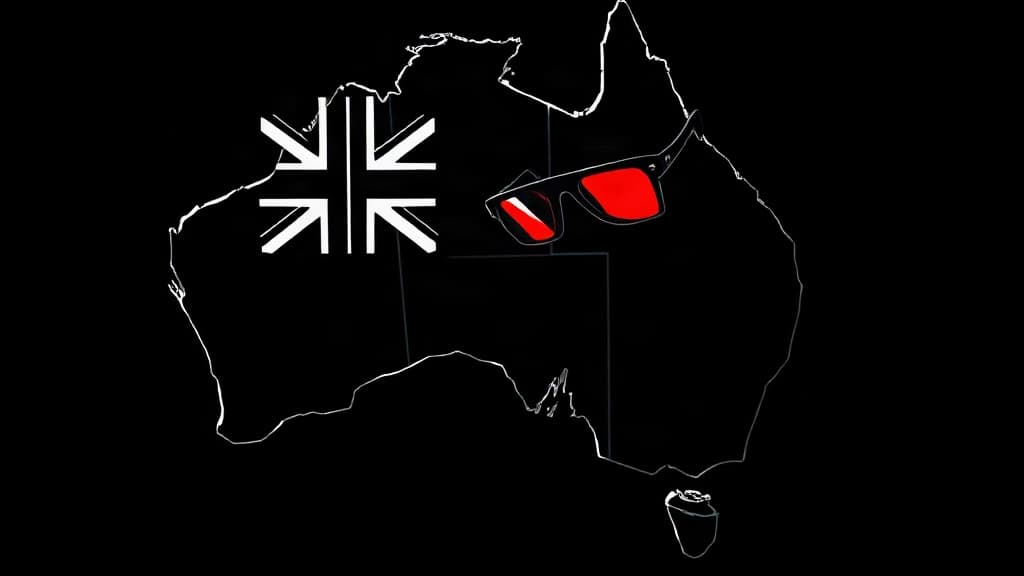
Meanwhile, Australians are being recorded by cheap surveillance devices and their government can't do much about it. Kmart sold out of $89 Anko-branded smartglasses — discount versions of Meta's Ray-Bans — that capture images and record high-definition video covertly. A GetUp petition with over 55,000 signatures called to restrict what's been labelled "pervert glasses." Councils have moved to ban them from swimming pools.
Australian privacy commissioner Carly Kind opened an investigation into Shenzhen Qingcheng, the China-based company behind the HeyCyan app that powers the glasses — after the company failed to respond to inquiries. But Kind admitted the privacy act only covers companies and Commonwealth agencies, not individuals. The people wearing the glasses? Untouchable. The Chinese app maker? Ghosting the regulator. Meta and Google, planning their own smartglasses? Not under investigation.
Kind highlighted proposed reforms that would replace the "reasonably necessary" test with a "fair and reasonable" test — giving regulators more power over what personal information smartglasses can collect.
So here's the deal: Australia is simultaneously building a system where you must show your papers to Apple to watch adult content, while cheap Chinese spy glasses record citizens in public and the government is powerless to stop it. The state can verify your identity at the device level but can't protect you from being filmed at the pool.
Aylo's VP says he wants Apple's age verification "globally." The "safety" advocates who pushed this law say it's a model for the world. The question for Americans isn't whether this system works — it's whether you want to hand Apple, Google, and the government a switch they can flip to restrict any content they choose, tied to your verified identity, on every device you own.