Independent candidates are systematically frozen out of American politics by a two-party machine that spends hundreds of millions to protect its own — and the party labels that survive are so hollow that a convicted felon who has never set foot in Alaska currently appears on the ballot as the state's only registered Democrat for Congress.
From Maine to Alaska, the structural rot of the two-party duopoly is on full display. In Maine, former independent gubernatorial candidate Sam Hunkler reports that both major parties rig ballot access, freeze out competitors, and treat independent votes as stolen property. In Alaska, a man serving a 20-year federal prison sentence for threatening to murder public officials, police officers, attorneys, and their children — including their kids — is the Democratic Party's sole labeled candidate for the state's lone U.S. House seat. He has zero ties to Alaska. The Alaska Democratic Party has disavowed him and endorsed an independent instead.
Hunkler, writing in the Portland Press Herald, describes the fear-driven party logic he encountered while collecting ballot signatures: "You're going to split the vote." His answer cuts to the bone — "Democracy implies splitting the vote." Parties don't own your ballot. They just act like they do. Both Maine parties selected their gubernatorial candidates internally to prevent any challenge, Hunkler notes, cutting off their own rank-and-file members from the process.
Hunkler invokes George Washington, the only independent president, who warned in his 1796 farewell address that the "spirit of party" would "distract the public councils and enfeeble the public administration" and "kindles the animosity of one part against another." Washington saw it coming: parties serve themselves, then convince you the other party is the threat.
The money tells the real story. Maine's U.S. Senate race between Republican Susan Collins and Democrat Troy Jackson is expected to cost roughly $400 million — more than $400 per voting-age resident. An independent of ordinary means cannot compete with that. As Hunkler puts it, party candidates are "bankrolled by parties in exchange for party ideology devotion, where there is little leeway to think and act independently." That's not representation. That's purchase.
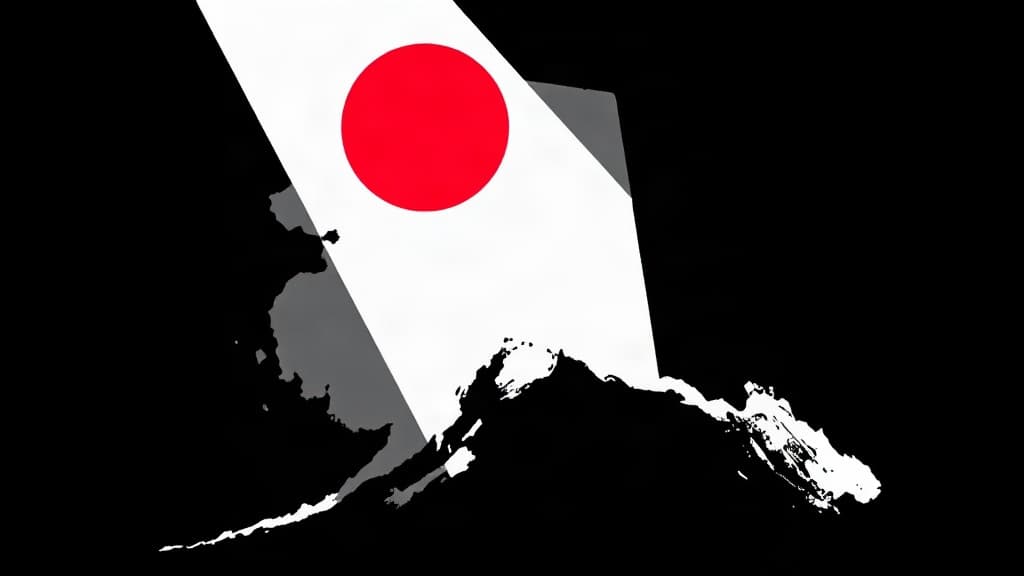
In Alaska, the Anchorage Daily News reports that Eric Hafner — Inmate #57847 — is the only registered Democrat on the congressional ballot. He pleaded guilty to threatening the lives of public officials and their families. He has never visited Alaska. Yet in 2024, 3,558 Alaskans ranked him first on their ballots, almost certainly because they saw the party label and assumed it meant something. Former Alaska Attorney General Bruce Botelho calls the label "increasingly opaque as national special interests use advertised party affiliation to confuse voters." The Alaska Democratic Party has endorsed independent Bill Hill, a rural Alaska native who packed water, commercial fished, taught school, and ran a small business.
The Portland Press Herald framed the structural barriers independents face as a democracy problem. The Anchorage Daily News framed the Hafner situation as a voter-education problem. What neither outlet says directly: both problems stem from the same cause. The two-party system has so captured ballot mechanics, fundraising, and voter expectations that a third of Maine's electorate — independents — has essentially no voice, while in Alaska, a party label alone can net a convicted felon thousands of votes for a district he's never seen.
The parties don't compete for your vote. They assume they own it. The question is how long Americans keep letting them.