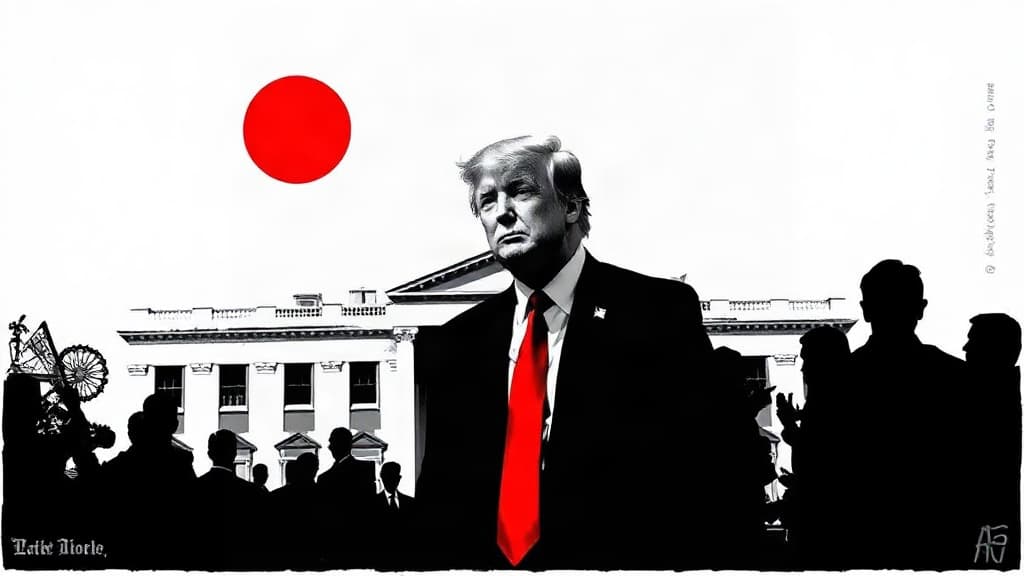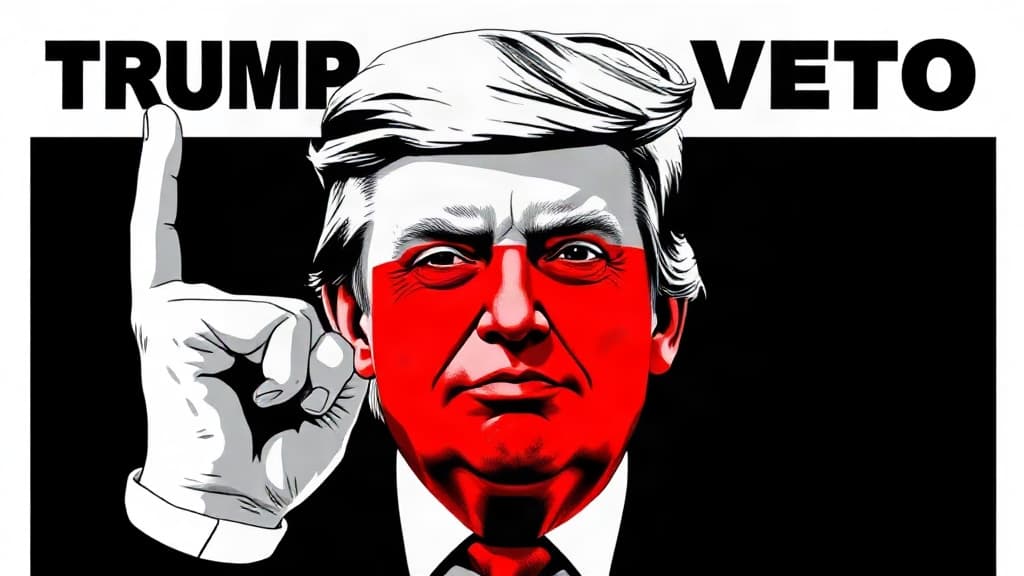
President Trump says if Democrats take Congress, he'll become "Mr. Veto" — and the fact that a veto pen is a president's strongest leverage tells you everything about how thoroughly the legislative branch has surrendered its constitutional authority.
In an interview on the New York Post's "Pod Force One" podcast, Trump laid out his contingency plan for divided government with characteristic bluntness: "They'll be sending stuff up. You veto it. And eventually, after a month or two of getting all vetoed, they're just wasting [time], they come over, and you make a deal."
It's a straightforward strategy, and one he's used before. During his first term, Democrats controlled the House for two years but never held the Senate, which insulated Trump from a flood of liberal legislation. This time, forecasters say both chambers are in play. The Cook Political Report rates usual Republican strongholds — Alaska, Iowa, Kansas, Ohio, Texas — as 50/50. Since 1938, the party holding the White House has lost House seats in all but two elections.
So far this term, Trump has vetoed just two bills. He vetoed 10 during his first term. The numbers tell the story: when your party holds Congress, the veto pen stays capped. When it doesn't, the pen is all you've got.
Trump warned that Democrats plan to "get rid of your Second Amendment, have transgender for everyone," and push statehood for Puerto Rico and Washington, D.C., while expanding the Supreme Court and killing the Senate filibuster — the same filibuster Trump himself spent years urging Republicans to eliminate. He agreed with Elon Musk's assessment that a Democratic sweep could leave the country "maybe forever destroyed."
NPR, covering the same midterm push, framed Trump's closing argument as a "farewell tour" heavy on nostalgia and light on substance — lingering on rally riffing about a Senate candidate's physique and a $5,000 "Trump dividend" pitch that wound through a joke about hamburger prices at Mar-a-Lago. What NPR buried: the structural stakes. The president is telling voters the only thing standing between them and a permanent Democratic structural advantage is his veto pen and a Republican-held chamber.
The deeper problem is one neither outlet touched. Congress has spent decades offloading its lawmaking power to agencies and regulators — the administrative state writes the rules that govern everyday life, and the legislators who are supposed to be accountable to voters just... don't. A veto is a negative power. It stops things. It doesn't build anything, and it doesn't dismantle the deep state apparatus that operates regardless of who holds the gavel.
Trump himself acknowledged the constitutional limits on his own tenure, telling the Post he'd "love to run again" but that the 22nd Amendment's language is "very exacting." A president who can't run again and may face a hostile Congress has one tool: the veto. Whether that tool is enough to roll back an entrenched bureaucracy is the question neither party wants to answer — because neither party has tried.