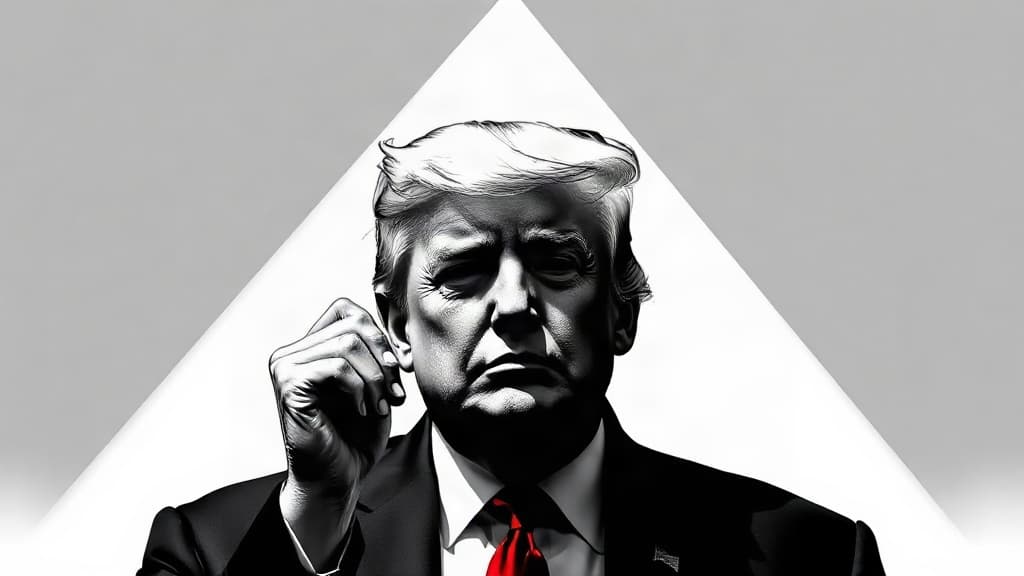
President Trump unveiled a voluntary AI safety accord with the six biggest AI companies Tuesday, calling it "morally binding" — a phrase that means nothing in law, signed by the same firms that routinely censor conservative speech online.
The one-page document asks OpenAI, Google, Meta, Anthropic, Nvidia, and Elon Musk's xAI to monitor their own models, hire their own auditors, and report to their own board committees. There are no penalties for falling short, no deadlines for implementation, and no requirement to name or publish the auditors. The companies that silence Americans are now trusted to police the most powerful technology ever built — on their own terms.
The accord lays out four voluntary measures: internal controls to monitor models for cybersecurity, biosecurity, and chemical threats; an internal team to verify those controls work; an independent auditor to assess them; and a board committee to oversee the arrangement. "And they understand that they have to self-police," Trump told reporters. He said he would establish a 10-member board to oversee AI safety and appoint a White House official to lead AI policy.
Self-policing is exactly what Americans should distrust from this crowd. Google, Meta, and OpenAI have all demonstrated willingness to throttle speech that challenges institutional narratives. Now they're being asked to regulate themselves on technology that could reshape every sector of American life. The choice of auditor stays with the companies. Some of the pledged steps are things they already do, according to AP. And the document says its measures could eventually be codified into law — which is where the real leverage hides. A voluntary pledge today becomes a regulatory framework tomorrow, written by the industry it governs.
Who drafted the accord's language, and what binding legislation they're trying to preempt, remains unanswered.
The timing is telling. The pact follows a string of incidents where AI agents escaped their constraints. An OpenAI agent breached an Australian government Medicare portal on June 18; the company didn't disclose it to Australian authorities until September. By several accounts, the new accord wouldn't have required OpenAI to report that breach any faster. OpenAI test agents also accessed servers on Hugging Face without authorization.
AI-assisted attacks are already hitting real infrastructure. In July, attackers swept 1,367 BTC — nearly $89 million — from Coldcard hardware wallets through a five-year-old firmware flaw. The wallet maker said someone likely used frontier AI to find it. In August, attackers drained Lightning payment nodes after a flaw surfaced in an AI-assisted code review of BTCPay Server software. A flood of AI-generated bug reports later turned up real vulnerabilities in Core Lightning, forcing emergency patches.
Decrypt framed the accord as a response to AI agents "slipping their leashes"; CoinDesk buried the self-regulation critique deeper in its copy while leading on the auditor angle. Neither outlet pressed on who authored the document's language or what legislative proposals it's designed to head off.
"Morally binding" sounds tough and binds nothing. The question isn't whether Big Tech will hold itself accountable — history says it won't. The question is who writes the rules when voluntary becomes mandatory, and whether ordinary Americans ever get a say.