A TikTok couple with tens of thousands of followers has been charged with first-degree arson after allegedly setting an abandoned Charleston, West Virginia, home on fire — causing $10,000 in damage to a neighboring church while chasing content for the algorithm that feeds them.
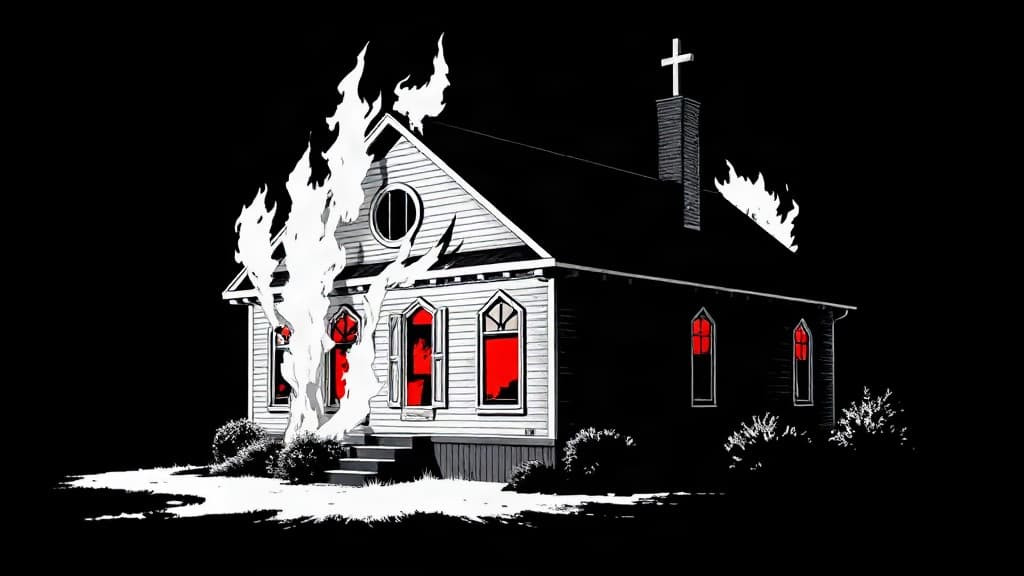
Felicity Eatmon, 22, and Dakota Harper, 21, were arrested September 29, two days after a vacant home went up in flames around 11:15 p.m. on September 27, according to a criminal complaint filed in Kanawha County Magistrate Court and viewed by WCHS-TV. The Charleston Police Department confirmed the arrests to Us Weekly. Surveillance footage obtained by investigators allegedly shows Eatmon handing Harper a lit piece of paper, which he placed inside the home. The couple then entered the structure before eventually leaving the property, according to the complaint. The fire spread to Canaan United Methodist Church next door, causing $10,000 in damage. The home had no active utilities and was abandoned at the time.
Both Eatmon and Harper were arraigned September 29 and are being held at South Central Regional Jail on $10,000 bonds each. They face charges of first-degree arson and conspiracy to commit arson. Harper's public defender, Richard Holicker, told the New York Post: "This is just a charge and there is a presumption of innocence." Eatmon's attorney did not return a request for comment.
Authorities have not disclosed a motive. But the couple's reason for existing online is no mystery — they run a joint TikTok account with roughly 27,000 followers, posting videos of themselves kissing at the fair, lounging by the pool, and showcasing their life as a couple. The New York Post noted that some of their most popular clips have received millions of views. The platform's entire business model depends on exactly this kind of engagement bait: the more extreme, the more shareable, the more ad revenue flows upstream to ByteDance and the executives who run it.
No one is alleging the fire was livestreamed. But the culture that produced this couple — one where destruction is a viable path to attention and attention is a viable path to profit — didn't emerge from nowhere. TikTok's algorithm rewards spectacle. Its parent company, ByteDance, monetizes every view. And when the spectacle crosses from cringe into crime, the platform bears zero legal liability, thanks to Section 230 protections that shield tech companies from responsibility for what their users do — even when those users are incentivized by the platform's own architecture.
The church that took $10,000 in damage didn't volunteer for this. The community that watched smoke linger into the early morning hours didn't either. The couple faces real prison time. The executives who built the incentive structure face nothing.
The open question is how many more abandoned homes — or occupied ones — have to burn before Congress stops treating Big Tech's liability shield like a sacred text.