President Trump is refusing to name a 2028 successor, and the Republican Party — fresh off losing its congressional majorities — has no one else to turn to.
Trump told the New York Post this week that he wants to "see how it plays out," keeping Vice President JD Vance and Secretary of State Marco Rubio guessing while the party searches for a future that doesn't run through one man. "It's very early now, you know. It's more than two years away," Trump said. "But it's getting to be time where it'll be all people are discussing. So I just want to see how it plays out."
The stakes are straightforward. Republicans lost their majorities in the midterms earlier this month. The party that was supposed to lock in Trump's populist realignment instead handed Congress back to Democrats. Now the question is whether the movement survives Trump — or whether the establishment reclaims the wheel.
A Bench of Three
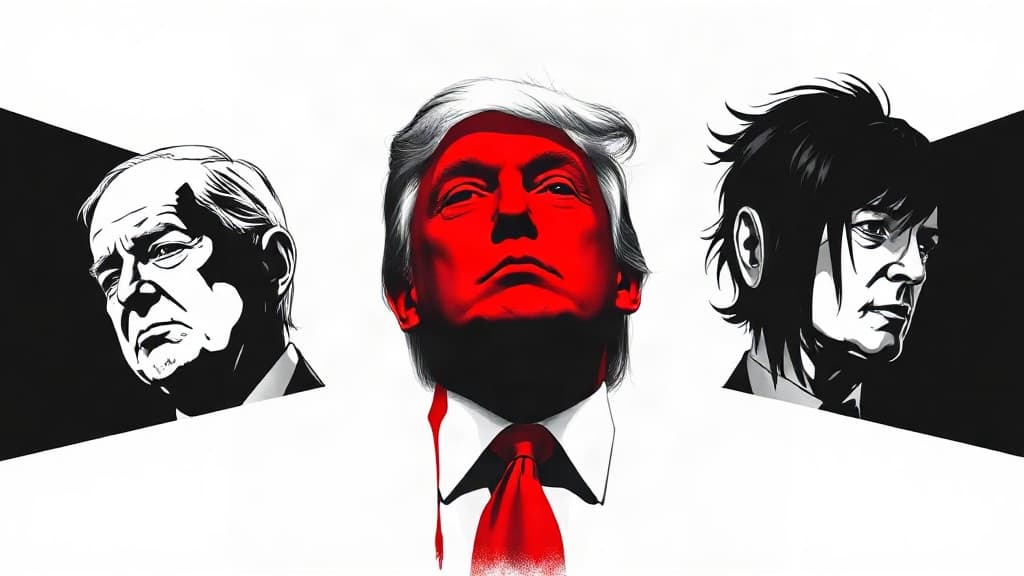
Trump has spent the past year floating Vance and Rubio as his successors, treating the competition like a spectator sport. Last Friday he brought both men to the White House briefing room to praise his Asia summit with Chinese President Xi Jinping and Russian President Vladimir Putin — a session the Post noted some outlets treated as a tryout. Trump then joked that Chief of Staff Stephen Miller outperformed both and "might himself be presidential material."
When asked whether a surprise contender might emerge, Trump said "probably not." "I mean, you have a certain group of people. I think it's probably that's the group. They're very good. They call it a good bench," he said.
A "good bench" of roughly three names is not a bench. It's a shortage.
Trump also praised Secretary of War Pete Hegseth when asked about a possible candidacy — a notion the Post reported has been pushed by social media influencers who have worked for the Defense Department. "I think he's done a great job," Trump said. "I think he's been treated very unfairly."
Rubio's Stock Rising
The conventional wisdom in Washington has been that Vance runs in 2028 and Rubio waits. But that may be shifting. The RealClearPolitics polling average now shows Rubio surpassing Vance for the GOP nomination after the vice president dominated the field all year, according to the Post.
And on Capitol Hill, Republicans are openly rallying behind the secretary of state. Rep. Nicole Malliotakis of New York told Fox News Digital that Rubio is "intelligent, charismatic, level-headed, cool-tempered and very knowledgeable about the issues and eloquent in explaining them" and that "there is a lot of interest from Republicans in seeing him explore a run." Rep. Marlin Stutzman of Indiana was blunter on Election Day: "Now that we lost majorities, we can't push policy, so we will have to do better at communicating. I am all in for Marco. He can be a unifier."
Rep. Carlos Gimenez of Florida said colleagues have been coming to him unsolicited wanting to support Rubio. "And it's not just a few," he said. "There's a number, a pretty good number."
Here's the tell. Rubio ran as a traditional Republican against Trump's populism in 2016 before becoming one of his closest advisers. House Republicans pushing him now — after a midterm wipeout — signals a possible pivot back to the pre-Trump playbook. MassLive, drawing on Fox News Digital's reporting, framed Rubio as the "next great hope" for GOP lawmakers. That's establishment language for: we want our party back.
Rubio himself has deflected. "I'm not going to discuss it in any form and fashion," he said, according to MassLive. He told The New York Times earlier this month that serving Trump for the duration of his second term has "always been my plan" and that he would defer to Vance if the vice president runs.
The Power Play
A source close to the White House told the Post that Trump savors fomenting competition among his team and is likely to withhold his endorsement as long as possible — keeping himself in control of the party and postponing his own lame-duck status.
That's the real story. Trump's ambiguity isn't accidental. It's a lever. Every Republican with presidential ambitions has to stay loyal, stay visible, and stay in his good graces because there is no path to the nomination without him. The party built its majority on his coalition and his personality. Remove Trump from the equation, and what's left is Vance, Rubio, and a Pentagon chief whose supporters are running influencer campaigns.
Trump didn't float himself for a third term — an unconstitutional option he's used to troll Democrats, the Post noted. But he doesn't need to. The longer he waits, the longer he remains the center of gravity.
The open question is what happens when the lever is no longer there to pull. A party that can't pick a successor without one man's blessing has a bench problem it can't tweet its way out of.