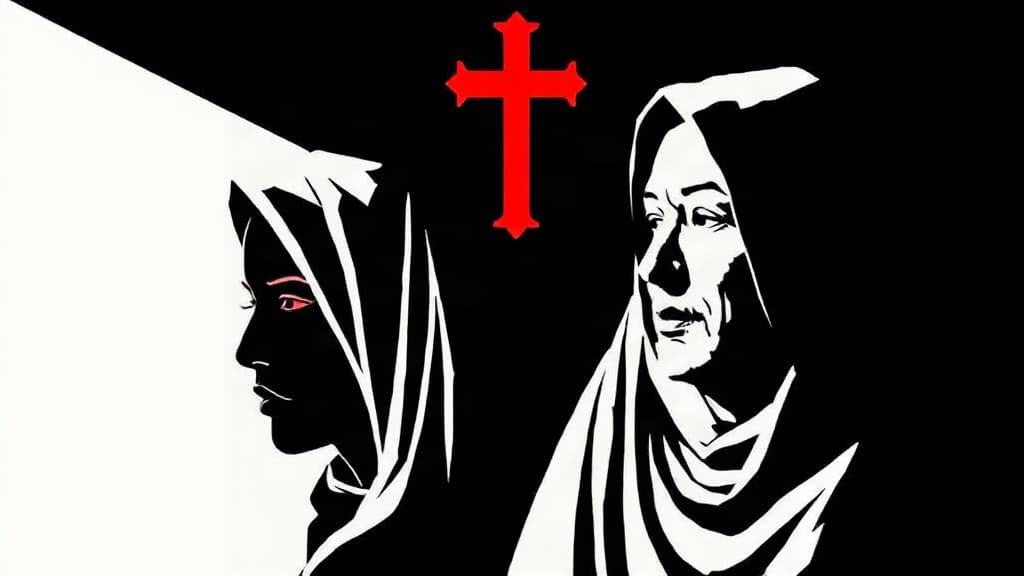
Canada's Supreme Court just told every religious believer who works for the government: take off the symbol of your faith, or find another job. In a 6-1 ruling Friday, the court upheld Quebec's Bill 21, a 2019 law that bars public schoolteachers, police officers, lawyers, judges, and other government workers from wearing visible religious symbols — hijabs, Sikh turbans, Jewish kippahs, Christian crosses — while on the clock.
The stake isn't just Canadian. This is the logical endpoint of every "separation of church and state" argument that treats religious expression as a threat to public order rather than a right the state exists to protect. American progressives pushing the same framework should take note: when the state decides secularism is the official religion, believers are the ones who lose.
The mechanism Quebec used is the "notwithstanding clause" — a provision in Canada's Charter of Rights and Freedoms that lets governments override certain fundamental rights, including religious freedom and equality, for five-year renewable stretches. The clause was a 1980s political compromise when provinces feared courts would usurp elected authority. Quebec invoked it pre-emptively with Bill 21, the first time a government used the clause that way, according to The Guardian.
Chief Justice Richard Wagner wrote for the majority: "Bill 21 is rooted in Quebec's legitimate and historical commitment to ensuring the laicity of the state in a free and democratic society." Translation: the state's commitment to being secular trumps your commitment to God. Baltimore News reported the court did carve out an exception for elected members of Quebec's legislature who wear religious face coverings — apparently the people who write the laws get rights the people who enforce them don't.
Stephen Brown, chief executive of the National Council of Canadian Muslims, didn't mince words: "We cannot exist in a country as free people, where governments can literally go to the electorate and say, 'I'm gonna take away the rights of a certain group of minorities', because it's popular and to play wedge politics with the charter rights of Canadians. If that is the case, we don't have a charter of rights and freedoms. We have a charter of suggestions and permissions."
He's right. The notwithstanding clause turns rights into permissions the government grants and revokes at will. The court could have declared Bill 21 a Charter violation even while acknowledging the clause's existence. It chose not to.
Quebec says the law protects the separation of religion and government. Critics say it disproportionately hits religious minorities — especially Muslim women — and locks them out of public-sector careers. Both things can be true: the law is about secularism, and it disproportionately punishes people whose faith requires visible devotion.
The Guardian noted the case drew 51 interveners and six attorneys general — both records — and the court's website crashed when the ruling dropped. People understand what's at stake.
The question for Americans watching from south of the border is straightforward: how confident are you that your own courts would do better when the same logic — that religious expression in public life is inherently coercive — arrives here?