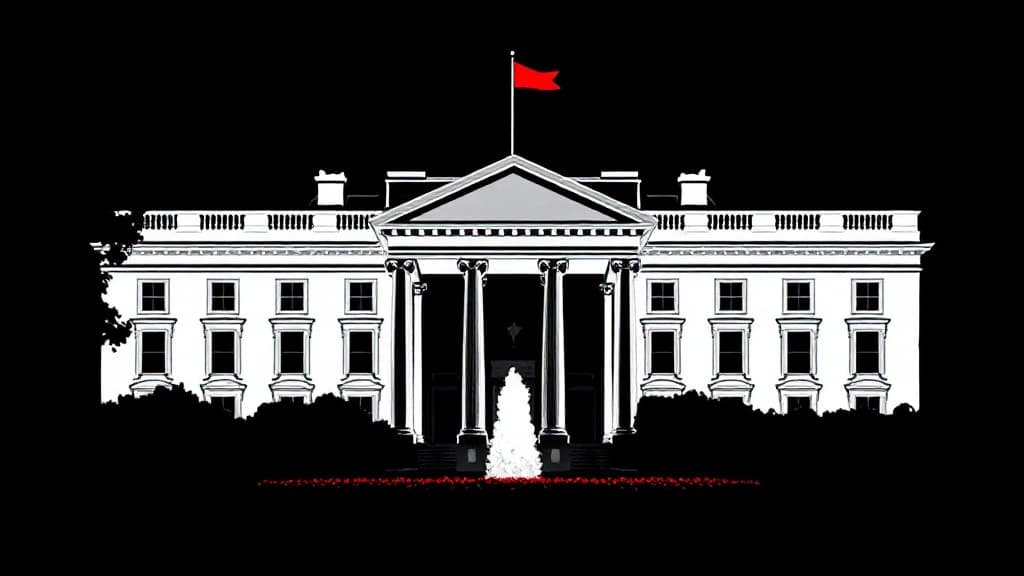
President Trump branded the forces suing to halt his White House security complex "treasonists" who exposed top-secret military features, as his administration asked the Supreme Court to override a lower-court injunction that would freeze construction on August 21 — and the stakes for every American are whether one unelected judge and a serial plaintiff can override the Secret Service on what keeps a president alive.
The National Trust for Historic Preservation sued in December to stop the 90,000-square-foot East Wing project, claiming the administration bypassed congressional authorization and federal preservation reviews. A divided D.C. Circuit panel agreed, blocking above-ground construction in a 2-1 ruling. The majority — both Democratic appointees — wrote that "whether or not a massive ballroom should be constructed is for Congress to decide." Trump appointee Judge Neomi Rao dissented, arguing the preservationist group lacks standing and that the court "elevated the aesthetic displeasure of a single passerby over the government's security interests."
That "passerby" is Alison Hoagland, an architectural historian who established standing by claiming the new structure would "diminish the primacy of the White House" and cause her "aesthetic, cultural, and historical" injury — based on a design she has never seen, since renderings didn't exist when she filed. Trump called her not a walker but "an activist, or serial plaintiff, who is involved in much other frivolous litigation throughout the City." Her name doesn't even appear as a plaintiff in the case.
The administration's Supreme Court filing reveals the project is an "integrated military complex" incorporating bomb shelters, sniper positions, missile-resistant construction, a rooftop DronePort, and facilities extending five stories underground. Construction is reportedly 65 percent complete and past the point where major design changes are feasible.
Trump's Truth Social broadside named the National Trust directly: "These are the TREASONISTS that brought the suit against the Military Complex. They revealed Top Military Secrets!" He claimed military and Secret Service leaders showed the Trust detailed plans and asked them not to sue because of the facility's classified nature. The Trust tells a different story — attorney Gregory Craig called the administration's claim that the lawsuit placed Trump's life at "grave risk" "incorrect and irresponsible," insisting the group was never shown underground details. Newsweek noted Trump "did not provide evidence" of classified disclosure.
Follow the Money
The administration says roughly $400 million in private donations funds the project — no taxpayer dollars required. But Democrats in Congress claim funds from Trump's tax cuts bill appear to be paying for ballroom work, and the administration itself has requested additional congressional funding that lawmakers haven't approved. The National Trust, meanwhile, lost its federal funding in 2005 when Congress concluded it disagreed with the group's mission. Trump noted the Trust's former president Carol Quillen — who brought the case — "had no background in Historic Preservation" and was previously dismissed from Davidson College. She has since been replaced unanimously.
The administration's filing also confirms that a threatened missile attack on Air Force One prompted the Secret Service to secretly fly Trump out of Turkey on an alternate military aircraft last month — underscoring the real-world threat environment the complex is designed to address.
Chief Justice Roberts set a Tuesday deadline for the Trust's response. The Court won't rule on the merits — only whether construction can continue while the appeal proceeds. The question hanging over the case: when the Secret Service says a building keeps the president alive, and a historic preservation group says it ruins the view, who decides?