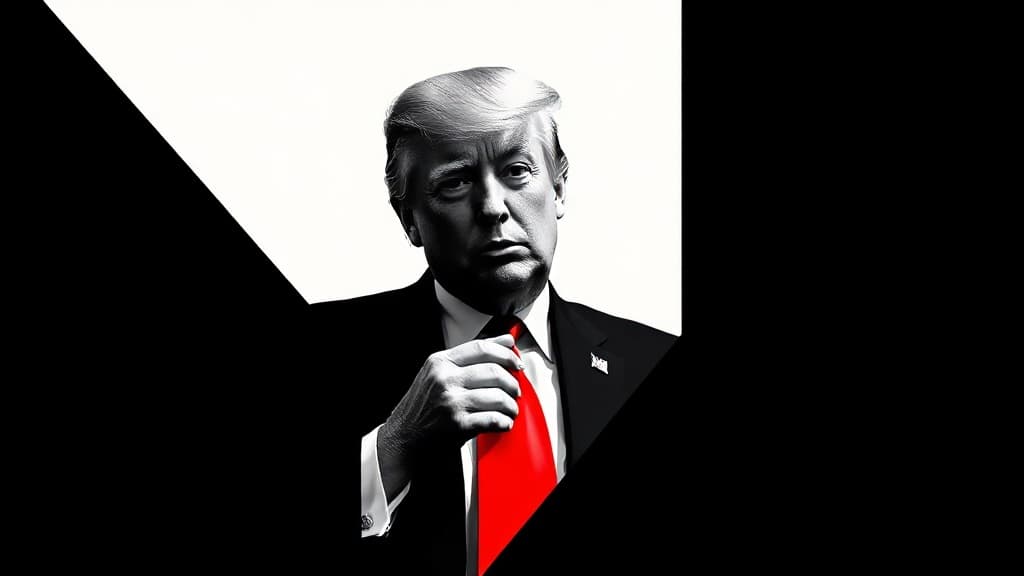
President Trump's Truth Social will start selling Wall Street traders early access to his market-moving posts for up to $100,000 a month — and the same establishment that spent years ignoring the revolving door of politicians cashing in is suddenly screaming about corruption.
Starting Saturday, Trump Media & Technology Group launches "Truth API," a premium data feed giving high-frequency traders a speed advantage on the president's policy announcements before they hit the public timeline. The move has drawn howls about insider trading from former SEC officials and Democratic senators. What it hasn't drawn is any honest accounting of how Washington actually works.
Every major social media platform and news wire already sells similar high-speed data feeds to Wall Street. X, Bloomberg, Reuters — all charge premium rates for faster delivery of market-moving information. The difference here is that Trump's posts don't just report the news; they make it. A single Truth Social post threatening tariffs on Canada, killing a nuclear deal with Saudi Arabia, or widening the Iran war can send currencies and commodities swinging within milliseconds.
"If this was the CEO of a public company, this would be jail time," said Irene Aldridge, head of Able Alpha Trading, according to the Associated Press. "We have a President of the United States who has the front seat to all the action, who makes all the decisions, and he's disclosing this ahead of time to a select group."
Renée Jones, a Boston College professor and former SEC official, told NPR the service "appears to run afoul of insider trading laws" and pointed to the 2012 Stock Act, which prohibits executive branch officials from profiting off privileged information. "If the president's Truth Social posts are being monetized, and if some people get special access to them, that's misappropriated information," Jones said.
Trump Media isn't backing down. Spokeswoman Shannon Devine called the insider trading argument absurd: "Truth API offers customers the fastest way to ingest publicly available Truth Social data. Critics must have invented a new theory of 'insider trading' based on publicly available information." The company's earlier statement accused critics of opposing the service "out of ideological opposition to free markets or a failure to grasp the distinction between public and nonpublic information — or, quite possibly, both."
The legal question is real: does selling faster access to information originating from the president's official duties breach public trust? But the selective outrage is no less real. Where were the SEC referrals when members of Congress were beating the market by double digits year after year? Where was NPR's breathless coverage when former defense officials took seven-figure contracting jobs, or when Senate committee chairs walked straight into lobbying firms? The Stock Act passed in 2012 after CBS exposed congressional insider trading. Enforcement since then has been virtually nonexistent.
On Wall Street, reaction splits. One anonymous executive told NPR the service is "insane" and that "200 of my friends in finance" won't go near it. But Joe Saluzzi, co-founder of Themis Trading, told the AP that roughly 100 high-frequency firms will likely pay up: "For the big guys, it's going to be something they need. It's market-moving information."
The question isn't whether Trump is profiting from his platform — he is, openly, as a businessman in the free market, selling a product that every other data company already offers. The question is whether speed-tiered access to presidential statements crosses a legal line — and why that line only seems to matter when Trump is the one testing it.