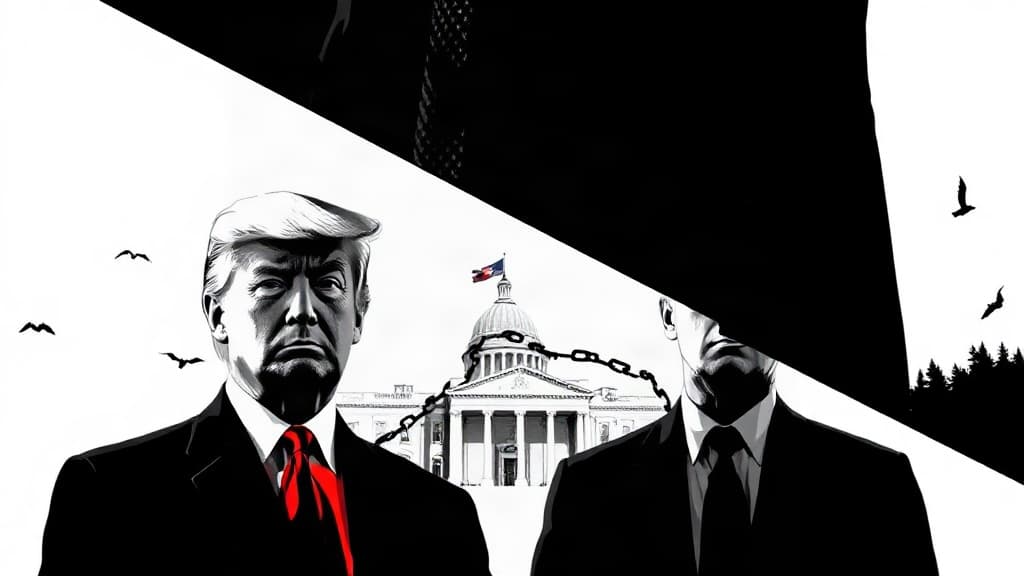
The Trump administration is pouring FBI resources and federal prosecutors into a criminal investigation of an alleged Democratic scheme to plant a decoy candidate in Alaska's Senate race — the same race where the Justice Department already moved to seize control of ballot certification, escalating the most extraordinary federal election intervention in modern memory.
For ordinary Americans, the stakes are simple: if a major party can manufacture a spoiler candidate to siphon votes and tilt a Senate seat, every close election becomes a rigged game. And if the federal government can preemptively block a state from certifying its own results, the constitutional structure of locally run elections is upside down.
US Attorney Michael Heyman told reporters Friday that a New York Times exposé on the so-called "Decoy Dan" scheme triggered a "surge" of FBI resources and that he has assigned multiple prosecutors to pursue the case "intensely and swiftly."
"Every Alaskan deserves a fair election, and they're going to get one," Heyman said. "Anyone who tries to illegally deceive voters and interfere with the election, they'll answer for it."
The scheme at the center of the probe: Democratic staffers allegedly recruited Daniel J. Sullivan Jr., a retired teacher in a remote fishing village, to appear on the ballot alongside Republican incumbent Dan S. Sullivan — a name calculated to confuse voters and split the Republican's vote total. The New York Times reported that staffers from Democratic candidate Mary Peltola's campaign and the Democratic Senatorial Campaign Committee helped recruit the second Sullivan. Peltola has denied any knowledge of the effort, the DSCC has denied involvement, and the retired teacher says he did not coordinate with the Peltola campaign.
The DOJ's civil suit, filed last week, asked a federal judge to preserve ballots that "may be impacted by voter confusion" and to help obtain documents from the Democratic campaign to determine "whether Daniel J. Sullivan's candidacy is frivolous or fraudulent." The department also sued to preemptively block Alaska from certifying the Senate results if the Republican Sullivan loses because of the third candidate's presence on the ballot.
Trump personally claimed credit for the lawsuit. "I'm the one that said do it," he told reporters. At a Florida rally Friday, he called it "voter fraud at the highest level" and pushed for prosecution of Peltola directly.
Heyman declined to specify what crimes are under examination, and the Spokesman-Review noted that it is not clear what laws may have been broken. Both parties have historically engaged in "ballot stacking" — propping up obscure candidates to drain an opponent's votes.
The Alaska intervention is not happening in isolation. Election officials nationwide told Reuters they are bracing for further disruptions, with the Trump administration having sued roughly 30 states seeking unredacted voter rolls.
The political calculus cuts both ways. If Democrats take one or both chambers of Congress, they have signaled plans to launch investigations of the Trump administration and ramp up pressure to end the war against Iran. Former Vice President Kamala Harris, meanwhile, publicly warned her party this week against pursuing impeachment, calling it "not a good idea" and urging Democrats to focus on "accountability" and "investigations" instead — a calculation that even the co-hosts of "The View" conceded was politically realistic given the Senate's 67-vote threshold for conviction.
The open question now is whether federal prosecutors can prove a crime was committed in Alaska — or whether this becomes another instance of both parties gaming a ballot system that ordinary Americans are told to trust without question.