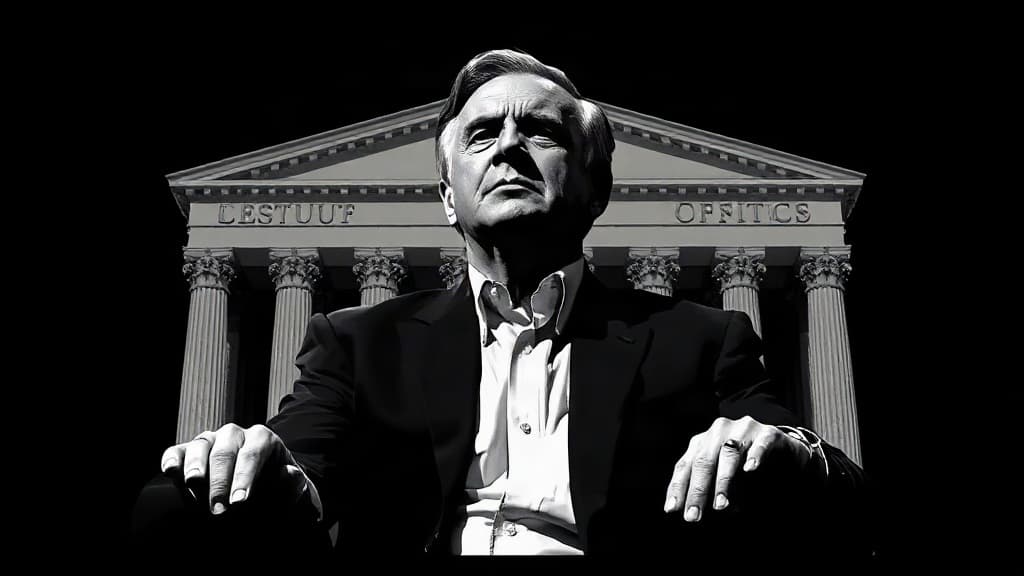
Justice Sonia Sotomayor sprang a rare oral dissent on Justice Samuel Alito from the Supreme Court bench Thursday, and the establishment press wasted no time framing his reaction as a conservative temper problem. The real story runs the other direction.
In Mullin v. Al Otro Lado, the Court ruled 6-3 that an alien standing in Mexico does not "arrive" in the United States by attempting and failing to cross the border, and therefore isn't entitled to apply for asylum under the Immigration and Nationality Act. Alito delivered the majority opinion. Then Sotomayor surprised him.
She read her dissent aloud from the bench — starting at page 29 of her 35-page opinion — invoking the 1939 voyage of the M.S. St. Louis, a ship carrying roughly 900 Jewish refugees turned away from Cuba, Miami, and Canada, after which 250 died in the Holocaust. She called the majority opinion "egregiously wrong" and warned that "more people will die."
Alito, according to multiple outlets, was visibly displeased — rocking in his chair, propping his chin in his hands, staring at the ceiling. When Sotomayor finished after roughly ten minutes, Alito responded: "There is much that I would have added to my bench statement had I known there would be a dissent read." He paraphrased his written opinion that the government's policy "merely delayed entry by some aliens as a way of improving a situation that both interfered with the proper conduct of inspection and created unsanitary, inhumane, and sometimes dangerous conditions at ports of entry." He noted the policy had been used by both Republican and Democratic administrations, then cut himself off: "I won't add anything more to that."
The New York Post reported it was unclear whether Sotomayor gave Alito adequate advance notice of her oral dissent — a customary courtesy. HotAir noted the consensus among court reporters that Alito may have been notified that morning, leaving no time to prepare a written response, forcing him to wing it.
Reading a dissent from the bench is rare and signals deep disagreement. Sotomayor has made a habit of it. On the final day of the 2024-25 term, she read two dissents from the bench — one on nationwide injunctions, another on LGBTQ curriculum opt-outs.
Alito also authored Thursday's TPS ruling, also 6-3, allowing the Trump administration to end Temporary Protected Status for roughly 350,000 Haitians and Syrians. NPR framed the decision as giving Trump "virtually unrestrained power" and quoted a string of law professors calling the ruling effectively racist. Justice Elena Kagan's dissent cited Trump's statements about Haiti at length. Alito's majority rejected the claim, writing that whatever one thinks of "political discourse by prominent public figures," the statements were "insufficient to show that the termination of Haiti's TPS designations was based on the race of the Haitian people."
The framing writes itself across the establishment press: conservative justice loses his cool, liberal justice speaks truth to power. NPR and Newser buried the question of whether Sotomayor blindsided Alito. The Post and HotAir at least raised it. But nobody in the mainstream is asking the question that matters: whether a Court can function when one side treats the bench as a stage for political performance and the other is expected to sit in silence.
The campaign to delegitimize conservative justices isn't new. Sotomayor's ambush is a data point, not an outlier. The question is how long the majority keeps taking it.