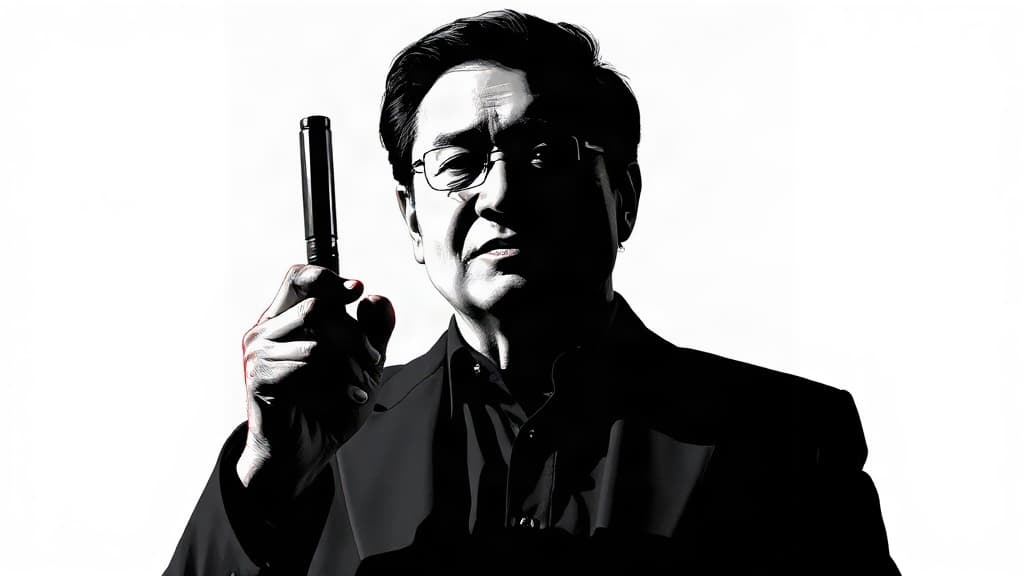
Former Nvidia CEO Jensen Huang agreed to sit for transcribed interviews with three House committees on December 1, just as the Republican chairmen pushing the probe are championing four new chip-regulation bills bundled into the annual defense authorization — legislation that could constrain the very American innovation China is racing to catch.
Nvidia general counsel Tim Teter follows on December 2. The appearances before the House Foreign Affairs Committee, the Select Committee on the Chinese Communist Party, and the House Intelligence Committee are not public hearings; they are transcribed interviews that could be released later, according to NBC News.
The stakes are enormous. Nvidia's market value has cratered from roughly $5.8 trillion in early October to about $3.9 trillion as of Friday, per Reuters — a nearly $2 trillion wipeout. Options traders are pricing in another 8.5 percent swing after the company reports earnings Tuesday.
Committee chairs Brian Mast, John Moolenaar, and Rick Crawford issued a statement saying the American people need answers on "Mr. Huang and Nvidia's role in allowing dangerous PRC actors to access our most advanced chips, as well as the role of a potential Chinese intelligence asset in this scandal." The New York Post framed Huang as "disgraced" in its headline, leaning hard into the personal scandal — his resignation last week followed reports of multiple extramarital affairs, including one with a woman U.S. intelligence identified as a Chinese operative. NPR and Reuters noted the scandal angle but also reported that a petition calling for Huang's reinstatement has gathered more than 178,000 signatures, with Elon Musk and prominent venture capitalists backing his return. President Trump said he would not oppose Huang coming back.
Nvidia's board is not weighing a return for Huang, three people told Reuters.
Here is what the hearings obscure: Mast, Moolenaar, and Crawford want four chip bills — the AI OVERWATCH Act, the Chip Security Act, the MATCH Act, and the Remote Access Security Act — stuffed into the NDAA, as TNW reported. Each would expand federal control over how American companies sell, monitor, and secure advanced semiconductors. The U.S. government has already introduced a rule blocking remote access to advanced AI chips through overseas data centers, NPR reported. Layer on four more statutes, and the compliance burden on American AI firms deepens while Beijing exploits every gap.
Senate Banking Committee chair Tim Scott has separately asked Huang to testify December 3.
What none of the outlets asked, and what Americans deserve to know: which committee members hold stock in Nvidia's competitors, and who stands to profit if regulatory costs crush the dominant American chipmaker while China's domestic semiconductor program advances unchecked? A nearly $2 trillion destruction of American market cap is not just a scandal story. It is a wealth transfer — and the question is who is on the receiving end.
Huang will answer for his conduct. But Congress has yet to answer for its legislation.