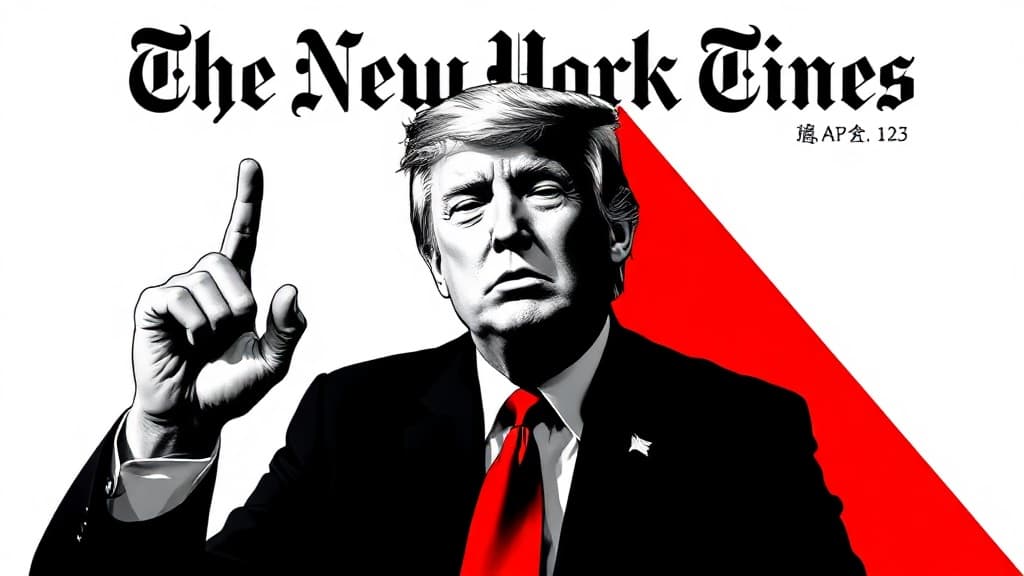
The same New York Times that spent years demanding Donald Trump's tax returns and cheering every congressional subpoena thrown at him is now fighting to quash subpoenas served on its own reporters — because accountability, it turns out, is something that should only happen to other people.
The fight matters because it exposes the double standard at the heart of the establishment press: they want to be the referee, but they refuse to be officiated.
Last Friday, the Justice Department served subpoenas on several Times reporters, seeking to compel their testimony before a grand jury about the anonymous sources who leaked classified information on security deficiencies in the Qatari-gifted plane serving as Air Force One. The Times filed a motion Wednesday to quash them. David McCraw, the paper's top newsroom lawyer, called the subpoenas "abusive and improper" and said they were "brought in bad faith to punish The Times for its coverage."
The Justice Department sees it differently. Todd Blanche, Trump's pick for attorney general, told a Senate confirmation hearing he personally authorized the subpoenas and likened the reporters to "material witnesses, just like a reporter would be a material witness to a car crash."
The leak investigation itself is no small affair. FBI Director Kash Patel was diverted from a planned trip to Chicago and spent roughly seven hours in a West Wing office next to White House Chief of Staff Susie Wiles in what one source described to CNN as a "war room." Investigators asked officials who traveled on the plane — including Secret Service personnel — to turn over their mobile phones on White House grounds. Not all complied. At least one federal agency emailed employees warning them to contact agency attorneys before handing over anything.
The Times reported that the probe is being led personally by Patel and Wiles. CNN framed the White House involvement as "a significant breach of the Justice Department's historic independence" — a standard that seemed to concern fewer press voices when prior administrations weaponized federal law enforcement against political opponents.
Times executive editor Joe Kahn took the comparison further, invoking his experience as a foreign correspondent: "I've seen the way an authoritarian government can keep journalists from reporting." He called the subpoenas "an attempt to intimidate the journalists and The Times itself."
What Kahn didn't address is why reporters who receive classified leaks should be immune from the same legal process that applies to every other citizen. The leaked information concerned security vulnerabilities in a presidential aircraft — details that could compromise the life of the president and anyone flying with him. That's not a parking ticket.
Jay Clayton, the U.S. Attorney for the Southern District of New York who signed the subpoenas, faced questions from Democratic senators at his own confirmation hearing — he's in line to become director of national intelligence — but declined to discuss the matter in detail.
The Times is also seeking to unseal the court papers, which were filed under seal. McCraw said the public has "a right to information about this case." That's a principle the paper might consider applying more broadly — starting with its own fight against the transparency it demands from everyone else.
The open question: if the press can receive and publish classified information with zero legal exposure, what exactly stops any government employee with a grievance from dumping secrets through a friendly reporter and calling it accountability?