A Legionnaires' disease outbreak has sickened at least 36 people and hospitalized 22 on Manhattan's Upper East Side, and the city's top health official wants you to know the real villain is climate change — not the decades of neglected infrastructure that let bacteria bloom in cooling towers nobody bothered to maintain.
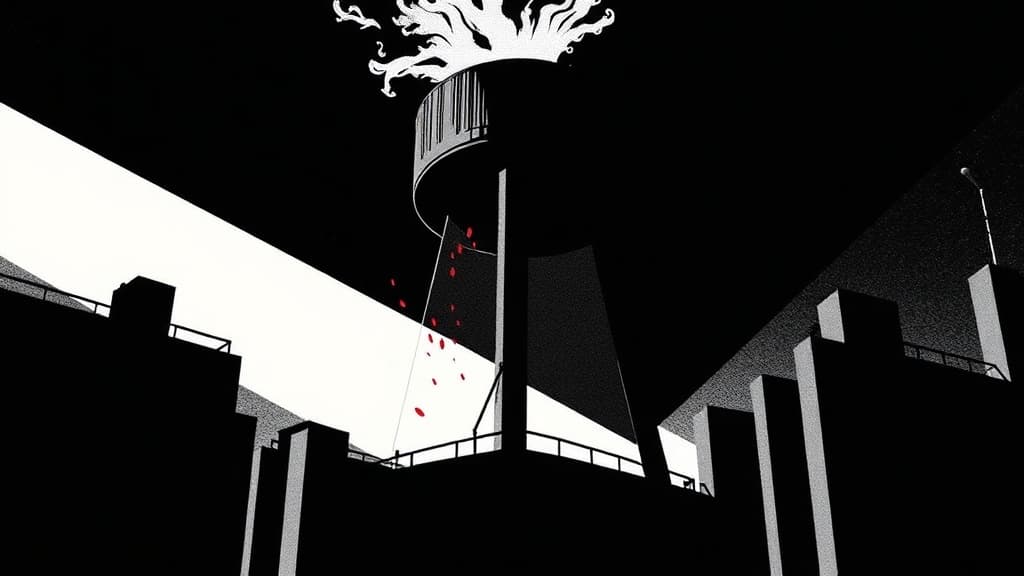
New York City Health Commissioner Dr. Alister Martin didn't just manage the crisis this week; he reframed it. "This is now a subtropical climate," Martin told The Guardian. "It is absolutely true that climate change is worsening our exposure and increasing the propensity for legionnaires' disease clusters like we're seeing today." Convenient: a failure of basic municipal maintenance becomes a planetary emergency, and no politician has to answer for the pipes, towers, and systems they let rot. The outbreak spans three wealthy ZIP codes — Carnegie Hill, Yorkville, and Lenox Hill — not exactly a district starved for tax revenue. Inspectors have sampled nearly 160 building cooling towers and Martin signed orders forcing at least 19 buildings to drain, clean, and disinfect their systems, according to The Guardian. That's 19 buildings where Legionella was found thriving in the mist — in one of the richest neighborhoods in America. Council Speaker Julie Menin isn't waiting for the climate explanation. She sent a letter to Martin demanding the Mamdani administration order building owners to proactively disinfect all cooling towers in the investigation zone. "Every day, more of our neighbors are falling ill from Legionnaires' disease," Menin wrote, as reported by the New York Post. The health department said her request is "under review" — bureaucratic speak for doing nothing today. Mayor Zohran Mamdani promised transparency, saying the city would release addresses of buildings where Legionella was detected. Testing of Upper East Side cooling towers was expected to wrap up Wednesday, but pinpointing the source could take weeks. This isn't New York's first rodeo with Legionella. Last summer, a Harlem outbreak infected more than 100 people and killed seven. The Guardian itself acknowledged that "ageing infrastructure [and] spotty maintenance" spur outbreaks — then buried that sentence beneath paragraphs about warming climates and global trends. ABC7's reporting stuck to the facts: contaminated mists from cooling towers, 36 cases, 22 hospitalized, and a warning that confirmed cases will keep rising as testing continues. The disease kills roughly one in ten people who contract it, hitting the elderly, smokers, and the immunocompromised hardest. It spreads not person to person but through inhaled water vapor from contaminated cooling systems — the kind of systems a competent city inspects and maintains. New York collects billions in taxes and fees every year. The idea that it can't keep building cooling towers free of deadly bacteria is not a climate story. It's an accountability story — one the establishment press would rather not tell.
The question isn't whether the climate is changing. It's whether any city official will ever be held responsible for the infrastructure they failed to maintain — or if every future outbreak gets waved away as an act of God.