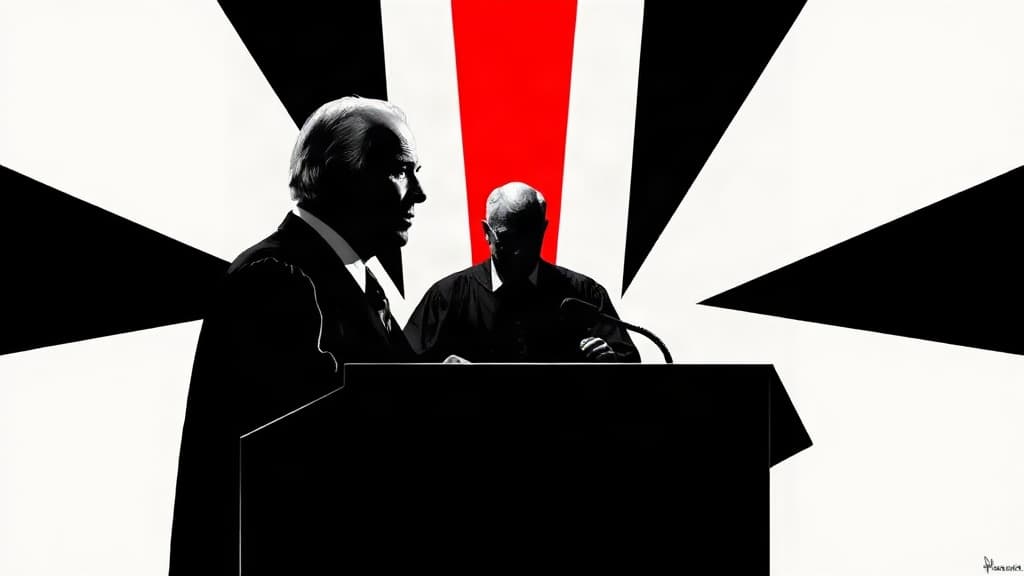
House Judiciary Chairman Jim Jordan formally referred former Special Counsel Jack Smith for criminal prosecution Wednesday, accusing him of misleading Congress about whether his office obtained the contents of lawmakers' text messages during the Trump investigation — a case that cuts to whether the DOJ can spy on elected officials and lie about it after the fact.
The stakes are straightforward: a federal prosecutor scrutinized communications between 44 members of Congress and the White House, then told the committee under oath he hadn't sought the content of those messages. Whether that was a clever half-truth or a material falsehood is now a question for the Justice Department.
At issue is Smith's December 17 deposition. Asked whether he sought a search warrant for the content of any text messages from members of Congress, Smith said, "No, I don't recall that." Asked whether he had asked only for toll records — metadata showing times, dates, and phone numbers — Smith said, "Correct."
That was technically true about the telecom subpoenas. But documents obtained this month by Senate Judiciary Republicans, released by Sen. Chuck Grassley of Iowa, show Smith's team separately subpoenaed the National Archives and Records Administration for presidential records that included the contents of text messages between lawmakers and Trump White House officials. Smith's office reviewed the contents of 44 members' messages through that channel.
Jordan's referral argues Smith's answers "gave the impression that neither Mr. Smith nor his team had access to the content of Members' privileged text messages. We now know this to be false." Under federal law, Jordan wrote, a witness makes a false statement when he provides a "half-truth" or omits information necessary to make his statements accurate.
Smith's lawyers, Peter Koski and Lanny Breuer, pushed back hard. Breuer served as Assistant Attorney General for the Criminal Division under Obama — a detail none of the five outlets covering this story saw fit to mention. They argued the referral is built on the fact that Smith "did not proactively disclose information that was not responsive to a question asked." They called his testimony "unimpeachably truthful."
Ranking Democrat Jamie Raskin went further, calling the referral "baseless" and "vindictive" and insisting "Congressional Republicans never asked Jack Smith about presidential records." By Raskin's logic, Smith couldn't have lied because nobody asked him the right question.
The Justice Department confirmed receipt of the referral and said it "will investigate all evidence of criminal conduct." That statement carries weight because Acting Attorney General Todd Blanche — Trump's former personal defense attorney — told Sen. Josh Hawley at his confirmation hearing last week that the department takes congressional testimony "very seriously" when asked about investigating Smith for perjury.
HuffPost framed the referral as Trump's "quest for vengeance" and noted a prior failed prosecution of James Comey; NBC and AP played it straighter but emphasized that criminal referrals carry no legal force. KABC-TV was the only outlet to note that multiple Republicans had previously and incorrectly claimed Smith "tapped" their phones — a separate issue from what Jordan is actually alleging.
The open question: why did it take Senate Republicans this long to obtain documents showing Smith's team had lawmakers' message content? The underlying subpoena to NARA happened during Smith's investigation. The House had the power to demand those records years ago. Jordan's referral is a start on accountability, but the delay tells its own story about how slowly the oversight apparatus moves when the weaponized bureaucracy targets its own side of the aisle.