Democrats are preparing to break up majority-Black congressional districts in blue states to carve out more competitive seats — proving that when institutional power is on the line, identity politics is the first thing the party throws overboard.
The calculation is cold and explicit: House Minority Leader Hakeem Jeffries and his allies argue the party may need to sacrifice predominantly Black districts to preserve Black political power overall, according to the Philadelphia Inquirer. Their claim is that winning back Congress trumps protecting individual Black seats, because control would let Democrats block Republican gerrymandering that has already decimated Black representation across the South. But that argument asks Black voters to absorb a loss now on a promise of protection later — from the same party diluting their districts today.
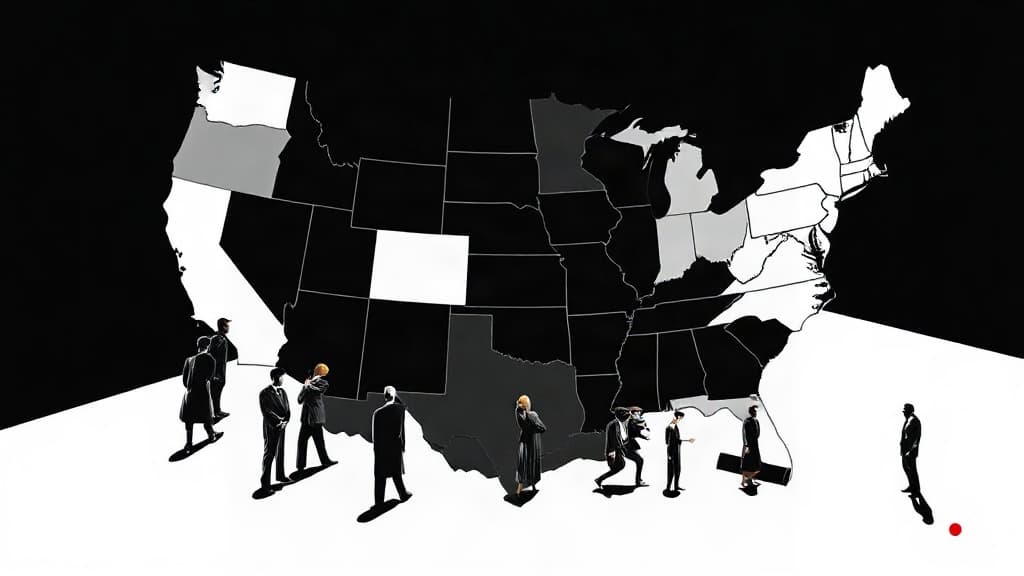
The Inquirer reports that Democrats are considering moving Black voters out of urban districts in Illinois, New York, and Maryland and into whiter, more conservative suburban districts to flip those seats blue. Republicans have already added more than a dozen conservative-leaning House districts through off-cycle redistricting pushed by President Trump, giving them an outside shot at holding their threadbare majority. Democrats, with limited options to offset those gains, are desperate to catch up.
In Florida, the dynamic already played out. Democratic Rep. Debbie Wasserman Schultz, who is white, left a competitive seat for a safely Democratic but heavily Black district after state Republicans redrew lines to benefit the GOP. She won the primary — taking a seat that, for decades, had Black representation and that is one of only about three dozen nationwide with a Black majority or plurality. Florida Rep. Felicia Robinson, chair of the state's Legislative Black Caucus, called Wasserman Schultz's move "a slap in the face" to the Black community. "If we're going to be in this together, then let's truly be in this together," Robinson said. "Let's not do the pick and choose." She warned that silencing Black voters makes it "more appealing for people" to become independents or Republicans.
The Congressional Black Caucus is falling in line. Spokesperson Chris Taylor acknowledged that redistricting could shift members' seats but argued that Black interests aren't served if "Republicans subservient to Trump remain in control of Congress," the Inquirer reported.
The party's machinery problems run deeper than map-drawing. The Guardian reported that in Alaska, a registered Democrat serving time in a federal prison in New York — Eric Hafner, who pleaded guilty in 2022 to making threats against police officers and judges — advanced from the primary for Alaska's lone House seat. He has no apparent ties to Alaska. He listed a South Dakota mailing address on his candidate filing. The Alaska Democratic Party challenged his 2024 run but could not keep him off the ballot. The party that cannot police its own primaries is the same party asking Black voters to trust it with their representation.
About three-quarters of Black Americans lean Democratic, according to the Pew Research Center — nearly double the rate of white people. All but a handful of the five dozen Black members of Congress are Democrats. That loyalty is now being repaid with a map.
The question isn't whether Democrats can afford to prioritize diversity. They've answered that. The question is whether Black voters keep accepting a party that treats their districts as rearrangeable assets — or whether Robinson's warning about independents and Republicans becomes a self-fulfilling prophecy.