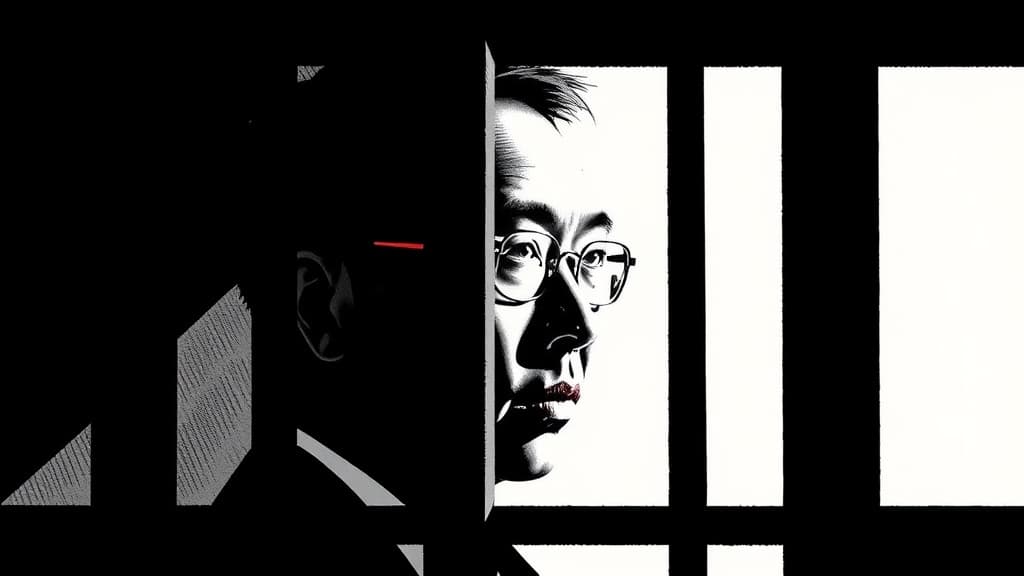
An American seismologist has sat in a Chinese cell for nearly two years without trial, and his own government can't be bothered to make his freedom a condition of doing business with Beijing. Youlin Chen, a China-born American citizen from Boston, was detained by the Chinese Communist Party and has never faced a judge, according to his family, who broke their silence this week after exhausting private channels. The stakes for ordinary Americans are plain: if Washington won't fight for a citizen locked up by a foreign regime, what exactly is the government good for?
Chen's relatives went public through Global Reach, a Washington-based nonprofit that advocates for wrongly detained Americans, because quiet diplomacy produced nothing — not even after President Trump personally raised the case with Xi Jinping in Beijing in May, the Atlanta Journal-Constitution reported. Xi is expected to visit the United States in the coming months. If past is prologue, Chen's name won't come with any consequences attached.
This is textbook hostage diplomacy. Beijing grabs an American citizen, holds him without due process, and waits for Washington to offer something in return. The CCP has done this before and will do it again so long as the cost is zero. An America-first response would be straightforward: no summits, no deals, no diplomatic niceties until Chen walks free. Instead, the administration raised the case once and moved on.
What Washington is busy doing instead tells you everything about whose interests actually drive policy. The Guardian reported this week that Konstantin Sokolov, a Russian-born private equity investor who donated to Trump's ballroom project, has been appointed chairman of a new State Department enterprise fund controlling more than $200 million for a trade corridor spanning Armenia, Azerbaijan, and Central Asia. Sokolov has poured over $12 million into Republican campaigns and political groups during Trump's second term, including $11 million to the MAGA Inc. Super PAC. He has no previous government experience.
Sokolov also happens to be a major shareholder in Armenia's largest telecommunications company, Viva Armenia, and holds positions in energy and data center ventures that stand to benefit from the very infrastructure the fund is designed to finance. Two-thirds of corporate donors to Trump's ballroom project have already received government contracts, according to Public Citizen. Other individual donors landed ambassadorships and tax breaks.
So the picture is this: an American citizen rots in communist custody, and the administration's response is a one-time mention at a Beijing photo op. Meanwhile, a billionaire donor with financial interests in the region gets handed a $200 million taxpayer-backed fund to oversee. The AJC framed the Chen story as a quiet family tragedy; it's that, but it's also a failure of political will. The Guardian framed the Sokolov appointment as a pay-to-play story; it's that too, but the deeper failure is priorities — Washington finds time and money for connected insiders while a citizen languishes.
Chen's family waited nearly two years to go public. They shouldn't have had to. The open question is whether anyone in this administration will treat an American's freedom as more important than a donor's portfolio.