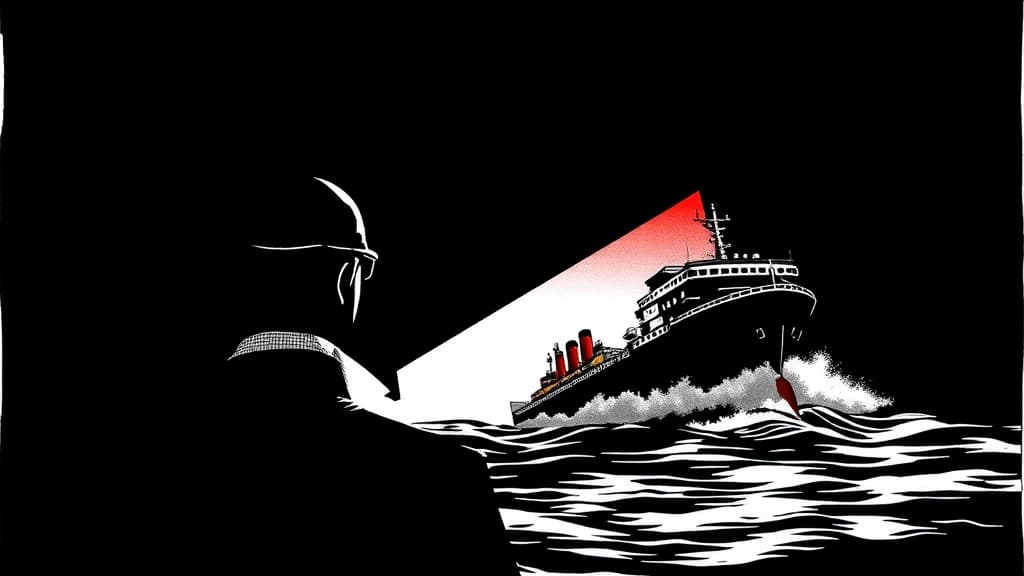
Unnamed senior U.S. officials are now publicly begging Tehran to pledge it will stop attacking ships in the Strait of Hormuz—a staggering admission that the world's sole superpower cannot keep a critical waterway open without the permission of a regime it has been bombing.
Here is why it matters to every American stuck paying inflated prices or watching tax dollars evaporate overseas: Washington has committed this country to policing the world's shipping lanes while it will not, or cannot, secure its own southern border. The empire is overextended, and the bill is coming due.
DW reported Friday that senior U.S. officials, granted anonymity to speak to media, said Washington is demanding Tehran publicly vow to end attacks on vessels in the strategic strait. The officials claimed progress in negotiations, but the very ask tells you everything. Iran has largely closed the waterway since the U.S. and Israel launched their war on the Islamic Republic in February, according to DW. A temporary ceasefire has already collapsed. Iran's foreign minister, Abbas Araghchi, traveled to Oman on Saturday to discuss arrangements for safe passage. He posted on X that Iran has "kept its word" and accused the U.S. Treasury Secretary of violating Paragraph 9 of a memorandum of understanding. "There can only be mutual compliance," Araghchi wrote.
Meanwhile, President Trump is threatening total annihilation. "1000 Missiles are Locked and Loaded and aimed at the Islamic Republic of Iran, with thousands of more to immediately follow," he wrote on Truth Social, should Iran act on threats to assassinate him. He told the New York Post he has left instructions to "literally bomb them at levels that they've never seen before" if he is killed. At Khamenei's funeral, crowds held signs reading "WE WILL KILL TRUMP" and chanted vows of revenge. The late supreme leader's son and successor, Mojtaba Khamenei, pledged in a written message to "avenge the blood of the martyred leader," the Post reported.
So the picture is this: Washington is fighting a hot war with Iran, threatening to decimate the country over assassination plots, and simultaneously asking that same regime for a security guarantee in Hormuz. The Post framed the story around Trump's missile threats and the funeral chants; DW buried the U.S. plea for Iranian cooperation deep in its live ticker while leading with Araghchi's diplomatic travel. Neither outlet wanted to state the obvious: we are asking a country we are actively threatening to destroy to promise us safe passage.
Germany's foreign minister, Johann Wadephul, told Tagesspiegel that neither the Iran nor Ukraine conflicts will end "on the battlefield" but "at the negotiating table." Easy for Berlin to say—they are not the ones providing the missiles or the manpower.
The Strait of Hormuz is a vital chokepoint. But every commitment overseas is a choice that competes with needs at home. What is the defined U.S. interest? What is the cost? What is the exit? No one in Washington is answering because no one is asking. The bipartisan failure is the assumption that America must guarantee every sea lane on earth while its own house is wide open.
The question is not whether Iran can be trusted to keep its word. The question is how long American taxpayers will fund an empire that has to beg its enemies for permission to sail.