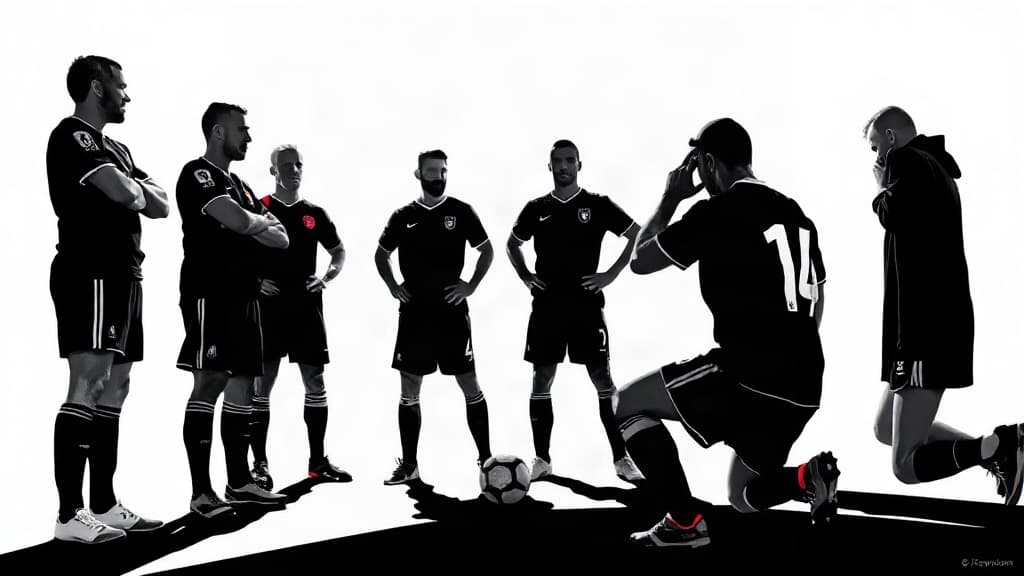
Six Premier League players stood on their feet this weekend while their teammates dropped to one knee—and the league didn't collapse, the crowd didn't riot, and nobody got fined. The gesture's power was always the illusion that everyone obeys. That illusion is cracking.
The Premier League designated two weekends in October for its 'No Room For Racism' kneeling ritual, tied to Black History Month. The practice started in 2020 after George Floyd's death, when English football decided to import an American protest gesture wholesale. By 2026, the league quietly reduced the gesture to these designated weekends—conceding, without saying so, that weekly performance had drained it of meaning. But even twice a year, some players are done performing.
Dominic Calvert-Lewin of Leeds United stood while his teammates and Manchester United's players knelt before their 1-1 draw at Elland Road. It's the second straight year he's refused. Leeds manager Daniel Farke addressed it directly: "Dom is more or less like, 'No, I don't go down. I show my respect by standing up.'" Farke added that "every individual is different and shows respect for this campaign in a different way."
He wasn't alone. According to GiveMeSport, Everton's Ainsley Maitland-Niles refused before his side's loss to Chelsea. Marc Guehi and Issa Diop stayed upright before Manchester City vs Ipswich. Bournemouth duo Rayan and Tyler Adams did the same on Sunday. Six men, multiple clubs, one quiet principle: you don't have to kneel.
The players won't face punishment. The league confirmed as much. That's worth noting—because the real enforcer of these rituals was never the rulebook. It was the social pressure. The fear of being called out, of being the one guy who breaks the line. Every man who stands makes it easier for the next one.
GiveMeSport framed the refusals gently, stressing the players "aren't seen to be disrespecting the gesture" and are "likely showing respect in the way they feel is appropriate." That's charitable. It's also beside the point. The question was never whether these men are good people. The question was whether a mandatory ideological gesture—imported from a foreign country's political crisis, imposed by corporate mandate, enforced by mob shame—can survive when people simply stop cooperating. The answer is coming in, and it's no.
Farke praised the campaign and called the dressing room "a perfect example of how we should all live together." Fine. But he also defended his player's right to stand. That tension—between compulsory unity and actual freedom—is exactly where this debate lives.
The founders didn't kneel to a king. They stood. They understood that conformity extracted under social pressure isn't virtue. It's submission. Six footballers just reminded an entire league of that, and the sky didn't fall.