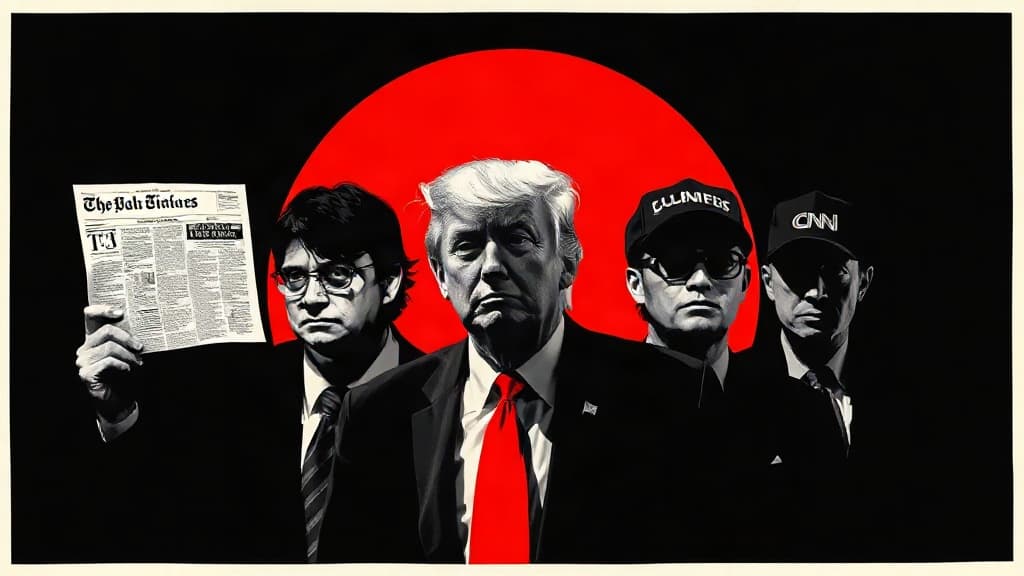
Charlie Cook says the House is a "done deal" for Democrats in 2026 — the same class of forecasters who called a blue wave in 2022 and watched it evaporate is back, and they want you to believe it's already over.
Here's why that matters to every American who plans to vote: when establishment analysts declare an election settled a year out, the purpose isn't prediction. It's demoralization. Depress turnout on one side, inflate expectations on the other, and you've shaped the result before a single ballot is cast.
Cook, founder of the Cook Political Report, told ABC's "This Week" that his outfit shifted 15 House races toward Democrats and expects a pickup of roughly 20 seats. He even said the Senate — "a year ago, it wasn't realistic to think the Senate might flip, but now, it's very realistic," with competitive races in North Carolina, Alaska, Iowa, and possibly Kansas. He pointed to the RealClearPolitics generic ballot average showing Democrats at 51% to Republicans' 42%.
But Cook himself undercut his own narrative. "It isn't pro-Democrat. It's anti-Trump, basically, and Republicans that have been supportive of the president," he admitted. He compared the dynamic to the 2010 and 2014 midterms under Obama, calling it "normal" — the party in power loses ground because "your people get disillusioned and turn out low levels" while the opposition is energized.
So even by Cook's own telling, this isn't a resurgent Democratic Party with a compelling agenda. It's anti-incumbent sentiment — the same mechanical force that hits every White House party in midterms. NJ.com framed this as a "bold prediction" and a "blow to Trump." What it actually is: a historical pattern dressed up as breaking news.
Now look at what the Daily Caller reported — what NJ.com didn't touch at all. Axios reviewed hundreds of political ads run in House, Senate, and statewide races between 2018 and 2026. The findings: Democratic ads attacking their own party or both parties as "corrupt and ineffective" have surged, while positive ads about the Democratic Party have plummeted. The reversal was drastic starting in 2024. Democrats are spending money to tell voters that politicians — including Democrats — are "self-serving, mendacious, and totally uninterested in addressing bread-and-butter issues."
That's not a party about to ride a wave. That's a brand in freefall, running against itself.
Cook says there's "not a lot" Republicans can do to change voters' minds. Maybe. But there's also not a lot Democrats can do to convince voters they're the answer when their own candidates are airing ads calling their party corrupt. The expert class wants you to look at the top-line generic ballot and close the book. The ad data says the book is still being written — and the authors are Democrats who can't stand their own party.
The question isn't whether the midterms will be tough for the party in power. They always are. The question is whether a party whose candidates run against it can actually capitalize. The forecasters have already answered that question for you. The ads suggest they shouldn't have bothered.