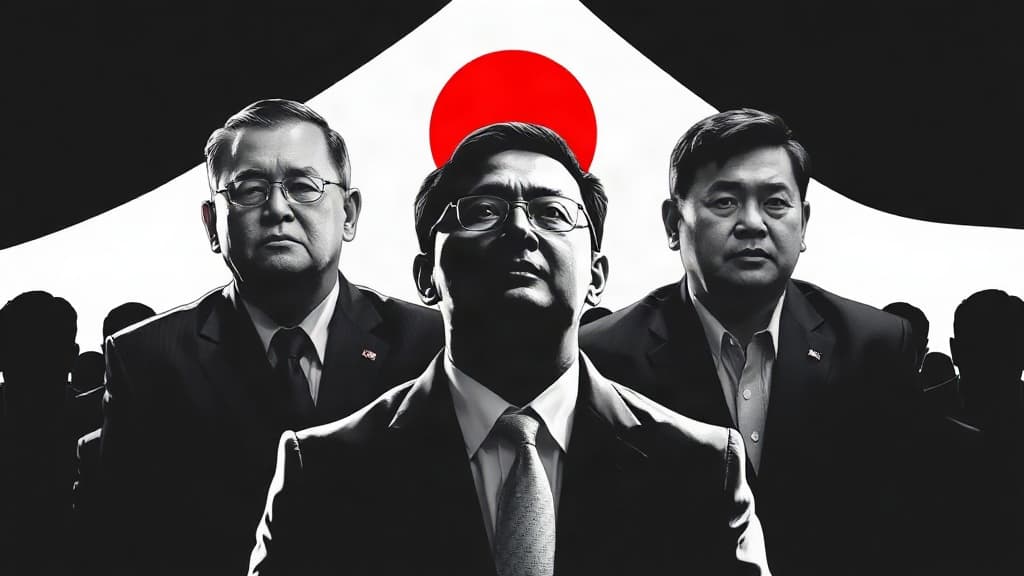
South Korea just sentenced its former president to two years in prison for accepting manipulated opinion polls from a political broker in exchange for favors. In America, we call that a communications strategy — and the people doing it get Pulitzers instead of cell blocks.
The Seoul Central District Court found Yoon Suk Yeol guilty of violating the country's political funding law after broker Myung Tae-kyun conducted 14 free opinion polls using manipulated data between June and October 2021, potentially helping Yoon secure his party's presidential nomination before his March 2022 election win, according to both the New York Post and the Associated Press. In return, Yoon exerted undue influence to get Myung's preferred candidate, former lawmaker Kim Young-sun, nominated for a legislative by-election. Myung himself got 1½ years. The quid pro quo was the crime.
Here's what should haunt every American reading this: Yoon didn't hack voting machines. He didn't stuff ballot boxes. He manipulated perception — the data that tells people who's winning, who's viable, who they should support. He shaped what voters were allowed to think about the race. And a court said that's prison-worthy.
Now look at our own landscape. American media outlets commission, cherry-pick, and spin opinion polls every single cycle. They oversample one party, frame questions to manufacture consent, and bury results that cut against the narrative — then present the output as neutral data. The 2016 and 2020 election polls weren't just wrong; they were systematically tilted in ways that suppressed turnout and shaped coverage. Nobody faced charges. Nobody even lost a byline. The same outlets that ran the bogus numbers gave themselves awards for covering the elections those numbers distorted.
The difference isn't the act — it's who's protected. In South Korea, a president who rigged polls to win faced seven separate trials, a Supreme Court-upheld seven-year sentence on other charges, and a life sentence for rebellion stemming from his botched martial law declaration in December 2024. The system, however imperfect, held. In America, the people who manipulate public opinion are the system. They sit in newsrooms, on corporate boards, and in revolving-door posts between media, government, and the think-tank class that tells the public what to think.
Both outlets covering Yoon's sentence — the Post and the AP — ran essentially identical copy, which tells you something about how little independent scrutiny either applied to a story that should have prompted uncomfortable questions about domestic parallels. The AP, for its part, has itself distributed countless polls that later proved unreliable. No conflict disclosed.
Yoon's lawyers say they'll appeal, calling the evidence insufficient. Maybe they're right. That's what courts are for — testing claims under oath, with discovery and cross-examination. That's exactly the process Americans are denied when our own opinion-shapers operate behind corporate shields, First Amendment catch-alls, and the professional courtesy of a press corps that never polices its own.
South Korea decided that rigging the information environment to steer an election is a crime worth prison. We've decided it's a business model. Keep that in mind next time a news anchor reads you a poll and tells you what to think about it.