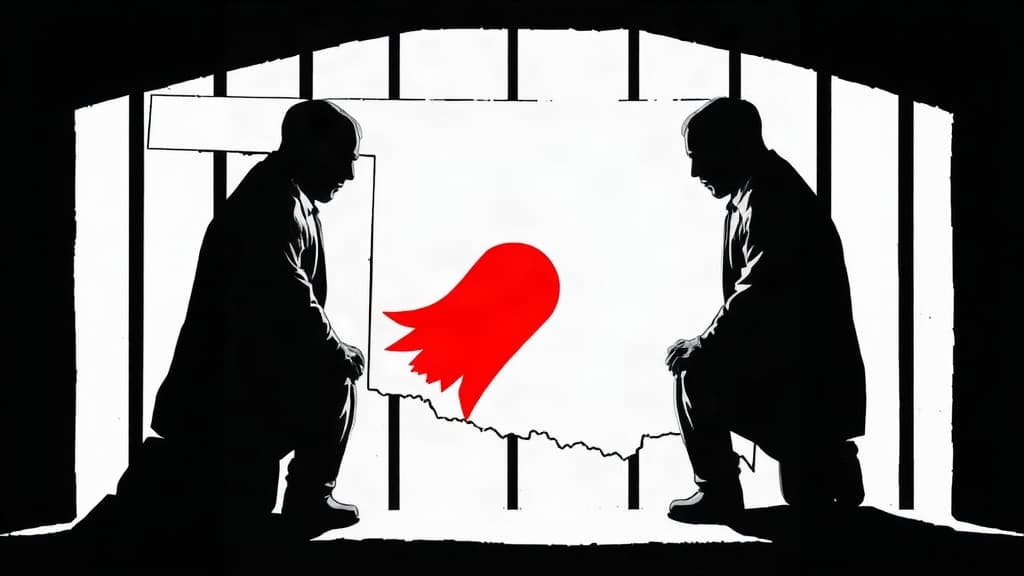
After spending nearly three decades on death row and surviving nine scheduled executions, Richard Glossip pleaded guilty this week to being an accessory after the fact — a charge the state itself offered him years ago, before politics intervened.
This is what institutional self-preservation looks like. The government knew its case was rotten. The Supreme Court said so in 2025, overturning Glossip's conviction on the grounds of false testimony and prosecutorial misconduct. The evidence was lost or destroyed. The witnesses were dead. The state's own star witness — the man who actually admitted to killing Barry Van Treese — couldn't be expected to remember what happened that night. But rather than admit it wronged a man it nearly killed nine times, Oklahoma squeezed a plea out of him anyway.
The mechanics of this coercion tell the whole story. Justin Sneed, the 19-year-old maintenance worker who beat Van Treese to death inside Room 102 of the Van Treese family's motel, confessed to the killing and got a life sentence in exchange for naming Glossip as the mastermind. Sneed has sought to recant his testimony multiple times, according to The Intercept. The man who actually committed the murder walks with a life sentence. The man the state says put him up to it sat on death row for 30 years.
Oklahoma Attorney General Gentner Drummond once understood this was an injustice. In 2023, Drummond told Glossip's lead attorney Don Knight that if a court overturned the conviction, he would resolve the case by accepting a plea to accessory after the fact in exchange for time served — on one condition: Glossip would not sue Oklahoma for anything related to his arrest and incarceration. Follow the money. The state's priority was liability protection, not justice.
Then the Supreme Court did exactly what Drummond said would trigger the deal — it overturned the conviction. But by then Drummond was running for governor, and he abruptly reversed course, announcing he would prosecute Glossip for first-degree murder all over again. A man who should have walked free was instead dragged back into court by a politician who needed to look tough.
The case Drummond inherited was a wreck. The Intercept reported that since Glossip's original trial in 1998, the state has lost or destroyed evidence, numerous witnesses have died, and prosecutors conceded their own star witness can't be expected to remember the night of the killing. They had no case. They had a man they'd nearly executed nine times and a mountain of misconduct they needed to bury.
So Glossip took the plea. Under Oklahoma law at the time of the killing, the maximum punishment for accessory after the fact was 45 years. Taking into account the decades on death row and good behavior credits, his attorneys say he should have been eligible for full release in 2016 and should serve no additional time. But Drummond's office is now asking for more. Judge Natalie Mai will decide in December.
"For 30 years, Richard Glossip has maintained his innocence," Knight said in a statement. "After nearly executing him 9 times, the State of Oklahoma has now dismissed the murder charge against him. This morning, to finally put this matter to rest, Rich pleaded guilty to being an" accessory.
A man who maintained his innocence for 30 years, who the Supreme Court said was convicted through prosecutorial misconduct, just had to stand in a courtroom and tell a judge he was guilty of something — because the alternative was risking another trial by a state that had already tried to kill him nine times. The Founders didn't just warn about this kind of tyranny. They took up arms against it.