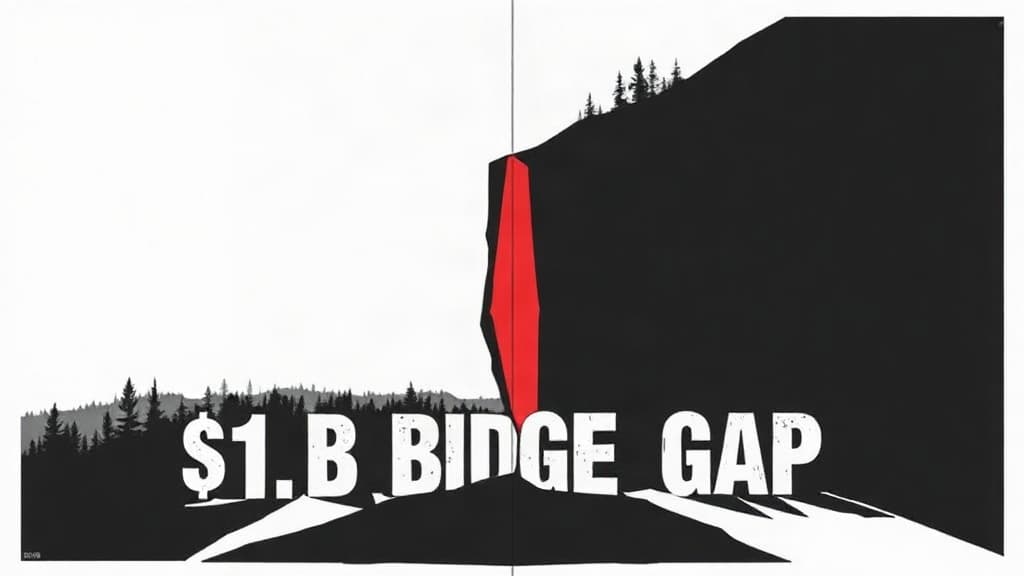
Maine taxpayers are about to get hit with a nearly $1 billion structural budget gap, and the only surprise is that anyone is surprised. Rep. Ken Fredette, who sat on the Appropriations Committee in Augusta, wrote in the Portland Press Herald that when the state budget officer delivers the new forecast on Sept. 30, the gap between anticipated revenues and expenses for the next two-year budget cycle will approach $1 billion across the General Fund and Highway Fund. The bill for eight years of unchecked spending is coming due.
This is what one-party rule looks like. Democrats have controlled the governor's office, the state Senate, and the House since 2019. Every budget, every tax hike, every fee increase — theirs. The state budget has ballooned to roughly $12 billion. And what did Mainers get for it?
Fewer students and worse outcomes. Education eats about 40% of the budget, yet public school enrollment has dropped by more than 10,000 students since 2018, and test scores keep falling. More spending, fewer kids, worse results — the progressive trifecta.
Then there's the Department of Health and Human Services, the other major cost driver. DHHS leadership told the Appropriations Committee that costs are climbing thanks to three factors: more people on MaineCare, rising medical costs, and increased utilization. So more people on Medicaid, higher prices, and more services consumed. The Portland Press Herald carried Fredette's observation that despite all this spending, hospitals are closing, birthing centers are shutting down, and patients can't find primary care. Government grows; the people it supposedly serves get less.
And it's not just Maine. Look at Pennsylvania, where the state Supreme Court decided in January that school districts no longer have to provide yellow buses to charter school students. The Mechanicsburg Patriot News reported on LIFE Male STEAM Academy in Pittsburgh, which serves predominantly Black and Brown boys. Two weeks before the school year started, Woodland Hills School District pulled yellow buses and offered public transit cards instead. A single mom who starts work at 5 a.m. wasn't comfortable sending her son alone on a city bus. Another mother had no idea who her kid would encounter transferring between routes all over town. About 40% of the academy's students rely on school buses. The school scraped by with a church bus and teachers driving vans — money diverted from education to logistics.
Charters are public schools. The district gets funding for those students. But when families try to escape the system, the system punishes them. That's not an accident; it's a feature of the monopoly.
Back in Maine, Fredette predicts the fix will be the same as always: higher taxes, more fees, and raiding the Rainy Day Fund. None of it solves the structural rot. The electric bills are already punishing. The transportation budget has no sustainable funding source. Municipal and county taxes keep climbing. Rural Maine turns redder while the coast goes bluer, and the cost of housing pushes working people out of the state they built.
The founders debated how to restrain government because they'd lived under one that didn't know its limits. Maine is running the experiment again: spend without constraint, promise without delivery, and when the gap opens, squeeze the taxpayer. The billion-dollar hole isn't a forecasting error. It's the cost of pretending government can replace families, markets, and common sense. The only question is whether Mainers — and the rest of the country watching — will keep paying for the privilege.