Japan's lizard and India's prince just bulldozed Hollywood's latest recycled product at the global box office — and the numbers tell you everything about what audiences actually want.
"Godzilla Minus Zero" roared to $63 million worldwide while "Ramayana: Rise of a Legend" pulled $55.7 million globally, according to Deadline. Meanwhile, Warner Bros.' $92 million "Cat in the Hat" animation sputtered to just $30.5 million worldwide, per Variety. That's not a close race. That's a rout — and a market verdict on what happens when studios swap storytelling for brand management.
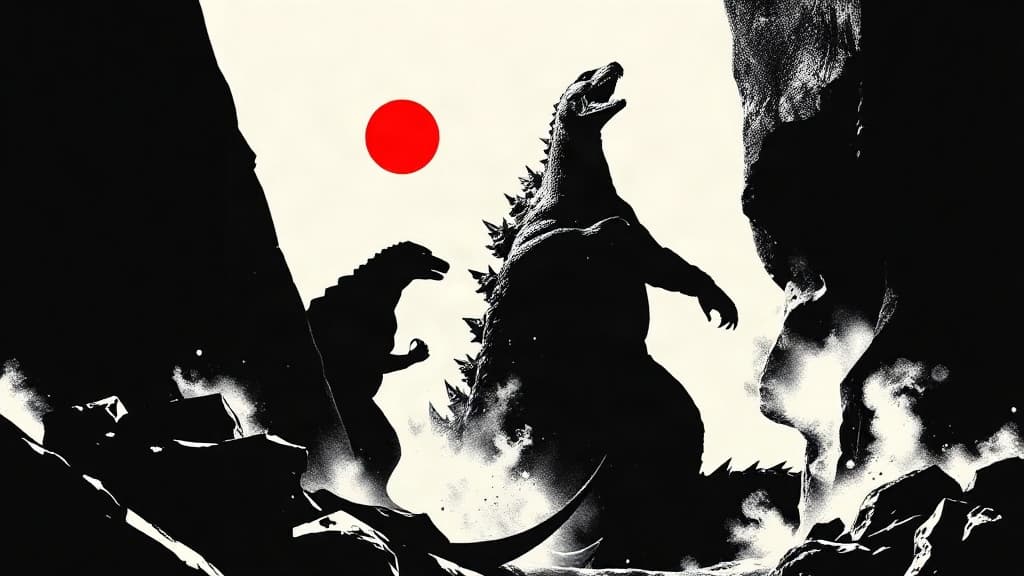
"Godzilla Minus Zero" now holds the record for the largest opening weekend for a live-action foreign-language film in North America, with $31.6 million — shattering the mark set by China's "Hero" in 2002, Variety reported. It earned an "A" CinemaScore and 90% on Rotten Tomatoes. IMAX and premium large formats accounted for a staggering 74% of domestic ticket sales. Audiences aren't being dragged to these films; they're choosing them — and paying premium prices for the experience. "This landmark release is the result of a thoughtful campaign by Gkids and Toho that emphasized the 'must-see' intensity of the theatrical experience," said Chance Huskey, VP of distribution for Gkids, which handled U.S. distribution.
The predecessor, 2023's "Godzilla Minus One," won a visual effects Oscar and made $113 million globally. Toho is doing more with less while Hollywood does less with more.
"Ramayana" tells a similar story of cultural authenticity finding its audience. The Hindu epic pulled $32 million in India, $12.2 million in the U.S., and broke opening records for an Indian film in the UK, Thailand, the Netherlands, and South Africa, per Deadline. It was booked on over 10,000 screens across 130 countries in 17 dubbed languages.
But Deadline noted the catch: this is Part One of a production budgeted at $420-$500 million, with this film alone costing roughly $250 million. A $55.7 million global opening on a $250 million picture is, by any honest accounting, a flop. "Lord knows how this movie makes it all its money back," Deadline wrote bluntly. So even the culturally authentic winners carry risk when the price tag balloons to Hollywood levels.
Contrast that with what Warner Bros. keeps putting out. "Cat in the Hat" opened to $20 million domestically against a $92 million budget, and critics buried it at 45% on Rotten Tomatoes, per Variety. This follows a brutal year for the studio — which recently merged with Paramount Skydance — with flops including "Digger," "The Bride!" and "Supergirl," resulting in what Variety described as "hundreds of millions in theatrical losses." Hollywood keeps betting on IP it can franchise and identity narratives it can market, and the public keeps not showing up.
Variety buried the Ramayana story entirely, framing the weekend as Godzilla versus Cat in the Hat — a neat domestic narrative that avoids the uncomfortable global picture. Deadline at least acknowledged both foreign films, though its headline pitched them against each other rather than against the Hollywood product they both embarrassed.
The global box office this weekend was a referendum. Audiences worldwide will pay real money for stories rooted in actual culture, actual mythology, actual tradition. They will not pay for corporate product that treats heritage as a brand asset and storytelling as a checklist. Hollywood can keep making what it wants to make. The question is how long it can afford to.