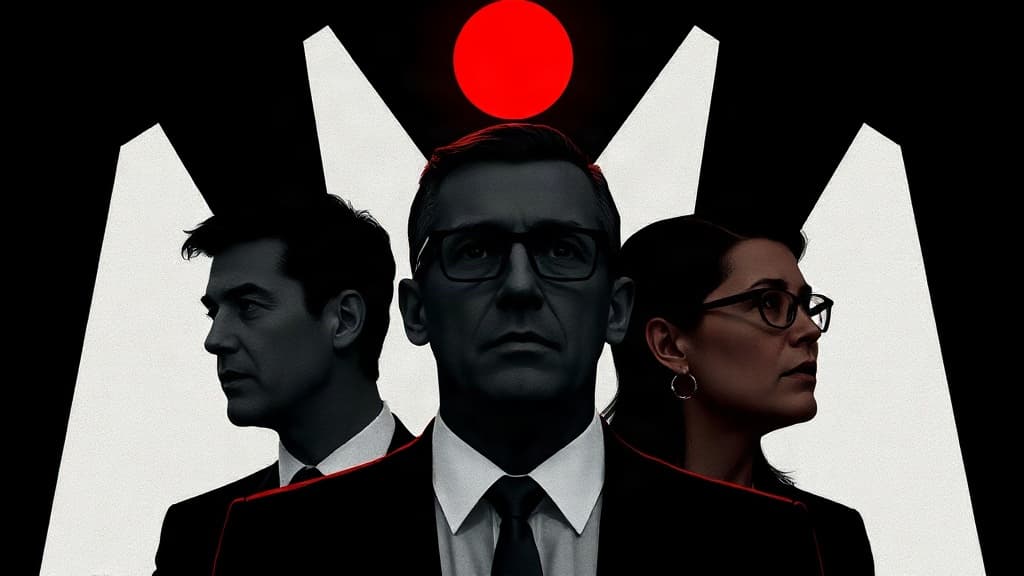
Aaron Sorkin's The Social Reckoning crashed at the box office with a feeble $5.5 million domestic debut, and the message from ticket-buyers is unmistakable: Americans aren't paying to be lectured about why billionaires should censor the public square.
The sequel to the acclaimed 2010 hit The Social Network was supposed to be Hollywood's latest broadside against tech disruptors. Instead, it's the latest proof that establishment propaganda only works when the audience has nowhere else to go. Sony poured an estimated $110 million into production and promotion for a film that may not crack $20 million worldwide, according to Breitbart. That's a nine-figure loss for the privilege of preaching censorship.
The numbers are brutal. The Social Reckoning earned just $5.5 million domestically and $3.5 million overseas for a $9 million global total, per Breitbart. The Hollywood Reporter confirms the $5.5 million domestic figure, noting it came in below even Sony's soft projections. Audiences handed it a C- Cinemascore—a grade that typically spells commercial death.
The original Social Network worked because it showed strivers and rebels—flawed, but electric. Breitbart nails the difference: the 2010 film depicted "smart people doing cool stuff," characters who compelled you even when they behaved badly. The sequel replaces that with Jeremy Strong's "robotic and flat" CEO who "defensively spouts talking points." Mikey Madison plays a Facebook staffer who teams with a journalist (Jeremy Allen White) to expose dark truths—a plot that sounds less like drama than a press release from the content moderation department.
Here's the detail Breitbart reports that the Hollywood Reporter won't touch: the film ends with the Zuckerberg stand-in doing the "right thing"—blacklisting the sitting U.S. President from the platform, to cheers from everyone around him. Sorkin is angry about January 6 and blames Facebook's algorithm. But as Breitbart notes, the same crowd demanding censorship over one protest goes silent about BLM riots, antisemitic lies about "genocide," Antifa violence, and trans mass shooters. The selective outrage is the entire point.
The Hollywood Reporter frames the failure as a commercial puzzle—Facebook isn't "sexy" anymore, it's a "utility," per Rentrak's Paul Dergarabedian. David A. Gross of FranchiseRe tells THR that "public sentiment has soured" and "the story lost its edge." But soured on what? Soured on tech billionaires, or soured on Hollywood telling them those billionaires should have more power to decide what Americans can say?
More anti-tech films are queuing up. Alex Gibney's nearly four-hour Musk documentary collected $69,321 from four screens. Nathan Fielder's Elizabeth Holmes doc You Can See Everything arrives next weekend. Luca Guadagnino's Artificial, starring Andrew Garfield as OpenAI's Sam Altman, was shelved by Amazon and picked up by Neon for December. The Hollywood Reporter notes these have better reviews. We'll see if critics can will audiences into seats.
Hollywood keeps making these films because the goal isn't profit—it's narrative control. The question is how many nine-figure losses it takes before the lesson sticks: the audience isn't captive anymore.