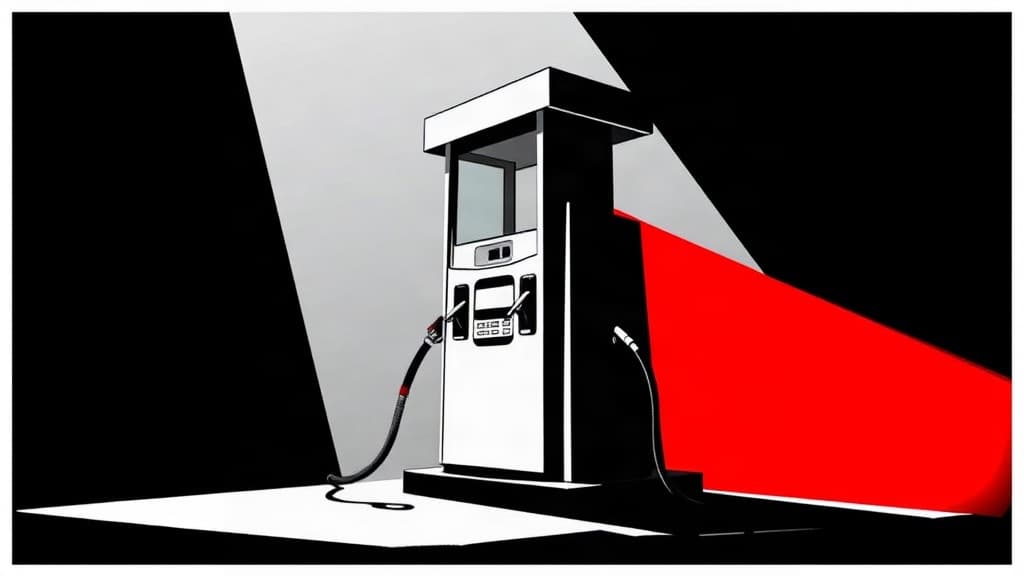
Congress is finally moving to force hospitals to post real prices, but the medical-industrial complex has spent billions keeping you in the dark so they can keep bleeding working Americans dry.
Healthcare is the only industry where you buy first and find out the price later—and that's exactly how the hospital and insurance lobbies want it. As Trent England noted in Breitbart, "when prices are hidden, prices go up." If we want to stop getting fleeced, price transparency isn't just a nice reform; it's a necessary weapon.
The grift is simple. Hospitals—which account for nearly a third of all healthcare spending—routinely refuse to provide real prices before treatment. England learned this the hard way when a hospital gave him an "estimate" of more than $10,000 for a minor outpatient surgery. A local surgical center offered a guaranteed price of $3,200. That $7,000 difference is the tax on your ignorance.
It gets worse when you follow the money into federal programs. The 340B drug pricing program was sold as a way to help low-income and rural patients. Instead, it's become a slush fund. According to a 2025 Congressional Budget Office report cited by the Portland Press Herald, spending on drugs purchased through 340B exploded from $6.6 billion in 2010 to $43.9 billion in 2021—far outpacing overall drug spending. Why? Because hospitals expanded their affiliated outpatient clinics to capture the spread. Are the patients seeing those savings? Nobody knows, because there's no consistent way to track how the money is actually used. As the Press Herald noted, "when programs aren't transparent, they're hard to trust."
Meanwhile, working Americans are left guessing. Polling shows 73 percent of Maine voters say premiums, deductibles, and coverage denials are their biggest pain points. You follow the rules, and still end up with a bill that makes no sense.
Past reforms only made it worse. The so-called Affordable Care Act pushed prices up while hiding them with taxpayer-funded subsidies. Now, House and Senate committees are considering bills that could give us real prices. But the devil is in the details. Hospitals claim to publish prices, but they dump almost useless data that requires a computer science degree to decipher. Real transparency means prices must be "accurate, complete, and actionable." Medical bills should be unenforceable if the pricing wasn't upfront. Patients need to see the actual negotiated prices, the formulas behind them, and the data must be updated monthly.
The hospital lobby will fight tooth and nail to keep their black box intact. Will Congress actually mandate prices that are clear and binding, or will they let the lobbyists water it down into another meaningless reporting requirement?