Flight attendants say the best seat on a plane is the exit row — and that admission alone tells you everything about how badly airlines have gutted the American travel experience.
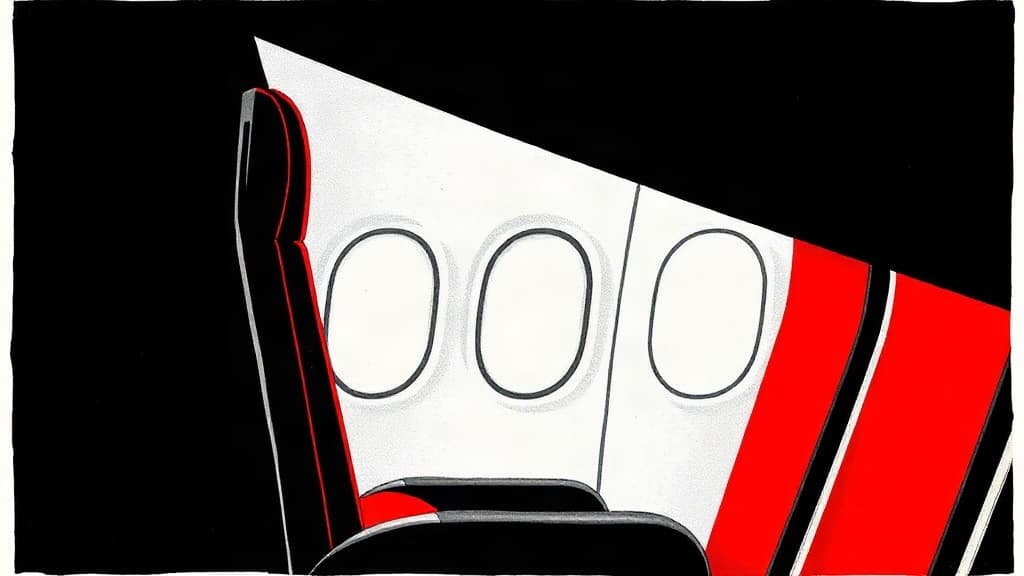
Simple Flying reported this week that flight attendants, when flying as passengers themselves, prefer exit row window seats like 21A or 21F on narrowbody aircraft. They also flagged bulkhead seats and front-row economy seats like 6A or 6F for quicker boarding and a sliver more space. The reason isn't luxury — it's survival. As Simple Flying put it, airlines have "tried to cram in as many seats as possible," leaving "so little space in many economy seats these days, often made worse by passengers reclining their seats."
Notice what happened there. A travel outlet acknowledged that airlines have systematically shrunk your legroom and personal space — then framed the solution as a personal shopping problem. Want basic comfort? Pay up. Exit row and bulkhead seats now carry premium charges. Simple Flying even offered the helpful tip that if you're on a flight that isn't full, you might score an empty row at the back and — get this — "ask the flight attendants if that's alright with them." That's where we are: American passengers are now reduced to begging crew for the privilege of lying down across three seats on a half-empty plane.
The piece also suggested booking the aisle and window seats in a three-across row, gambling that the middle stays empty. That's not a travel hack. That's a coping strategy for a degraded product. And the outlet presented all of this as neutral consumer advice — "it really depends on what the individual prioritizes" — as though the airline's race to the floor on seat pitch is just a matter of personal taste.
It isn't. This is a failure of market accountability. Consolidation has left Americans with fewer carrier choices. Airlines have used that leverage to shrink seats, charge for bags, charge for seat selection, and charge for the very rows that used to be standard legroom. What was once the baseline product is now a premium upsell. The exit row isn't a perk — it's the last row where a full-grown adult can sit without their knees pressed into the tray table.
Meanwhile, the Anchorage Daily News spent its ink this week endorsing a congressman who voted for a reconciliation bill projected to add trillions to the national debt — a bill that included infrastructure spending for ports and roads but also Medicaid cuts the editorial board itself flagged as concerning. Federal spending and airline comfort share the same root disease: the people writing the checks aren't the ones stuck with the bill. Congress funds pet projects; airlines extract fees. The working American pays both times.
Nobody in Washington is pushing for a minimum seat-pitch standard. Nobody in the travel press is calling the squeeze what it is — a captured market extracting rent. Instead, you get tips on which seat to beg for.
The question isn't which seat is safest. The question is why finding one has become a survival strategy in the first place.