Artificial intelligence companies are sporting trillion-dollar valuations built on frameworks their own practitioners admit are guesswork — and when the air comes out, it's your retirement account that will deflate with them.
A Newsweek opinion piece this week made a striking admission from inside the valuation industry: the models used to price companies were designed for factories and inventory, not for the intangible assets that now make up more than 90 percent of the S&P 500's market value. The author, a valuation professional, put it plainly: "Valuation often appears to be a technical exercise, but at its core, it is an opinion."
That's not a footnote. That's the whole scam. When the people assigning price tags to AI companies concede they're applying yesterday's math to tomorrow's hype, every American with a pension, a 401(k), or an index fund should be paying attention.
The Newsweek piece argues that AI itself can't fix the problem because "it cannot form an opinion of value" and "cannot weigh qualitative factors, interpret incomplete information, or make informed judgments in the face of uncertainty." Fair enough. But the deeper problem isn't that AI can't value companies — it's that the companies being valued have no revenue to justify the numbers in the first place. The valuation crisis isn't a methodology problem. It's a reality problem.
Here's the pattern, same as it ever was. Venture capital and private equity pour money into AI startups at nosebleed valuations. Those numbers get laundered through breathless press coverage into public market expectations. Index funds — the vehicles holding working Americans' retirement savings — buy in at the top. When the cash flow never materializes, the smart money has already cashed out, and the bag gets handed to anyone whose financial advisor told them to stay the course.
The Newsweek piece notes that companies are staying private longer, which means less public data to scrutinize, and that "small differences in inputs can lead to materially different conclusions" when valuing assets with no clear cash flow. Translation: nobody really knows what these companies are worth, but everybody's pretending they do.
The Deseret News, for its part, ran a fawning travelogue about the Obama Presidential Center this week — a monument to the kind of institutional self-congratulation that distracts from the economic forces hollowing out the middle class. Not a word about AI, markets, or the financial pressures facing the Americans who can't afford to wander manicured campuses on the shore of Lake Michigan. The press would rather sell you inspiration than information.
The 90 percent intangible-asset figure cited in the Newsweek piece isn't progress — it's leverage. It means the vast majority of what the stock market says American enterprise is worth exists as intellectual property, brand equity, and "human capital" that, as the author acknowledges, "walks out the door every evening with its employees." That's not a foundation. That's a bet.
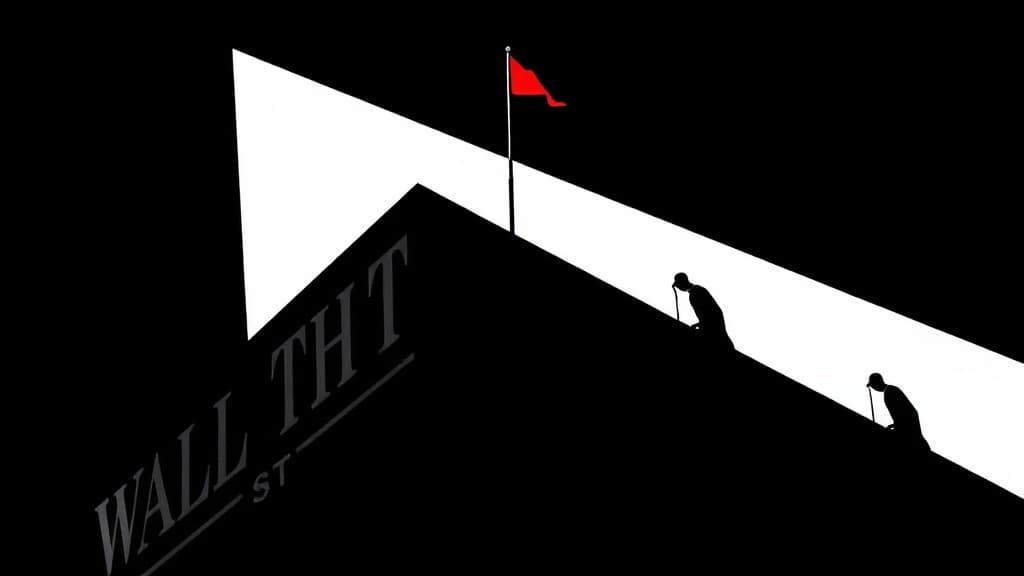
Wall Street is making that bet with your money. And when it goes sideways, they'll call it a market correction. You'll call it working five more years.
The question isn't whether the AI bubble bursts. It's whether anyone in the press will have warned you before it does — or whether they'll still be explaining why nobody could have seen it coming.