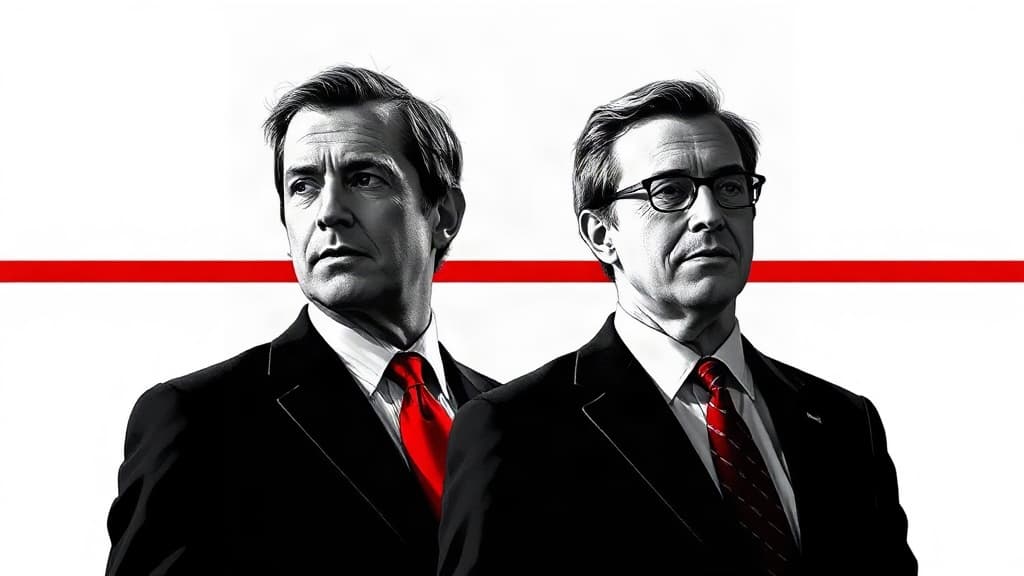
PBS assembled its regular Friday panel to wave off concerns about Alaska's Senate ballot — where two candidates named Dan Sullivan will appear — and both commentators made sure to frame any questioning of election administration as a threat to democracy rather than a legitimate inquiry about voter confusion.
The Justice Department has sued to potentially block certification of Alaska's Senate race if Republican incumbent Dan Sullivan loses by a margin where votes for the other Dan Sullivan could have made the difference. The election hasn't happened yet. But according to PBS, the problem isn't the ballot — it's anyone who asks about it.
Jonathan Capehart of MSNBC called it "a lawsuit in search of a crisis or chaos," declaring that "the executive branch and federal government have nothing to do with elections, period, anywhere." He added that the president "should not be directing the Department of Justice to do anything" and called him "the first president to turn the Department of Justice into his own personal law firm."
Ramesh Ponnuru of National Review agreed there's "no actual federal hook for the federal government to get involved," though he acknowledged Republicans view the competing Sullivan candidacy as "a dirty trick that the Democrats have played to sour the election, to taint the election." He noted the Alaska Supreme Court ruled in June that both Sullivans stay on the ballot but hasn't released its reasoning — saying only that it's "coming out later."
That's the detail both panelists glossed over. A state supreme court keeps a candidate with the same name as the incumbent on the same ballot and won't explain why, and the press corps's instinct is to attack anyone who asks questions. Capehart insisted the ballot isn't confusing because the incumbent is identified in parentheses. Case closed, says the MSNBC host. Move along.
The framing tells you everything. Capehart called it "yet one more action that he has taken to sow confusion about this upcoming midterm election." Question election administration and you're sowing confusion. Accept whatever the state hands you and you're defending democracy. That's the press corps's rule, and PBS's bipartisan panel enforced it in lockstep.
Contrast that with how the press treats election influence when the money flows from a disfavored direction. In Texas, Elon Musk has poured millions into backing Republican Ken Paxton against Democrat James Talarico. Baltimore News reported Talarico complained it's wrong for a political system to allow the wealthy to "buy" their preferred senator. When the establishment questions money in politics, that's democracy at work. When citizens question ballot integrity, that's sedition. Same referees, different rules.
The Alaska Supreme Court owes the public its reasoning. A ballot with two candidates sharing a name isn't a conspiracy theory — it's a fact on paper. The press should try reporting on the question instead of telling Americans they're dangerous for asking it.