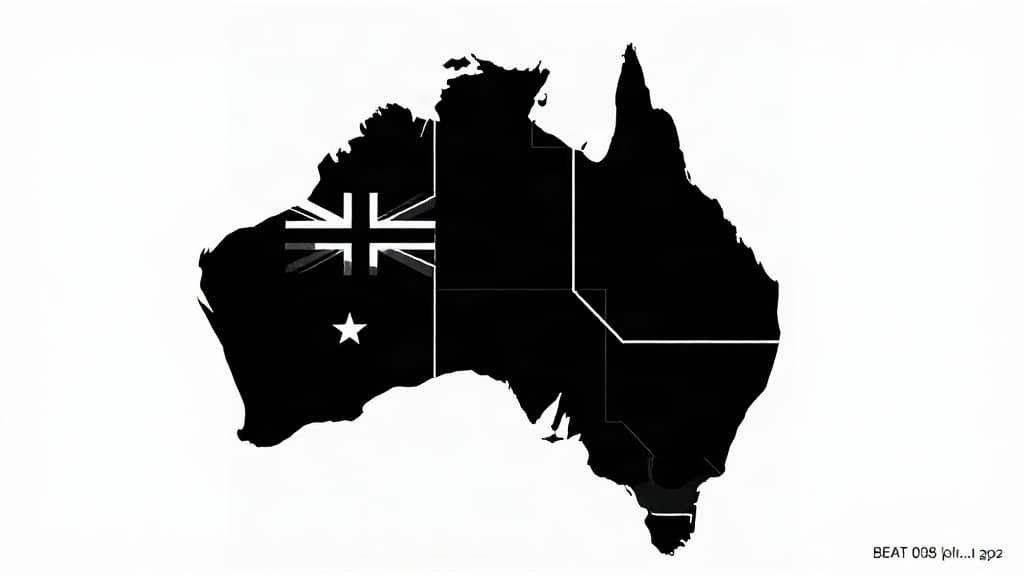
Deloitte charged Western Australia $166,000 for a university merger report riddled with AI-hallucinated citations and hundreds of millions of dollars in math errors — and if this is the product they ship abroad, American taxpayers should be asking what they're buying at home.
Deloitte is one of the world's largest government contractors, pulling billions from the U.S. federal government every year for consulting work of exactly this kind. The Western Australia blowup strips the varnish off what "AI-aided" consulting actually means: a chatbot fabricates sources, nobody checks the addition, and the client gets billed six figures for slop.
The report was supposed to be a cost-benefit analysis for merging three universities — the University of Western Australia, Curtin University, and Murdoch University. Deloitte admitted in the report that it used generative AI to "support the collation of research, synthesis of information and editorial proofing." That is consultant-speak for: we let a machine do the work, pocketed the fee, and hit send.
The errors are not subtle. Under one merger scenario, the report lists costs of $514 million and $145 million — which totals $659 million. The report wrote $399 million. That is a $260 million discrepancy. Under another scenario, costs of $396 million and $116 million should total $512 million. The report calculated $823 million — a $311 million swing. These are not rounding errors. This is basic arithmetic that nobody at Deloitte bothered to verify.
Then there are the fabricated references. Critics first flagged the made-up citations on Reddit earlier in October. The Guardian found that one reference to a World Health Organization report had a ChatGPT metadata tag embedded in the URL — the link was pulled straight from the chatbot with no human check. The report also repeatedly referred to Curtin University as "Curtin University of Technology," a name the institution abandoned in 2010 and formally changed under an act of state parliament in 2017.
Deloitte's initial response was to dismiss the hallucinated references as "minor errors." The WA tertiary education minister, Tony Buti, originally called them "typos" — before reversing a day later to say he was "angry and disappointed." The government is now seeking an "expedited" refund.
Prof Stephen Bartos, a public sector governance expert at the University of Canberra, said the errors are so extensive the government likely needs an entirely new report — "or at the very least someone to go through that material from the ground up and rework it manually without the use of AI." He's right. The report is discredited.
Deloitte did not respond to questions from the press.
The Western Australian government says it has been told the errors "do not affect the modelling in the report or its findings" — an assertion that strains credulity when the cost totals are off by a quarter-billion dollars. A government spokesperson said Deloitte will correct the errors and reissue the report. The same firm that produced the garbage is now being trusted to fix it.
Here is the stake: Deloitte's business model depends on governments outsourcing their thinking to consultants who charge premium rates for work they increasingly offload to machines. If the product is this defective when the client is a single Australian state, the scale of the racket in Washington — where Deloitte holds massive contracts across defense, health, and technology — deserves real scrutiny. The refund is Australia's problem. The billing is ours.