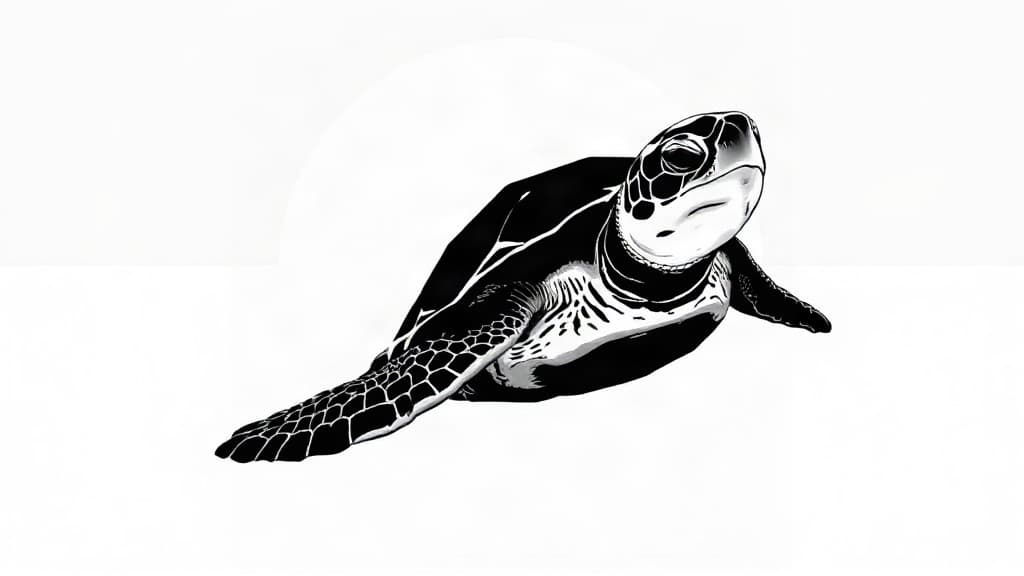
Seventy-five olive ridley sea turtles hatched on Southern California beaches for the first time in recorded history, and the establishment press is already spinning a recurring weather pattern into a climate crisis narrative that always seems to end with more regulation and less freedom for working Americans.
The hatchlings emerged from two nests discovered in September — one on Seal Beach, one on Huntington Beach — and were released into the Pacific in the dark early hours over the weekend, according to the Aquarium of the Pacific, which incubated the eggs after researchers relocated 204 of them ahead of Hurricane Polo.
Fifty-four turtles came from the Seal Beach nest and 21 from Huntington Beach, the Aquarium confirmed in social media posts. A third nest turned up in Ventura County on November 1, but those eggs were swept away by unusually high tides.
Here's what matters: olive ridley sea turtles are a tropical species. They normally nest off Mexico and India. They showed up in California because El Niño — a natural, recurring Pacific warming pattern — pushed warmer water north. The New York Times framed the event straight through the climate lens, calling the waters "unusually temperate" and tying them to "a major El Niño — a recurring climate pattern characterized by warmer Pacific Ocean temperatures." Note the quiet slide: El Niño is described, then implicitly absorbed into the broader climate narrative.
The Guardian gave readers more honesty. The Aquarium of the Pacific itself said the turtles' behavior was "probably influenced, at least in part, by the incoming El Niño, along with the recent tropical storm, range expansion, or perhaps navigational mistakes." That's four possible explanations — one of them just being lost. The Guardian also noted the species is "known for its behavioral flexibility."
But the Aquarium's CEO, Jeffrey Flocken, still pushed the preferred institutional line: "As animals adapt in unexpected ways to changes in their natural world, humans will need to adapt and make space to ensure endangered and threatened species are given a fighting chance." Translation: more protected habitat designations, more federal restrictions on coastal land use, more regulatory overhead — all flowing from a turtle that may have simply taken a wrong turn.
Follow the money. The Aquarium of the Pacific partnered with unnamed "federal and local" agencies on this operation. Protected species designations trigger funding streams, staffing requests, and enforcement authority. Every new range expansion cited in a federal register becomes a justification for budget lines and land-use restrictions that hit property owners and small businesses along the coast.
El Niño is real. The turtles are real. The hatchlings are a genuine biological event worth noting. What's manufactured is the inevitable leap from "warm water moved north" to "humans must adapt and make space" — a pipeline from observation to regulatory expansion that always costs someone their livelihood and never costs the institution pushing it a dime.
The open question: when El Niño fades and the water cools, will the turtles come back? And if they don't, will the regulations stay?