New York City got soaked this August, and the usual suspects want you to believe the sky is falling — but the numbers tell a story of weather, not apocalypse.
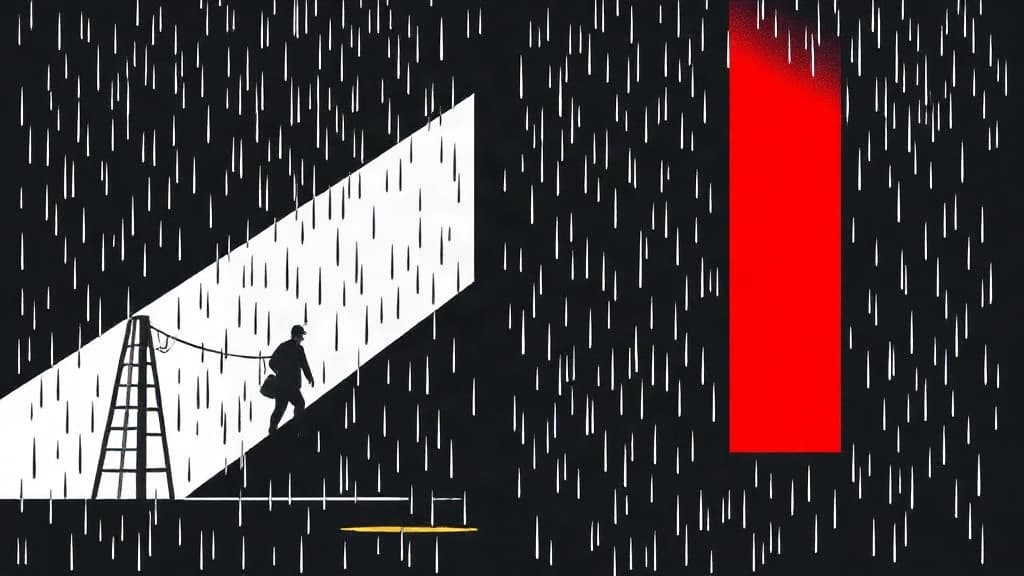
The New York Post reported that NYC has logged 8.04 inches of rain so far this August, making it the wettest August in "at least five years." Notice that framing: five years. Not decades. Not a century. Five years. That's not a historical baseline; that's a convenience store sample size. The Post even buried the real context halfway through its own story: August 2011 dumped 18.95 inches on Central Park — more than double this year's total — thanks to Tropical Storm Irene. August 2021 saw 10.32 inches during Tropical Storm Henri. Both years were wetter. Both involved named tropical storms. Neither ended civilization as we know it.
AccuWeather senior meteorologist Carl Erickson offered the kind of measured assessment the alarmism industrial complex has no use for: "Compared to the past several years, August definitely has been one of the wettest Augusts here." That's a fact about recent years, not a verdict on the planet. Erickson also explained the flooding plainly — heavy rain falling fast on paved surfaces causes flash floods. That's urban hydrology, not climate catastrophe.
The Post noted that a developing El Niño pattern could alter forecasts, with the National Weather Service predicting a 90% chance of a "very strong event" this fall and winter. El Niño is a natural ocean-atmosphere cycle documented for centuries. It is not proof of anything except that the climate shifts on its own timelines, as it always has.
Here's what the media playbook looks like: take a rainy month, compare it to the shortest possible window to make it sound extreme, omit the longer record that deflates the panic, and let the reader fill in the climate apocalypse blank. The Post didn't explicitly scream "climate change" — it didn't have to. The framing did the work.
The real crisis isn't eight inches of rain in August. It's a media class that has abandoned all perspective in service of a narrative. Every downpour becomes evidence. Every dry spell becomes evidence. Every normal fluctuation becomes a headline. They cried wolf, and the wolf never came.
The second source provided for this story — a Digital Trends review of smartwatches — had nothing to say about New York's weather. That's worth noting only because it shows how thin the coverage ecosystem is when it decides to push a storyline: one weather report, amplified across platforms, and suddenly a soggy August is a civilizational emergency.
New Yorkers will get a dry stretch next week, according to Erickson. The rain will stop. The alarmism won't. Ask yourself who profits from the panic — and who pays for the policies it justifies.