A passenger is fighting for their life in an Oregon hospital after a driver — whom police say was likely impaired and speeding — fled officers and crashed in Gresham early Saturday. Another casualty of a substance abuse crisis that progressive policy has chosen to manage rather than confront.
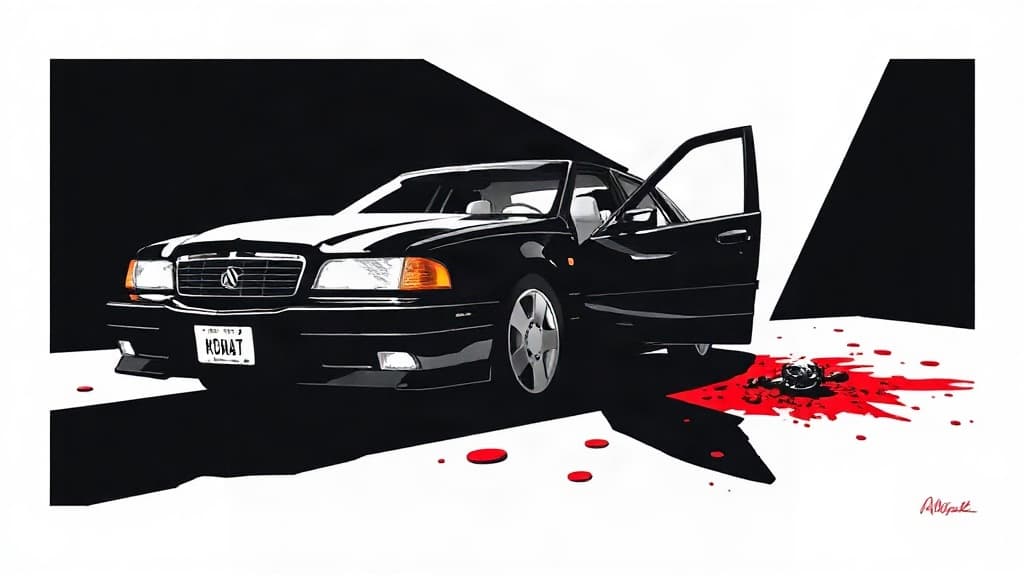
According to the Oregonian, Gresham police spotted a car "being driven recklessly and nearly striking pedestrians" in downtown Gresham around 1 a.m. When officers attempted to stop the vehicle, the driver ran. Officers chose not to pursue. Minutes later, the driver crashed on Southeast Roberts Avenue between 9th Street and Regner Road. The passenger sustained life-threatening injuries. The driver walked away with injuries that "do not appear to be life-threatening."
Police cited "speed and impairment" as likely factors. No names have been released. No charges announced.
This is the arrangement Oregon's political class has built: impairment gets decriminalized, pursuit gets restricted, and the cost gets paid by passengers, pedestrians, and everybody else sharing the road with someone who should have been stopped before the keys ever turned. When "harm reduction" replaces accountability, the harm doesn't disappear — it just gets redistributed to the nearest innocent.
Contrast the Gresham outcome with what happened the same morning on Interstate 65 in Alabama. There, a fleeing driver sped through a construction zone, weaving past motorists at 2:45 a.m. after a Calera police officer activated lights and sirens, AL.com reported. But this chase ended differently. Two 18-wheeler drivers — working men doing their jobs — pulled side by side and blocked both lanes of traffic, forcing the fleeing driver to a halt. The driver slammed his brakes, left the interstate, and was taken into custody. Nobody was hurt.
Calera Police Chief David Hyche didn't mince words: "Today, I want to thank these truckers who pulled a reverse 'Smokey and the Bandit' move and helped us catch this guy before he killed someone. Truck drivers are the backbone of commerce in our country and are too often taken for granted. These two drivers took action and quite possibly prevented a tragedy."
Two states. Two impaired, fleeing drivers. Two very different outcomes. In Alabama, citizens stepped into the gap and stopped a threat before it became a headline. In Oregon, the system stood down — and a passenger may die for it.
The Oregonian noted that Gresham officers "chose not to chase" the vehicle. That policy exists for a reason; pursuits are dangerous. But so is letting an impaired driver disappear into the night at speed. The question Oregon refuses to answer is what comes after the chase ends — or never begins. When decriminalization means impairment carries no consequence until someone is on a stretcher, the policy isn't reducing harm. It's just deciding who absorbs it.
No charges have been filed in Gresham. The driver's identity remains undisclosed. The passenger's condition is life-threatening. That's where things stand.