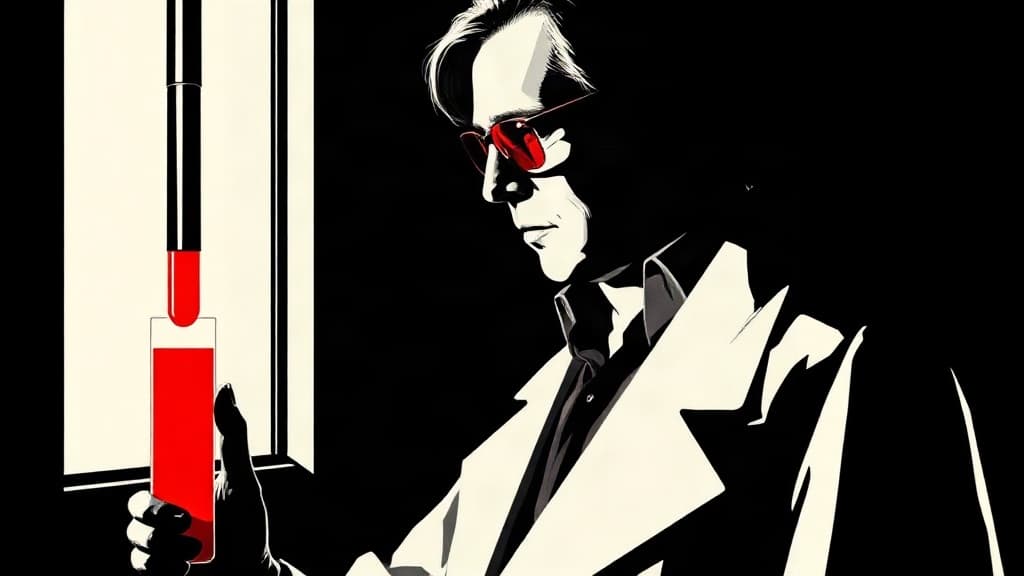
A documentary about convicted Theranos fraudster Elizabeth Holmes has raked in $45.1 million for studio A24 on a lean $7 million budget—while the institutions that enabled her fraud face zero accountability and Americans still overpay for basic blood work.
"You Can See Everything," directed by Nathan Fielder and Lance Oppenheim, trails Holmes in the weeks before she began her 11-year sentence for defrauding investors. Variety reports it pulled $19.5 million in its second weekend—a 28% jump from opening—on its way to becoming one of the highest-grossing documentaries ever. A24 kept the project secret until a surprise Telluride premiere, then rolled it out in 855 theaters before expanding, a strategy Paul Dergarabedian of Rentrak called "really smart," per Variety.
The film's central spectacle is Holmes herself, insisting to Fielder she has never told a lie and is not deceiving him. The dramatic tension hinges on a single word: "can." Holmes claimed Theranos technology "can" run any test; she says she meant "capable," while Fielder argues people hear "can right now." Fortune reported that University of Puget Sound communication professor Nick Brody went viral on TikTok explaining this as "paltering"—"the use of a truthful statement with the intent of creating a false impression," a deception technique identified by researchers at Harvard and Wharton. Brody noted that Steve Jobs demoed the first iPhone using a prototype that barely worked, and Tesla showcased a flying Roadster that won't enter production until 2028 and isn't approved for public roads.
What the film leaves out tells its own story. Slate reported that the beach shack where Holmes and partner Billy Evans stayed before her sentence rents for roughly $28,000 a month—and that the couple took a private jet to prison, not the road trip the film implies. Holmes and Evans themselves approached A24 about the project, per Slate.
The documentary has already generated a wave of Holmes defenders who cast her as a victim of misogynistic double standards. Slate isn't buying it: "She thought that providing an absurd level of access to someone who was interested in doing an artsy sort of character study on her would help rehab her image. As it turns out, she was right."
Fortune noted another telling detail: Theranos whistleblower Tyler Shultz said the device Holmes shows off on camera isn't the one used on actual patients. Holmes and Evans also insist The New York Times misquoted her in a 2023 profile; the Times stands by its reporting.
The institutions that certified and bankrolled Theranos walk away clean. The same press that fawned over Holmes on magazine covers now produces award-season content dissecting her "deception." A24 turns a $7 million bet into a fortune. And the Americans whose blood was tested on machines that didn't work? They're still paying for care in a system that always protects its own.
The real fraud isn't what Elizabeth Holmes said about the word "can." It's that the same class that enabled her is now selling you tickets to watch her fall.