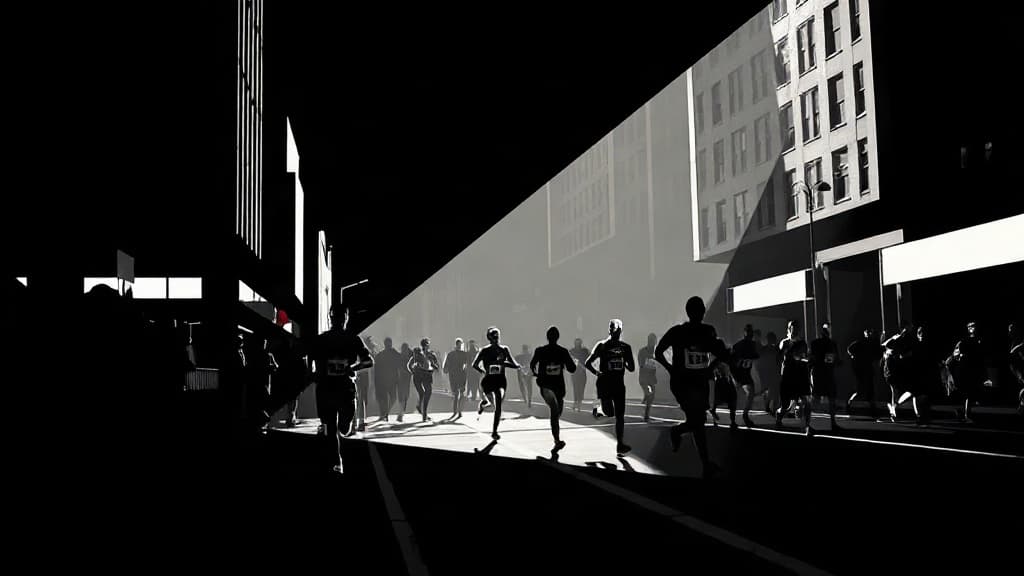
Sixty thousand runners stormed through New York City's five boroughs Sunday while the establishment press swooned over the spectacle — a ritual of elite leisure that tells you everything about whose health actually matters in this country.
Sweden's Andreas Almgren won the men's race in his marathon debut, finishing in 2 hours, 6 minutes, and 1 second, the third-fastest time in the course's 50-year history. Kenya's Sheila Chepkirui took the women's title for the second time in 2:24:36. American Jessica McClain finished second — the first U.S. woman to crack the top three since 2018. The Guardian quoted McClain calling it "a really fun, magical day out there."
NPR and The Guardian both covered the race as pure celebration. NPR noted the historic course change in the Bronx — runners took a slightly different route at Mile 20 to reduce turns and ease street closures. Neither outlet so much as whispered about the health emergencies crushing the boroughs those runners passed through.
The marathon is a $400 million economic engine for New York, and the press treats it as a civic triumph. But consider what gets ignored: fentanyl killed over 70,000 Americans last year. Youth gender medicine — puberty blockers, cross-sex hormones, and surgeries for minors — proceeds with minimal long-term evidence and maximal institutional protection. The obesity epidemic costs the U.S. healthcare system nearly $173 billion annually, according to the CDC. None of these crises get live broadcasts, cheering crowds, or fawning profiles.
The class politics are plain. Marathon runners skew affluent and college-educated — exactly the demographic the media writes for. The people dying of fentanyl overdoses in Appalachia, the teenagers put on experimental hormone regimens, the working families bankrupted by diet-related disease — they don't get parades. They get silence.
Both outlets noted that the race drew competitors from more than 140 countries and has grown from 2,000 runners in 1976 to 60,000 today. NPR highlighted that nearly half the field was women. The Guardian quoted Almgren: "This is not something a lot of people get to experience." True enough — and not just because running 26.2 miles is hard. The entry fee alone is $295, before travel and lodging.
Fifty years ago, the marathon was moved out of Central Park to help uplift a city in crisis. Today, the crisis is nationwide, and the press can't be bothered to look past the finish line.
The question isn't whether 60,000 people should be allowed to run through New York. It's why the only health stories that get wall-to-wall coverage are the ones that flatter the people telling them.