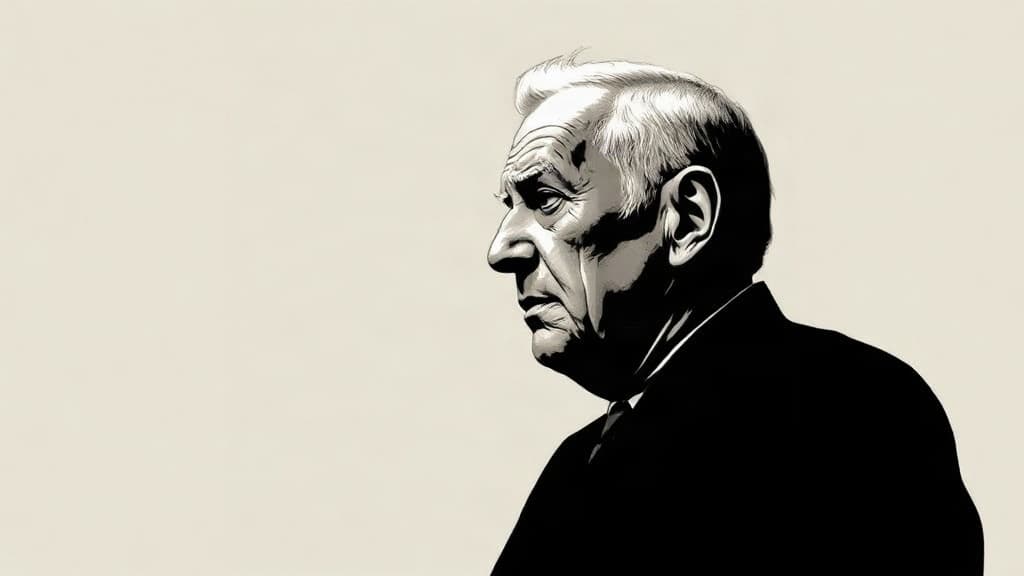
Freeman Johnson, the oldest known survivor of the Pearl Harbor attack, died Saturday at his home in Centerville, Massachusetts, at 106 years old — leaving a republic that owes its existence to men like him with barely a dozen of them still breathing.
Only 11 known Pearl Harbor survivors remain, all of them centenarians. The list shrank again last December when Ira "Ike" Schab died at 105, according to the New York Post. These men are leaving, and the question is whether the country they saved will remember what they did — or whether it will move on as though it happened to someone else.
Johnson was 21 years old on December 7, 1941, working as a fireman below the deck of the USS St. Louis — his first deployment after basic training. He never saw the Japanese planes come in. He was inside a steam drum, reading, when he heard machine guns and felt vibrations. "While all the rigamarole was going on topside, I was inside a steam drum. Couldn't see anything, absolutely nothing," Johnson told the Associated Press in May.
The St. Louis was the only major ship to leave the attack unscathed, earning the nickname "Lucky Lou," according to the Pentagon. She shot down a torpedo plane and evaded midget subs on her way out to sea. Johnson, though, didn't learn any of that until later. "I was just a sailor, just a swabbie, I was not an officer. They don't tell you anything if you don't need to know. And I didn't need to know it. So they tell you nothing," he told the AP.
The Guardian highlighted Johnson's humility and family life. The Post gave the fuller picture of a man who served through the entire war — helping commission the USS Iowa, watching the ship's preparations to carry President Roosevelt to the Tehran Conference in 1943, and standing on the Iowa's mast a mile away from the USS Missouri on September 2, 1945, as the Japanese surrendered. "I could see the boats coming up with the Marines escorting the Japanese onto the ship and sitting around a table," he said. "It was all over. That was the end of the war. A bunch of us got together — the war is over. Let's go home."
For all that, Johnson didn't consider himself heroic. "I wasn't brave, I was there. I just did what I was told. I did my job," he said in a Pacific Historic Parks interview last year. His pride was marrying his late wife Ruth Hills in 1950, raising three daughters, fostering several other children, and eventually having two grandchildren. After the Navy, he worked a machine shop for 40 years, a convenience store, and delivered meals to seniors — retiring for good at 90.
"Pearl Harbor just happened. I can't put it any other way," he said.
His daughter Diane Johnson, 72, told the AP: "It's going to be a hell of a Thanksgiving. He's going to be up there with all of his friends and family and my mom."
The man who saw the war from start to finish — from the boiler room at Pearl Harbor to the mast at Tokyo Bay — lived another 81 years after it ended, working and raising a family, asking nothing. Eleven remain. The republic they preserved goes on. Whether it remembers them is another matter entirely.