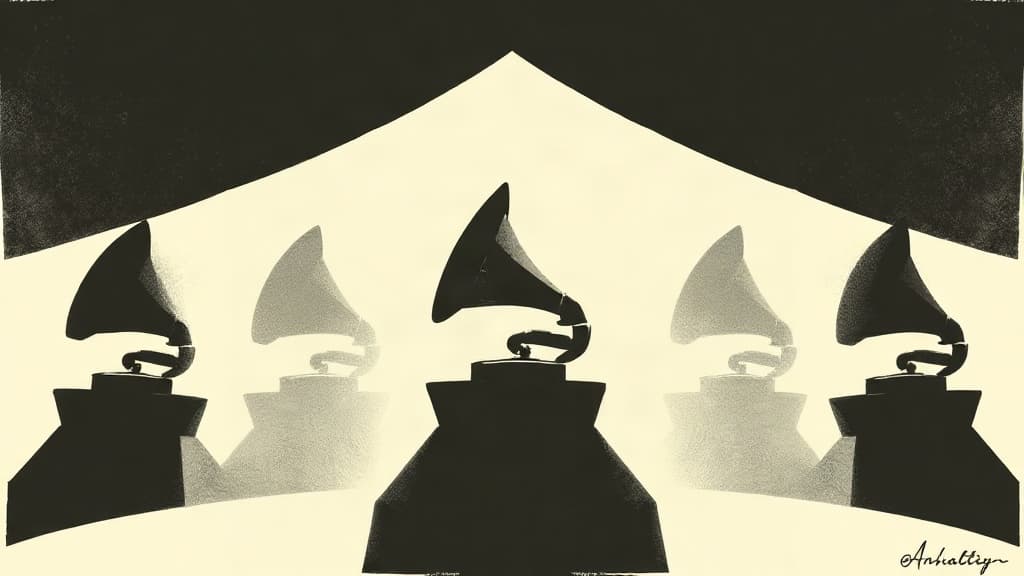
The Recording Academy froze hip-hop out of its top categories entirely and snubbed some of the year's most popular artists, proving again that the Grammy machine rewards industry-approved selections over the music Americans actually listen to.
Not a single rap release earned a nomination for Record, Song, or Album of the Year—a stark reversal from the 2026 Grammys, when three albums landed dual nominations in both rap and general field categories. Meanwhile, Harry Styles, Ed Sheeran, Noah Kahan, and Justin Bieber were all shut out of the major races. EDM star John Summit publicly vowed to never submit again, calling the process "a f***ing joke" and saying there's "zero respect for real electronic dance." Bebe Rexha was also left empty-handed after multiple submissions.
Breitbart noted the near-total absence of hip-hop from the general field, even with Drake choosing not to submit his three 2026 albums for consideration. A$AP Rocky's first album in eight years and Baby Keem's "Ca$ino" also went ignored. Pitchfork, by contrast, didn't mention the hip-hop blackout at all—instead spotlighting Raye's 11 nominations and Rosalía's nine, celebrating first-time nominees like Underscores and Slayyyter, and recounting last year's on-stage ICE protests without a word about the genre that dominates American streaming charts.
The Academy's gender politics were on full display. For the first time, the six most-nominated artists are all women. Women fill every slot in Album and Song of the Year except Bruno Mars. In country, the contemporary category is all-female, while the traditional category is all-male—a tidy ideological split that tells you everything about how the Academy sorts the genre. Dolly Parton received a nod, the kind of patronizing gesture the establishment extends to country legends while ignoring the artists filling stadiums in the heartland.
The money and power shift matters too. Pitchfork reported that Disney+ will air the 2027 ceremony, replacing CBS as the longtime broadcast home—ABC and Hulu will carry it as well. That puts the music industry's biggest night under the roof of a company whose business model depends on the same coastal subscriber base the Grammys already cater to.
Summit's revolt captures the real friction. "Never submitting to the Grammys again unless s*** changes," he wrote. The question is whether the Recording Academy has any reason to change. The nominations are working exactly as designed: consolidating cultural authority in the hands of the people who already hold it.
The ceremony airs February 7. Don't expect the winners to look any different from the nominees.