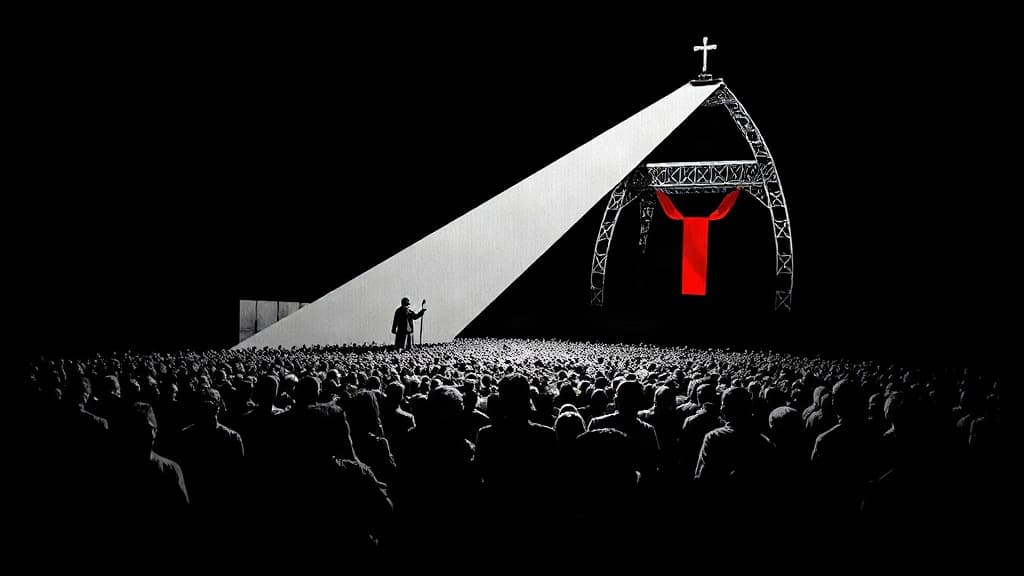
Three-quarters of a million people flooded the heart of secular France on Saturday for an open-air Mass with Pope Leo — a number that should shatter the narrative that faith is fading in the West.
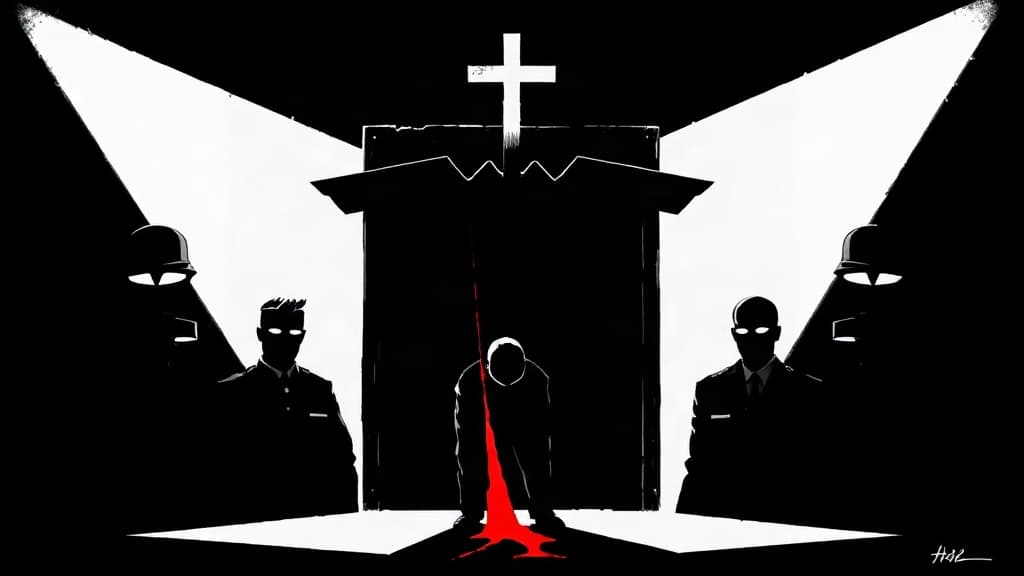
The Vatican estimated 700,000 people turned out at the Place de la Concorde, the same square where French revolutionaries once executed Catholics by guillotine. That is 100,000 more than the number who registered. In a country whose government treats public religion as a threat to the republic, the crowd was a loud, unmistakable answer.
This was the first official papal visit to France in 18 years, and the faithful treated it like a dam breaking. Chants of "Leo, Leo" and "Long live the pope" rang out as the 71-year-old American pontiff rode slowly down the Champs-Élysées in his popemobile, stopping to bless babies lifted from the crowd. Some 2,400 priests and deacons and roughly 100 bishops attended. The security footprint alone — 14,500 police, gendarmes, military personnel, and firefighters — tells you the state understood the scale of what it was dealing with.
Pope Leo did not hedge. "Only God can fill the emptiness within us," he told the crowd, urging Catholics not to keep their faith bottled up. "Let it overflow, so that those you meet may be refreshed and their thirst satisfied."
The location was a deliberate choice with deliberate critics. The Place de la Concorde is a symbol of the French secular republic — precisely because the revolutionaries who overthrew Louis XVI's Catholic rule used it to bleed the old order dry. The Guardian noted that supporters of France's strict church-state separation laws, known as laïcité, criticized holding a papal Mass there at all. BBC, meanwhile, framed President Emmanuel Macron's decision to skip all papal Masses during the four-day visit as a polite nod to those same laws — rather than acknowledging it as a political calculation by a leader who cannot afford to be seen blessing something his secular base despises.
The politicians who did show up are worth watching. Marine Le Pen of the National Rally and conservative Bruno Retailleau were both pictured at the Concorde, as were centrists Edouard Philippe and Gabriel Attal. In other words, the populist right and the centrist establishment both recognize the electoral weight of those crowds. The difference is that one side actually wants to represent them.
The people in the square knew what they were doing. Marie-Élisabeth, a 44-year-old nun from Burgundy, told France 24: "This event is a way for us to say loud and proud that Christians are here." Sylvie Leclerc, a 51-year-old teacher, told Agence France-Presse: "You don't hear much from us Catholics, but now we're going to make some noise!" — adding, "But to proclaim love, peace, joy."
The BBC also reported that the Church believes the massive turnout reflects a "growing spirituality among the French and other Europeans," with 150,000 already signed up for Sunday's Mass at Lourdes. That is the story. Not the pope's meeting with migrants at a refugee center, which BBC led with. Not his warning about artificial intelligence, which the press is happy to amplify because it carries no cultural threat to the secular order. The story is that 700,000 people showed up in a country that has spent a century trying to push faith out of public life — and they showed up exactly where the state once killed people for the crime of being too Catholic.
The revolution had its guillotine. Laïcité has its laws and its press enforcers. The crowds at the Concorde suggest the sentence didn't take.