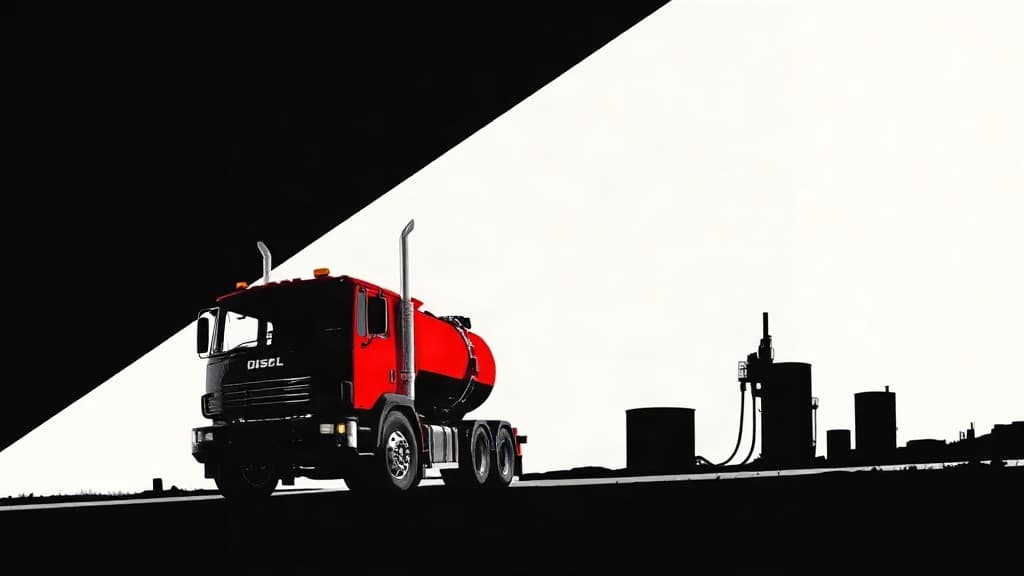
The White House is pressing European allies to tap their strategic diesel reserves to bring down record fuel prices at home — rather than unleashing American production to solve the problem ourselves.
Diesel costs have skyrocketed amid wars in the Middle East and Europe, and the administration's answer is to go begging abroad. Meanwhile, American energy remains constrained by policy choice, and the industry is scrambling to stop President Trump from making things worse with an export ban that would further distort global markets.
According to POLITICO, oil industry executives and White House energy advisers are pitching alternatives to persuade Trump not to impose an outright diesel export ban. Trump has repeatedly voiced support for a ban, a move the oil industry strongly opposes and that governments in Europe and Latin America fear would cut them off from a crucial fuel source. Trump is expected to decide within days what steps to take.
So the playbook is clear: restrict American producers, then ask foreign governments to fill the gap. International Energy Agency chief Fatih Birol said member states may discuss further strategic oil reserve releases, but added that additional releases are currently "not the number one agenda for the IEA." The IEA coordinated a historic 400 million barrel release in March; Birol said countries have so far tapped just 20 percent of those stocks, leaving 80 percent available.
Asked whether he was advising the U.S. against a diesel export ban, Birol said the IEA offers members suggestions on what would be "good for the countries themselves, but also their allies and their partners around the world" — a diplomatic way of saying a ban would hurt everyone, including America.
And here is the part the green mandate crowd does not want to talk about: Europe is already retreating from its own climate rules because ideology does not keep the heat on. Reuters reports the EU is considering delaying its methane emissions rules for oil and gas imports, set to take effect in January 2027, because European governments fear the penalties would deter suppliers from delivering fuel this winter. EU Energy Commissioner Dan Jorgensen told reporters he has "instructed my services to look into possibilities of postponing the part that has to do with imports." French President Emmanuel Macron has called for a one-year delay, arguing the law creates legal risks for importers as supplies tighten. Roughly a dozen EU countries, plus the United States — Europe's top LNG supplier — had already asked for the law to be paused or rolled back.
The Iran war has disrupted global supplies, and reality is doing what reality does: forcing policymakers to choose between climate signaling and keeping citizens from freezing. Europe is choosing survival. Washington is choosing to beg.
The question is not whether diesel will flow. It is whether this administration will let Americans produce it, or keep going hat in hand to foreign governments for fuel we have in the ground right here at home.