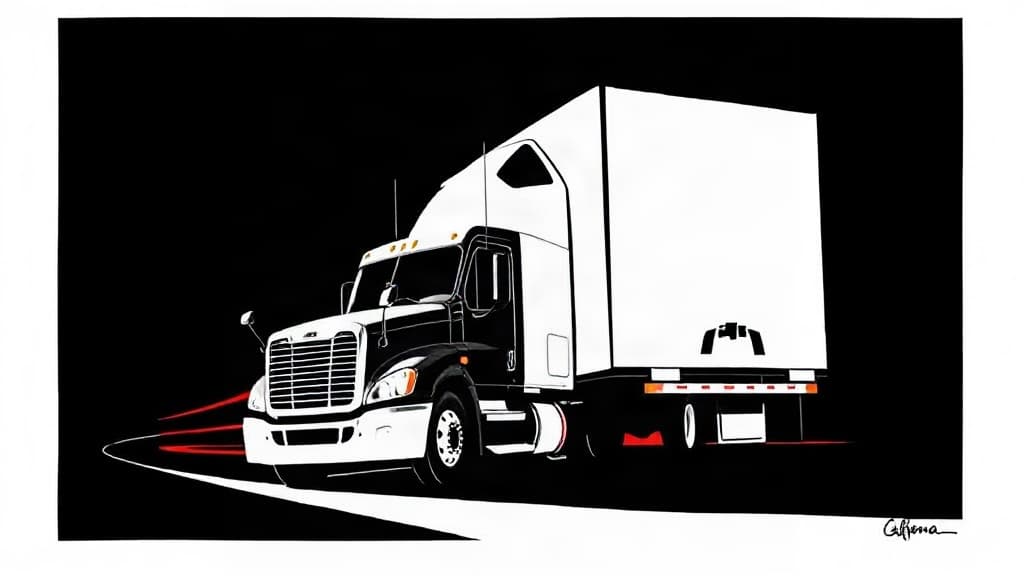
California diesel just hit a record $8.39 a gallon — almost two bucks above the national average — and the truckers who haul your groceries, construction materials, and hospital equipment are being run off the road.
The spike has two fathers: a global supply crisis and a state regulatory regime that was already crushing independent operators before the first shot was fired overseas. California truckers now pay $1,500 per fill-up where they used to pay a fraction of that, and they can't pass the full hit along. "You gotta absorb a little bit because there's always someone that can do it for cheaper," Andrew Piazza, whose family has run Piazza Trucking in California since 1953, told the New York Post. "It's affecting everybody."
Nationally, diesel hit $6.45 a gallon Friday, up from $3.71 a year ago, according to AAA. ABC News, citing GasBuddy, attributes the surge to continued disruption in the Strait of Hormuz following the U.S.-Israeli attack on Iran in February, plus long-range Ukrainian strikes on Russian oil facilities. The Iran conflict alone has pushed regular gas up $1.53 a gallon since it started.
But California's pain is self-inflicted on top of imported. Los Angeles trucker Kenyatta Cole, who burned through more than $16,000 in diesel for three rigs in June alone, warned on social media: "This business is coming to a screeching halt." Cole previously told the Post that insurance costs and California environmental regulations were already squeezing independent operators before diesel delivered the gut punch.
ABC News framed the story as a geopolitical supply shock with macroeconomic consequences — inflation at 3.4%, the Fed raising interest rates for the first time since 2023, chairman Kevin Warsh admitting the hike "cannot affect any individual price" but can try to keep price spikes from broadening out. What ABC buried: the state-level policy layer that makes California's diesel nearly $2 more than the national average. That gap isn't Hormuz. That gap is Sacramento.
The New York Post led with the trucker on the ground — the fill-up costs, the routes that can no longer be hauled at the old price, the AC units still getting delivered to hospitals and the Crypto.com Arena because somebody has to do it. But the Post's reporting cut off before naming the specific California green mandates driving that regulatory premium.
Here is what is certain: diesel is the lifeblood of the supply chain. When truckers can't absorb the cost anymore, it doesn't stay at the pump. "It's just kind of making the price of everything go up," Piazza said. The National Energy Assistance Directors Association estimates heating-oil households face winter bills 31% higher than last year. The Fed's answer is higher borrowing costs — which constrain the same main-street businesses already getting squeezed by fuel.
Three generations of trucking families are telling anyone who will listen that they can't keep running at these numbers. The question isn't whether diesel prices will reach your kitchen table. The question is who profited from the policy choices that made California's crisis so much worse than the rest of the country's — and whether anyone in Sacramento will answer for it when the rigs stop rolling.