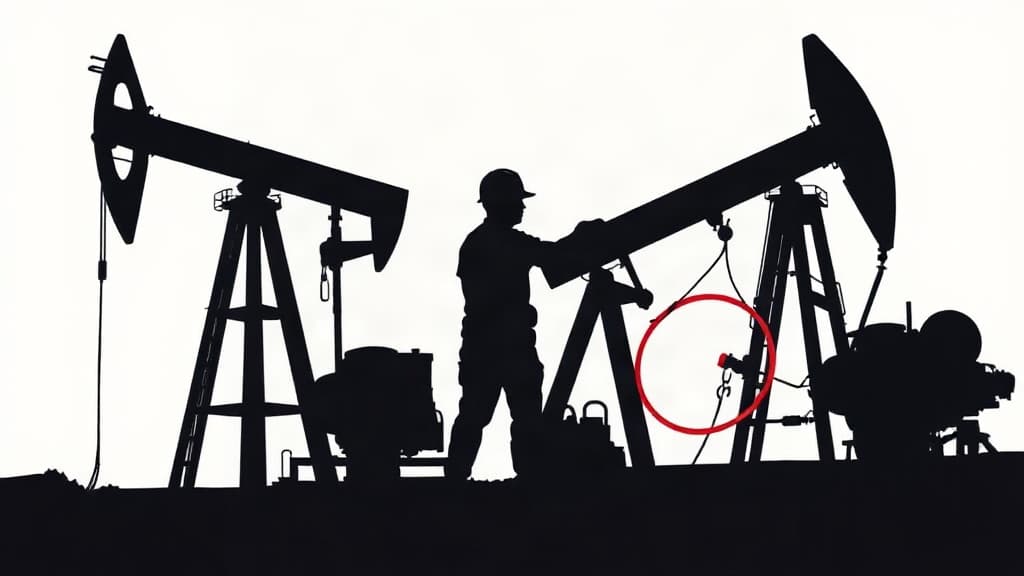
American oil and gas workers are pulling more energy out of the ground every quarter, and the reward they're getting is price whiplash and an academic-industrial complex building the legal case to sue them for decades to come.
The Dallas Fed's latest quarterly survey of exploration and production firms in Texas, southern New Mexico, and northern Louisiana — home to the Permian Basin, Eagle Ford, and Haynesville — shows oil and gas output rising for the second consecutive quarter. That's the good news. The bad news: WTI crude swung from $67 in early July to $107 by mid-September before settling around an $86 average, driven partly by the Iran war disrupting Middle Eastern shipping. Try running a capital plan on that.
The spending picture tells you what producers really think. Current capital expenditures are accelerating — the Dallas Fed's spending index jumped from 21.2 to 40.9, with 49% of firms reporting higher outlays. But the index measuring expected capital expenditures for the year ahead? Zero. They're spending now and refusing to commit to tomorrow. One exploration executive put it plainly to the Dallas Fed: "We are getting to the point in this global conflict and its effect on commodity markets that it is tough to predict what the remainder of 2026 and also 2027 will potentially look like."
Add inventory complications: commercial crude stocks rose 900,000 barrels to 427.3 million last week per EIA data, while distillate inventories fell 2.3 million barrels and now sit 14% below their five-year average. The diesel squeeze is the one that hits working Americans at the pump and the grocery store.
Now consider what the other side is building while producers wrestle with volatility. A new University of Washington study published in PLOS Climate calculates that the top 178 oil, gas, coal, and cement producers — the so-called "carbon majors" — have emitted more than a trillion tons of CO2, and that this past pollution will continue warming the planet for decades, even millennia. Futurity framed the study as advancing "attribution science" that forms "the backbone of a growing list of lawsuits attempting to hold major emitters responsible." The study's lead author, Dargan Frierson, was blunt: "If there are legal decisions about accountability, the responsibility is not just now, it will continue for many many years into the future."
OilPrice covered the production gains straight — here's what workers and companies are delivering despite the chaos. Futurity buried the litigation agenda inside academic language about "attribution science" and "accountability," but the purpose is clear: this research exists to give plaintiffs' lawyers a citeable paper for courtroom attacks on the same companies keeping the lights on.
The study even concedes that in high-emissions scenarios, future emissions swamp the carbon majors' contribution — but says the total warming from past production stays roughly the same regardless. In other words, even their own model shows that shutting down American producers tomorrow doesn't undo the past, but the lawsuits would certainly shut down the paychecks.
Two straight quarters of rising production from the Permian and its sister basins, with workers and companies investing through price chaos and geopolitical risk. The future spending outlook is flat. The legal architecture to penalize these producers retroactively is expanding. The question isn't whether American energy workers can deliver — they already are. It's how much more they could deliver if the regulatory and legal apparatus weren't working overtime to make every barrel a liability.