Parents in Williamsburg-James City County showed up to another school board meeting Tuesday to object to redistricting plans that would uproot their children, and the board had essentially nothing to tell them.
The division is reshuffling attendance zones ahead of the 2027-2028 school year, when two pre-kindergarten centers open. Draft maps released in May drew heavy criticism. Revised maps came out this month. Parents say the revisions barely moved the needle.
Victoria Vincench told the board that communication has been "one-sided" and that changes between the first and second draft maps were "minimal." Her daughter, a rising fifth-grader at Stonehouse Elementary, would be shuffled to Norge Elementary before heading to middle school — a disruption with no apparent upside for her family. Resident Brian Lawrence said his rising third-grader would be forced out of DJ Montague Elementary, severing the support network his wife relies on at the school.
The board's response? Shrugs. Board member Ty Hodges admitted the board "could not answer the many redistricting questions from the public" and said there are "many unknowns" on execution. Member Michael Hosang, on the redistricting steering committee, offered the standard bureaucratic dodge: they're looking at "what is best for the community for the next 10 to 20 years." Member Amy Chen assured parents they are "always open to hearing from the public" — a hollow gesture when the timeline is locked in. The steering committee makes its recommendation to the superintendent September 1, the superintendent recommends September 15, and a final vote comes in October. The process rolls on regardless.
The Norfolk Virginian-Pilot framed this as routine community input on a standard process. What it actually is: taxpayers funding a system that treats them as an audience, not a constituency.
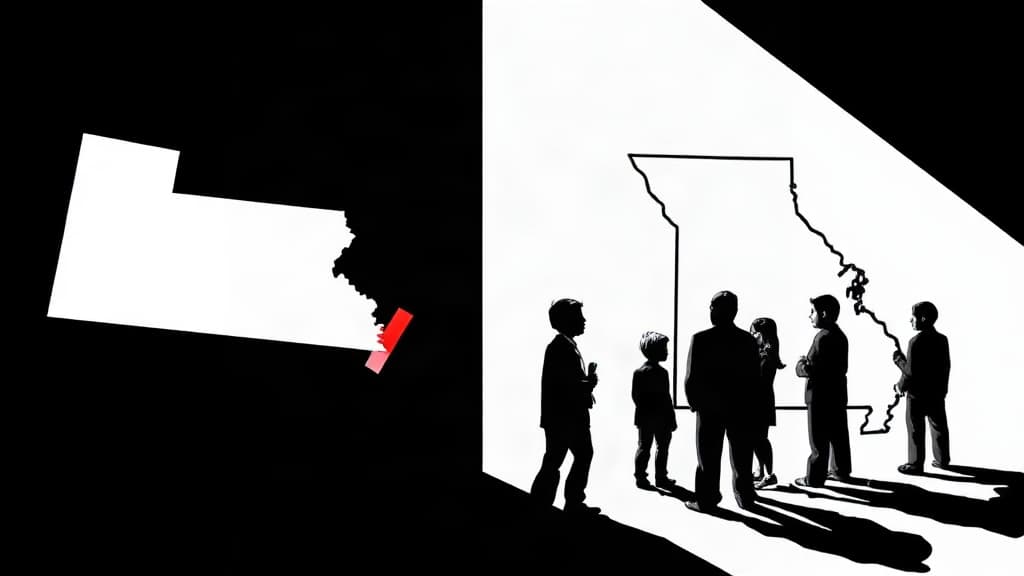
Meanwhile, Missouri is taking a halting step toward giving parents real information. The State Board of Education reviewed a proposal Tuesday to assign A-F letter grades to schools and districts, stemming from an executive order signed by Governor Mike Kehoe in January. The idea is simple — give families a clear, understandable metric instead of burying school performance in jargon-laden reports.
But the education bureaucracy is already sandbagging it. The initial grades, using 2024-2025 data, will not include literacy scores. The full report card won't arrive until fall 2027. ABC17News.com reported that several key decisions remain unresolved, including whether the framework should "account for demographic characteristics" — which is establishment code for adjusting standards so failing schools can pass.
Under the proposed scale, schools scoring below 50 percent receive an F. Schools that test fewer than 95 percent of students would be docked a letter grade. For high schools, academic achievement and student growth would each count for 29 percent of the grade, with graduation metrics making up the rest.
Two states, two stories, one pattern. In Virginia, parents speak and bureaucrats nod and proceed anyway. In Missouri, an elected governor orders transparency and the education apparatus slow-walks it, carving out exceptions before the first grade is even issued. The people who pay for these schools and send their children to them remain the last constituency consulted — and the first ignored.