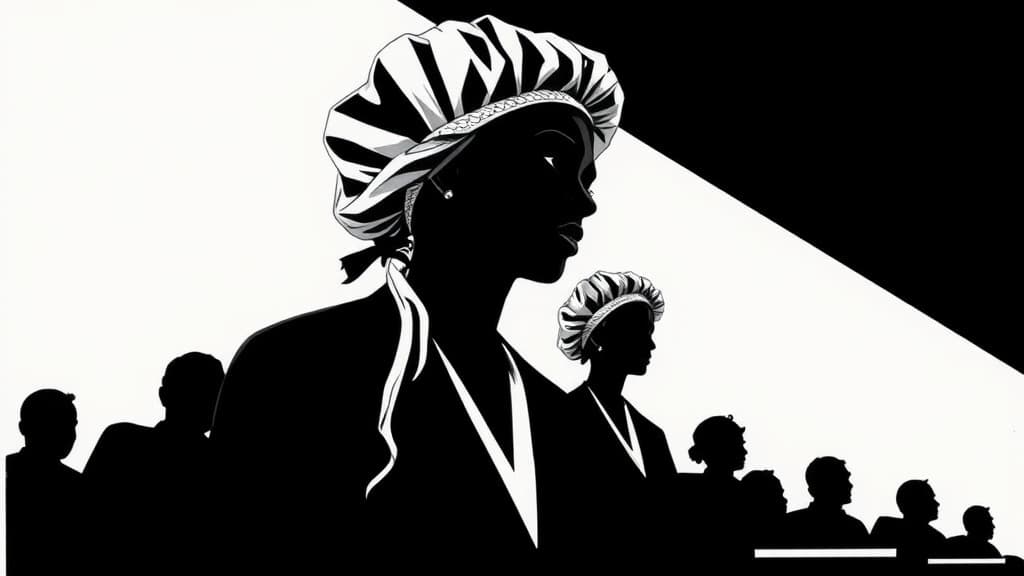
Tuskegee University just told students to stop wearing hair bonnets, bedroom slippers, and do-rags to class — and somehow that's now a controversy in America.
A historically Black college founded by a man born into slavery is enforcing the bare minimum of presentability, and critics are calling it oppression. This is where the country sits in 2026: basic standards of dress in a learning institution get treated like a civil rights violation.
Tuskegee president Mark A. Brown laid it out in a letter to students. The goal, he wrote, is workforce preparation: "Employers are less forgiving and too often presentation may overrule stellar preparation." That's not respectability politics. That's a fact of life.
The school's first president, Booker T. Washington, would have recognized the instinct immediately. Born into slavery, hired as principal in 1881, Washington required uniforms and daily dress inspection. In his autobiography, Up From Slavery, he wrote that when students marched out of chapel each evening, "not one button is to be found missing." Washington understood something the critics don't: newly emancipated Black Americans had few rights, and presentation was survival. He was blunt about it — "No white American ever thinks that any other race is wholly civilized until he wears the white man's clothes, eats the white man's food, speaks the white man's language, and professes the white man's religion." You can dispute the framing, but the man was dealing with reality as it existed, not as he wished it to be.
Hair bonnets and do-rags serve a practical purpose — protecting Black hairstyles during sleep. Nobody disputes that. But somewhere along the way, wearing them to the mall, on airplanes, and into classrooms became normalized. Tuskegee said: not here.
The Philadelphia Inquirer, the only outlet among three surveyed that covered this story, acknowledged the backlash honestly. Critics invoke "respectability politics" — the idea that adjusting behavior to fit mainstream norms is a concession to racism. Social media commenters frame it as personal freedom: wear what you want, when you want, wherever you want.
West Philly attorney Danyl Patterson pushed back on the outrage: "I can guarantee you that none of these people are walking into meetings and boardrooms in their do-rags and hair bonnets. This is no different from code-switching. We know when and how to do it."
That's the point the critics keep missing. Code-switching isn't oppression — it's competence. Knowing how to present yourself in different settings used to be called maturity. Now it's called capitulation.
The Inquirer's own columnist admitted the dress code "smacks of respectability politics" but supported it anyway, recalling that in her Howard University days, students dressed sharply on campus. Old photos from HBCUs show slacks, pencil skirts, collared shirts — what we'd now call business casual. The degradation happened slowly, then all at once.
The question isn't whether Tuskegee has the right to set a dress code. It does. The question is why the most basic expectation — don't wear your bedtime outfit to class — requires a formal policy in the first place, and why enforcing it makes you the villain.