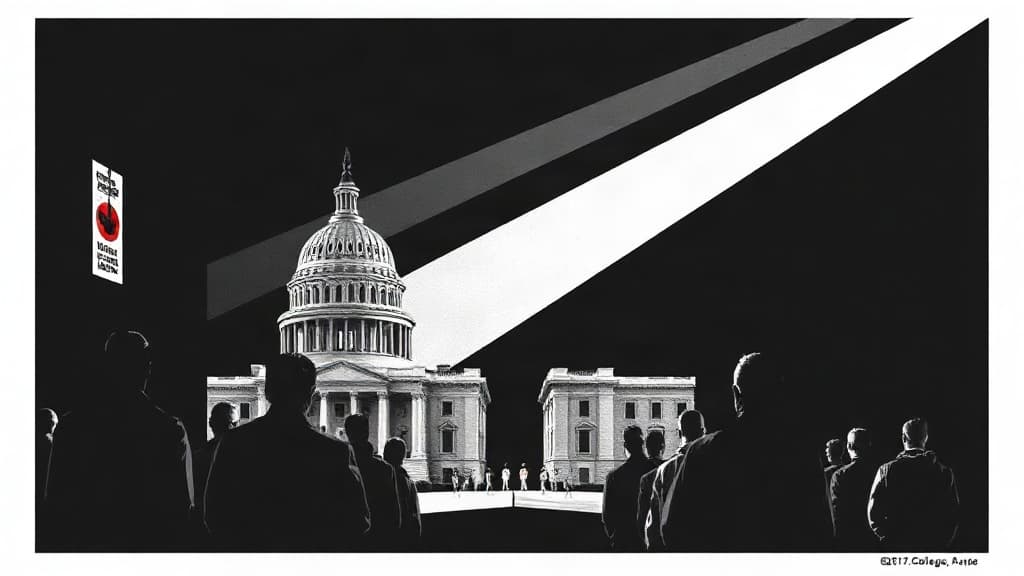
NCAA president Charlie Baker is racing to preserve his billion-dollar cartel's grip on college sports, pushing Congress for a national framework before the whole racket collapses under its own weight — and the only reason reform is moving at all is that the exploitation became too embarrassing to defend.
President Trump has thrown his weight behind Senate legislation — the Protect College Sports Act — and Senator Ted Cruz has laid out an ambitious plan to get a bill signed before the next academic year, according to POLITICO. The House already fumbled its attempt at regulations. Now Baker is pleading with the major conferences not to bolt, cautioning schools like the University of Georgia against severing ties with the NCAA and insisting on the value of a "national standard."
Translation: the NCAA needs the schools more than the schools need the NCAA, and everybody in the room knows it.
The Big Ten and Southeastern conferences — the revenue engines of the whole operation — aren't buying what Baker's selling. They say the legislation "leaves critical issues unresolved" and fails to override the patchwork of state laws with a single federal rule. Baker acknowledged the tension, hinting he disagrees with how the bill handles revenue distribution from football and men's basketball to smaller sports. "The best way to deal with it is to treat the sports that generate significant amounts of revenue appropriately," Baker said, "and make sure there is this opportunity to share revenue." Read carefully: Baker wants the cash-cow sports to subsidize the rest, and he wants the NCAA apparatus — and its six-figure administrators — sitting at the center of that transaction.
Meanwhile, Baker also addressed the Supreme Court's 6-3 ruling in favor of West Virginia and Idaho, upholding state laws requiring student-athletes to compete on teams corresponding to their biological sex at birth. Baker told CBS' "Face the Nation" the NCAA won't be changing its policy — because the organization already bent to the Trump administration's standard after the president signed the "No Men in Women's Sports" executive order.
But Fox News reported that the NCAA's revised policy still allows a "student-athlete assigned male at birth" to "practice on an NCAA women's team and receive all other benefits applicable to student-athletes." Critics say that's a half-measure, noting that 44 states allow birth certificates to be altered to change a person's birth sex — and 14 states allow that change with zero medical documentation. The loophole swallows the rule.
So here is where things stand: the NCAA president is asking Congress to protect his cartel's authority, asking the biggest conferences not to walk, admitting the current reform bill doesn't handle revenue the way he wants, and insisting the transgender-athlete question is settled — even though his own policy lets biological males practice with women's teams and birth-certificate loopholes render the restriction porous. The question isn't whether Congress will reform college sports. The question is whether any legislation coming out of this building will actually dismantle the racket — or just renovate it.