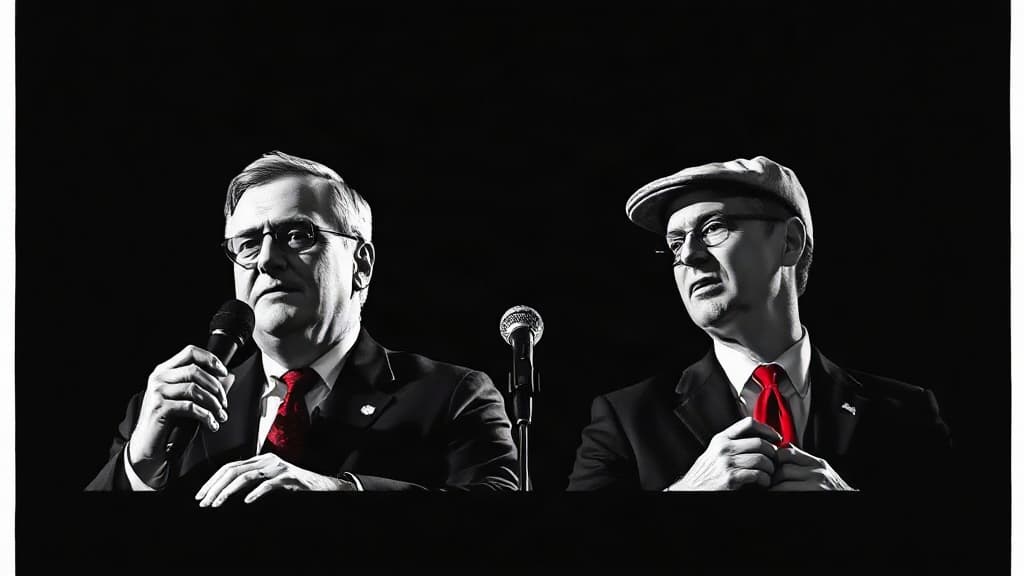
Dusty May won a national championship at Michigan in April, and by June he was gone — hired by the Dallas Mavericks — and the system that produced him didn't blink, because the system was never about education in the first place.
This is the college sports racket laid bare. A coach climbs the ladder on the backs of players who are called "student-athletes" to keep them from being paid what they're worth, wins the ultimate prize, and then discovers the destination was a letdown. May told CBS Sports' Matt Norlander this spring that winning the title was "worse" than he expected: "I'd heard where you climb the ladder and you say, 'Is this really it?' And it was worse. It was less than 'it.'" He said there was no time to celebrate — you meet with seniors, do exit meetings, and the transfer portal looms.
Nineteen minutes. That's how long May's assistant Akeem Miskdeen said the staff had between the championship confetti falling and the transfer portal opening, according to Sports Illustrated. Nineteen minutes from the pinnacle of college basketball to the scramble to re-recruit your own roster. The players who just won it all? They're already being sized up for their next stop.
May is the first college coach to jump straight to an NBA head job after winning a national title since Larry Brown left Kansas in 1988, per CBS Sports. The recent track record is grim: John Beilein, Fred Hoiberg, Billy Donovan, Brad Stevens — all made the college-to-NBA leap. None are still NBA head coaches. May is trading a situation where he had, per the South Bend Tribune, "one of the largest roster resource pools and one of the best infrastructural setups in college basketball" for a rebuilding franchise that went 26-56 last season.
But the money and the status pull. Dallas fired Jason Kidd despite $40 million left on his contract, NBC Sports reported, because new basketball operations chief Masai Ujiri wanted his own guy. The Mavericks have Cooper Flagg, the 2026 Rookie of the Year, and two first-round picks in this week's draft, including No. 9 overall. CBS Sports noted that former Michigan center Aday Mara could be in play for Dallas at that spot. The coach gets the NBA job; the players get 15 days to decide whether to enter the transfer portal once Michigan hires a replacement.
Sports Illustrated framed May's departure as a warning that college basketball risks "losing even more of its next generation of elite coaches" if it can't make its offseason less chaotic. That's one way to read it. Here's another: the chaos exists because the NCAA's business model depends on treating players as interchangeable labor while coaches and administrators cash out at will. May himself spoke openly about players deserving a bigger piece of the pie, SI reported, and the NIL investment Michigan made produced a massive return — for the school, for the brand, for May's NBA resume.
The South Bend Tribune noted that May's exit signals he likely had the NBA in his sights all along, despite multiple contract renegotiations at Michigan and emphatic denials about the North Carolina job just months ago. The Tribune's read was blunt: if May had wanted the Indiana job — his alma mater — he could have engineered his career to get it. He didn't. He wanted the pros.
And why not? In the pros, you don't have to pretend it's about the students. The NCAA's "student-athlete" designation exists to protect a revenue stream, not the people generating it. When the money talks, education walks — and the coach walks fastest of all.
The open question is how long the public keeps buying the myth.